DEW Hallmarks galore
- Uniform insta-rust
- Damage to locomotive not consistent with a “3 ton boulder”
- Warped, wilted steel, impossibly deformed with zero stress cracks anywhere
- No casualties, supposedly two crew jumped prior to impact
- Impact speed calimed to be 30 mph
- Conductor survived
- 13 cars accordioned / folded – numeracy
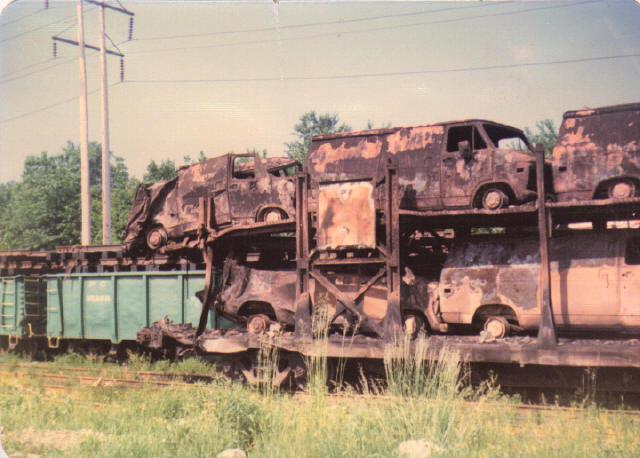
- Ridiculously “toasted cars”
- Nearby “ear-witnesses” described two explosions
- Official story does not match reality (no bend, plenty of distance)
- 300 feet of track; 30 mph speed; 3-ton boulder – numeracy
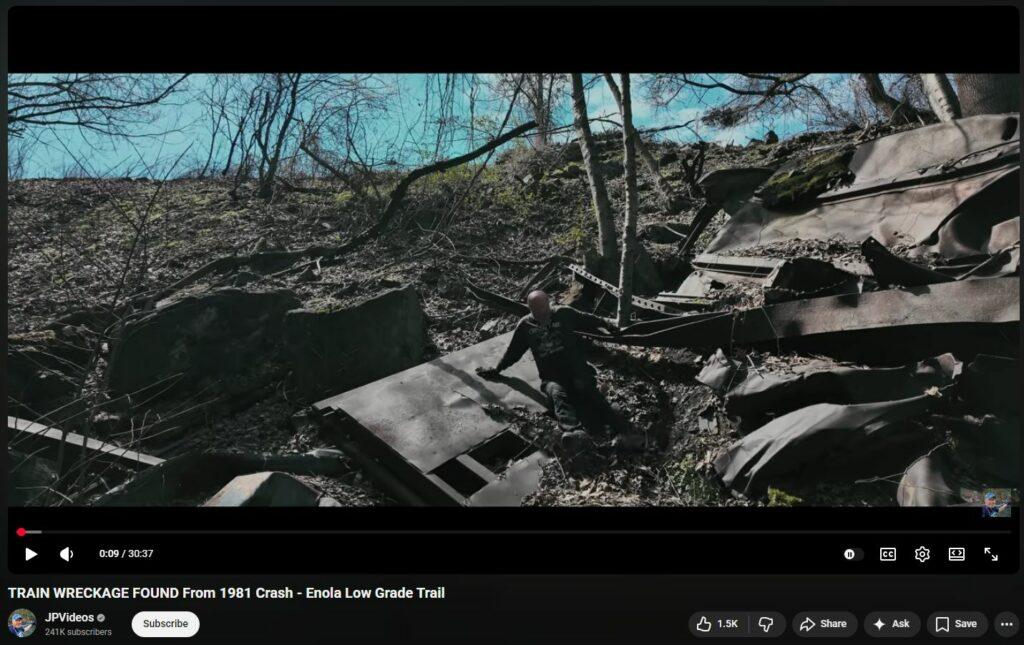
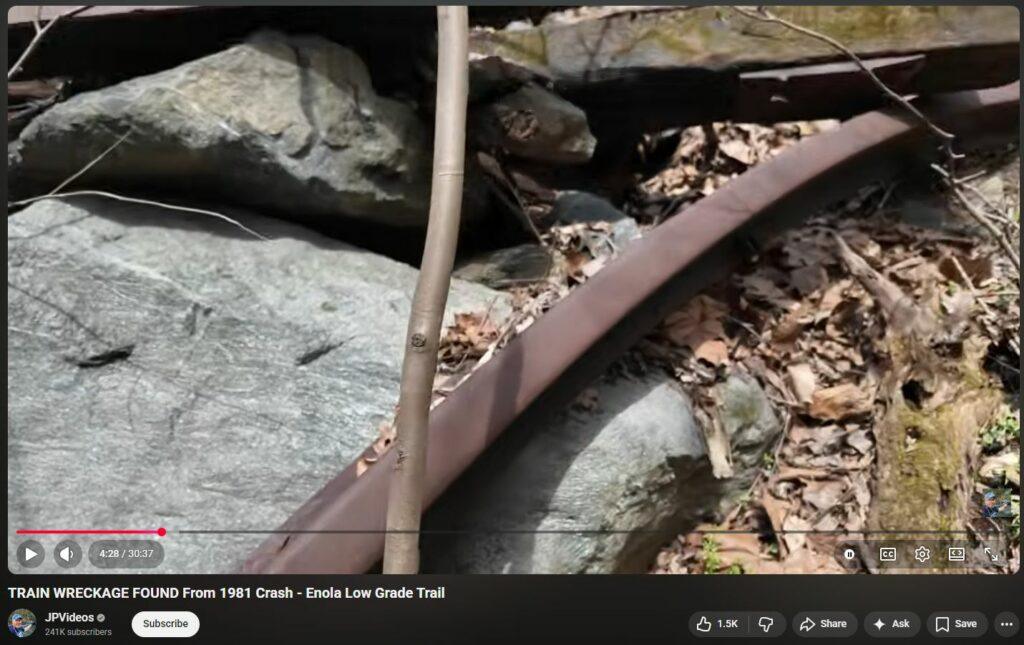
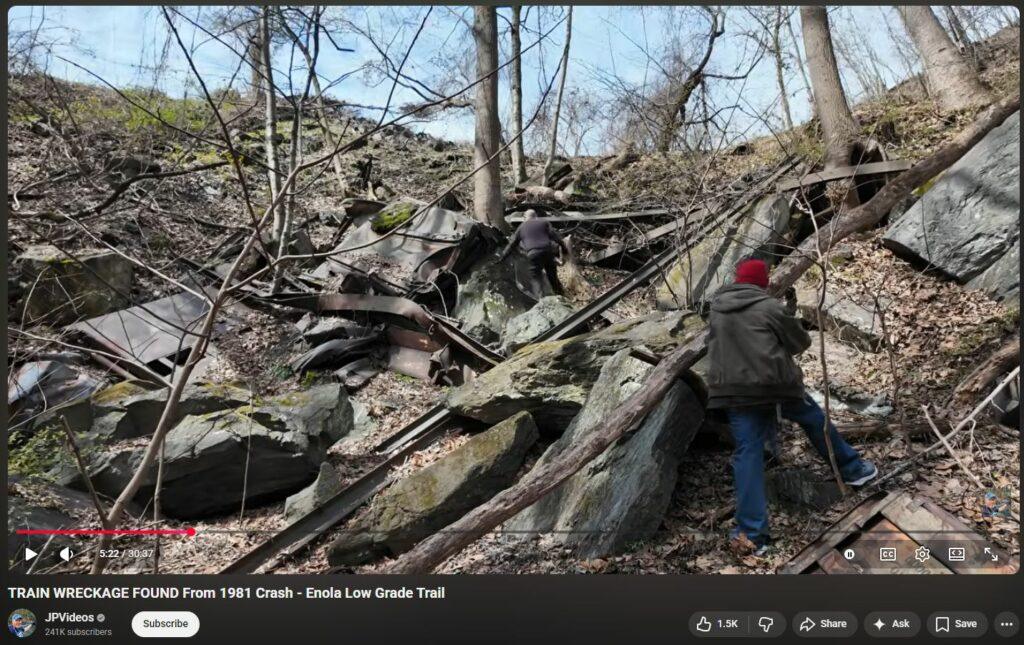
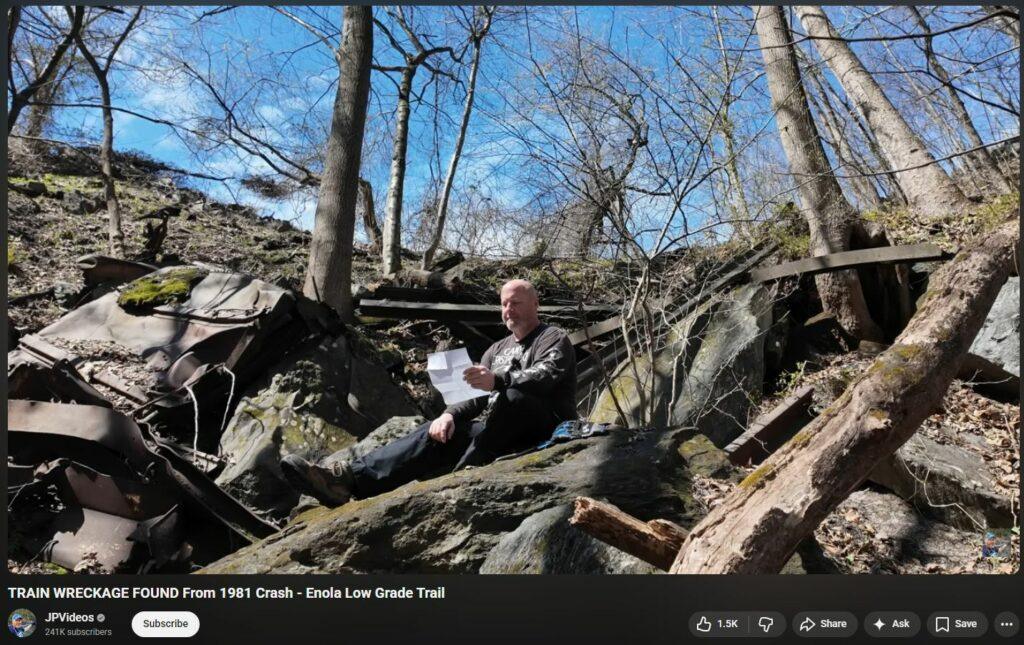
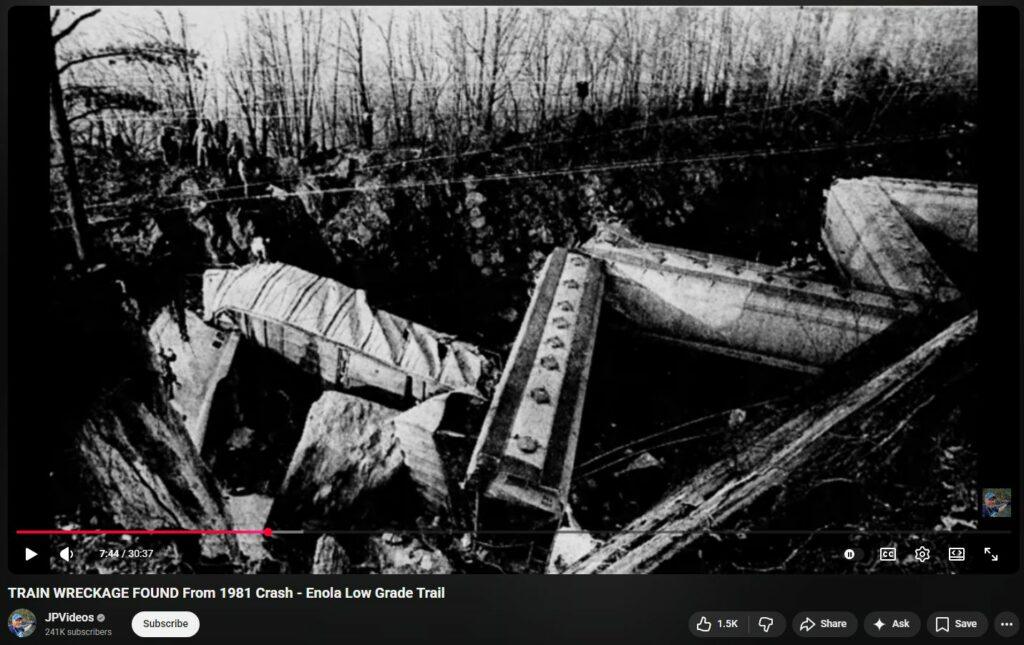
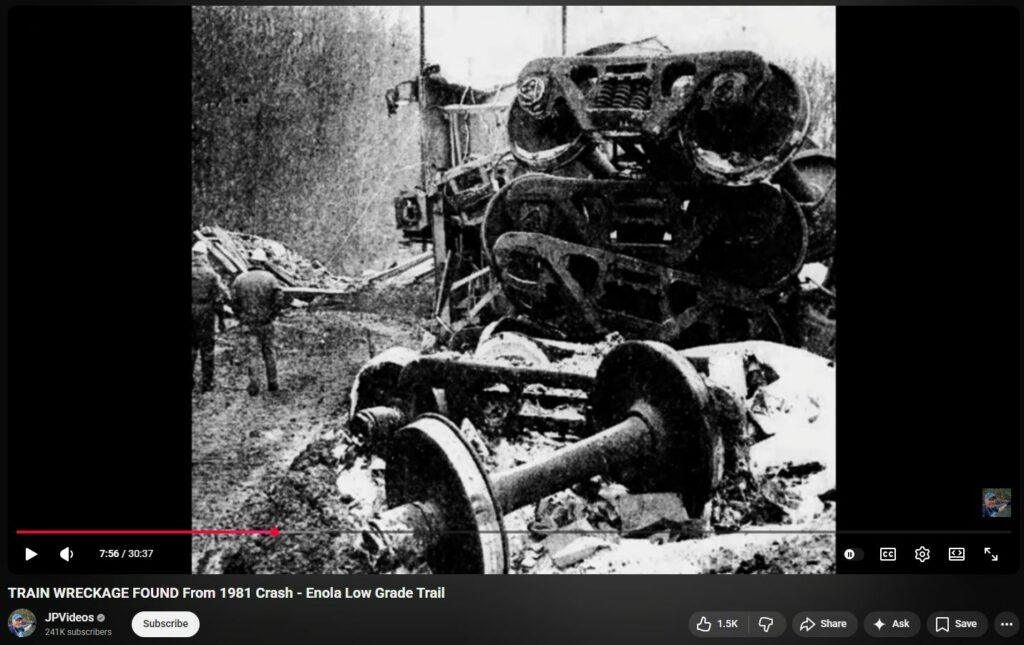
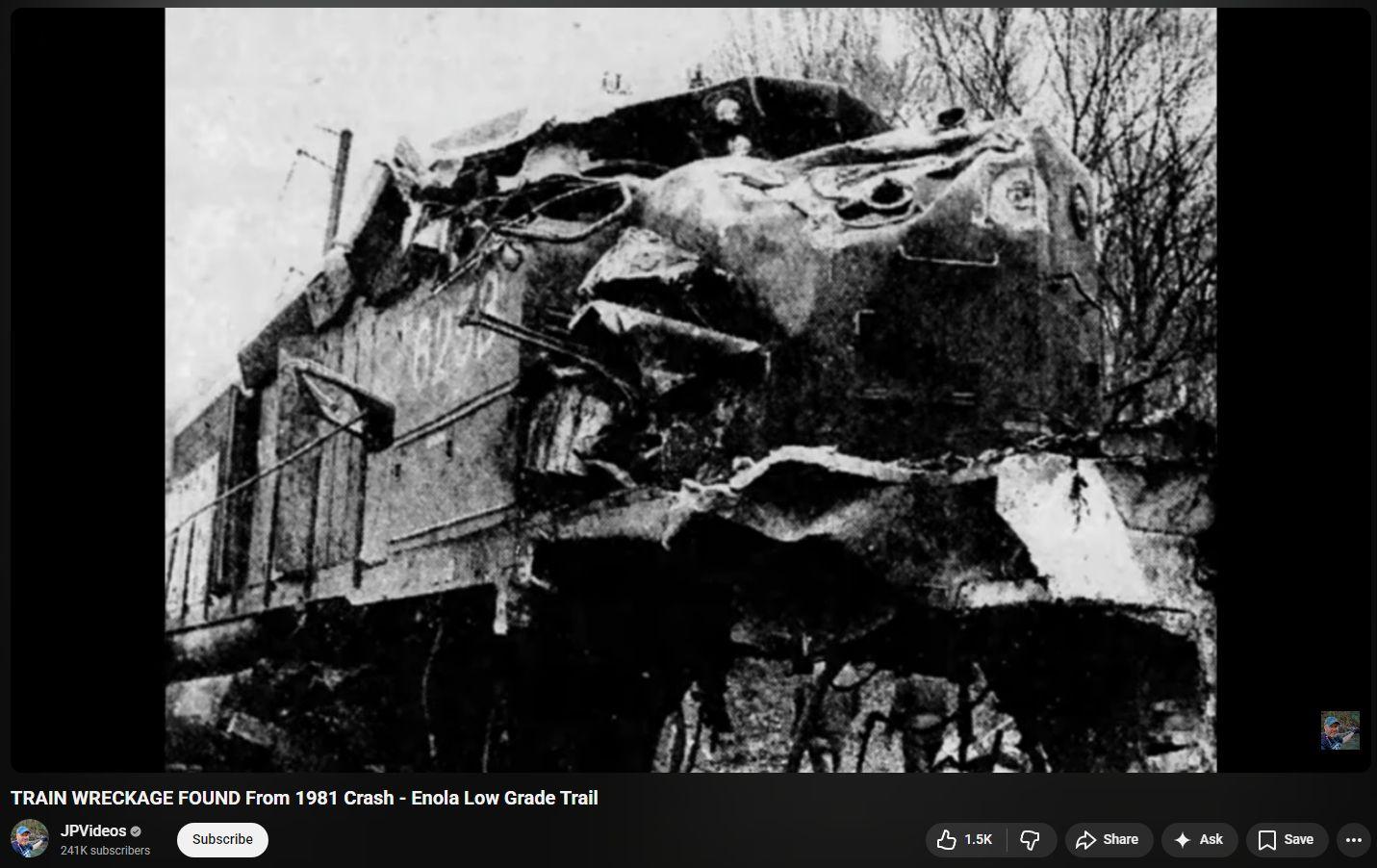
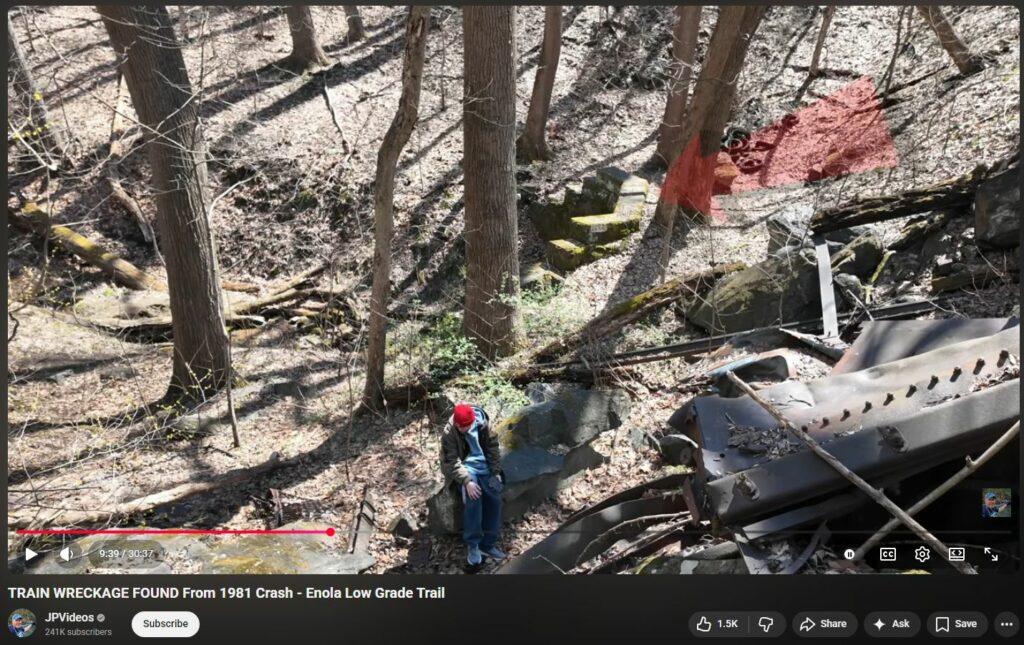
Plastic pellets, melted onto what was a superheated J-Hook.
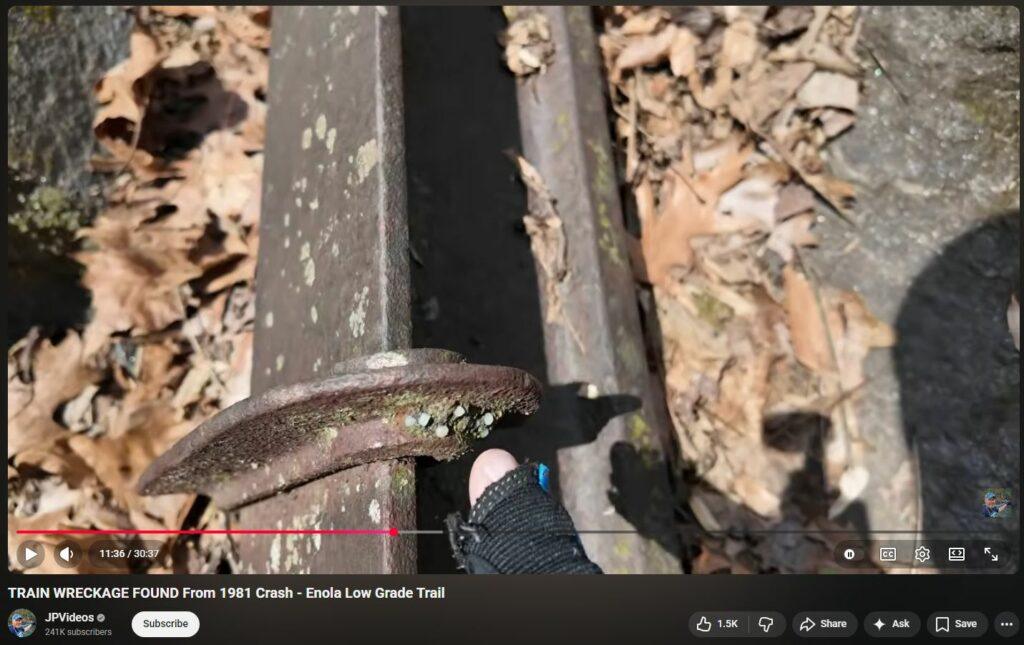
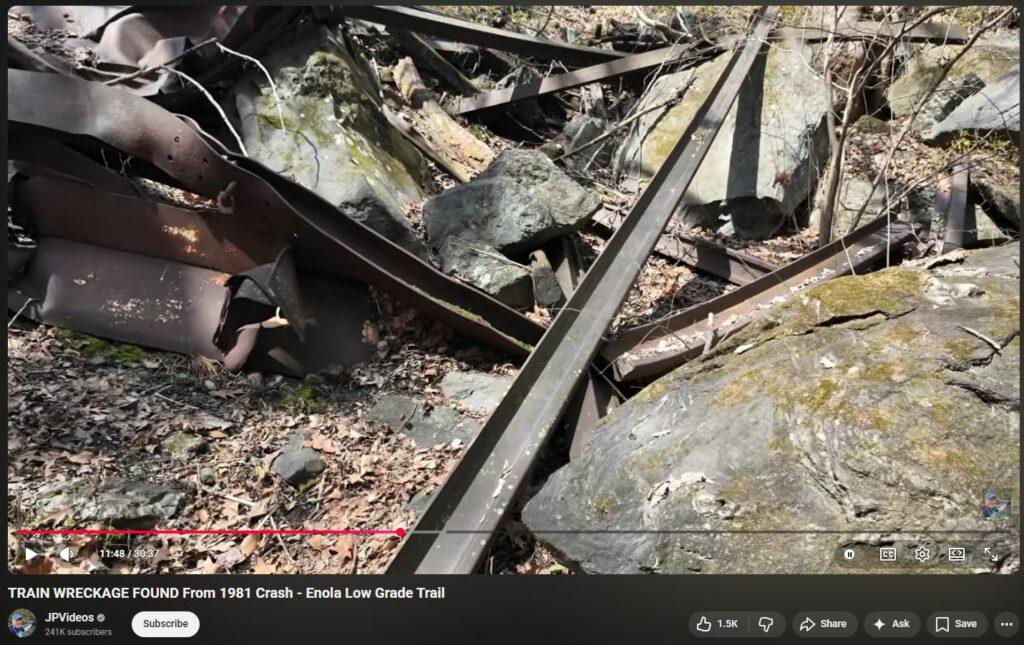
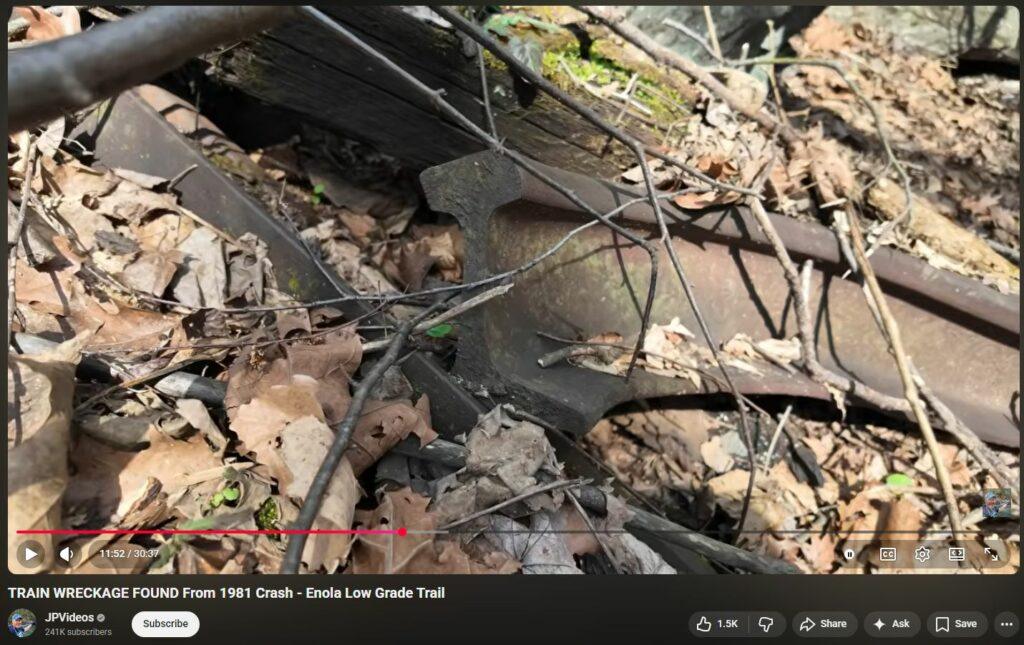
“Look at that piece…it’s twisted and bent and curved. That’s not normal.” 11:55 in
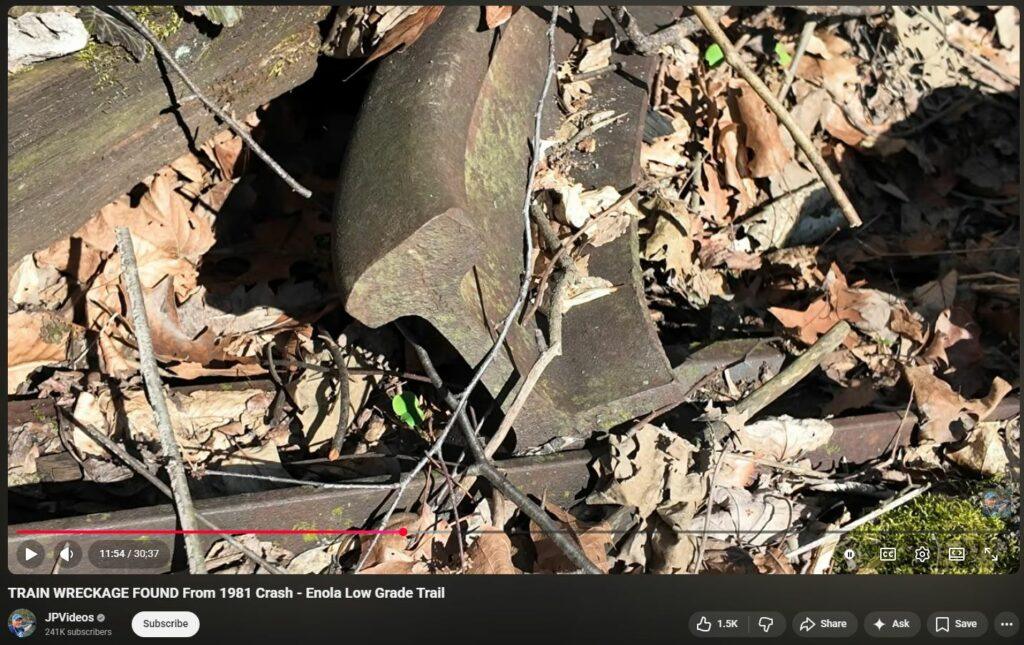
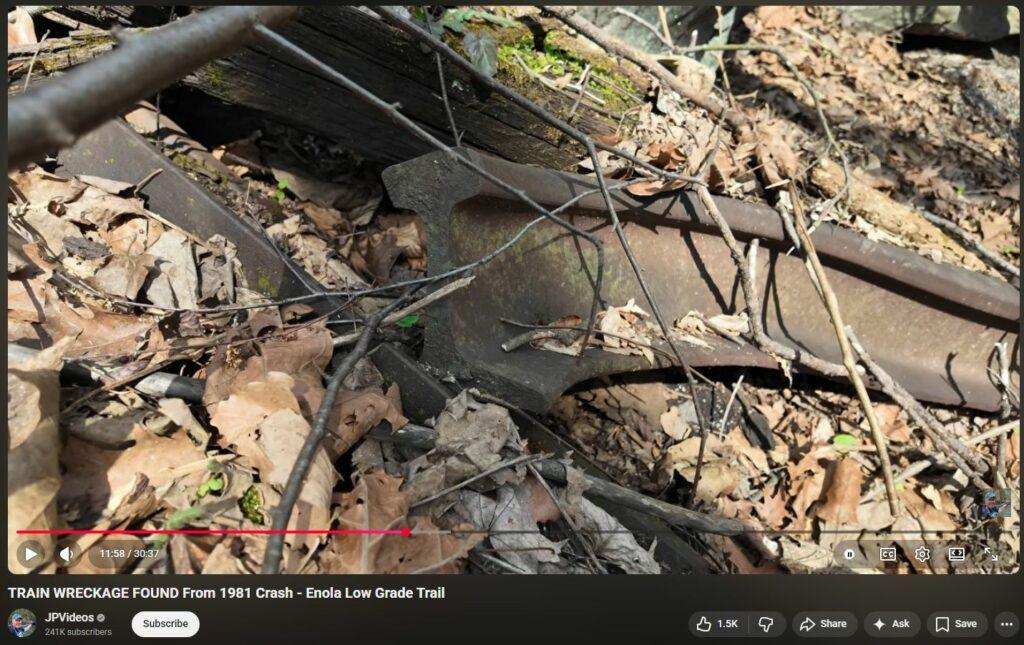
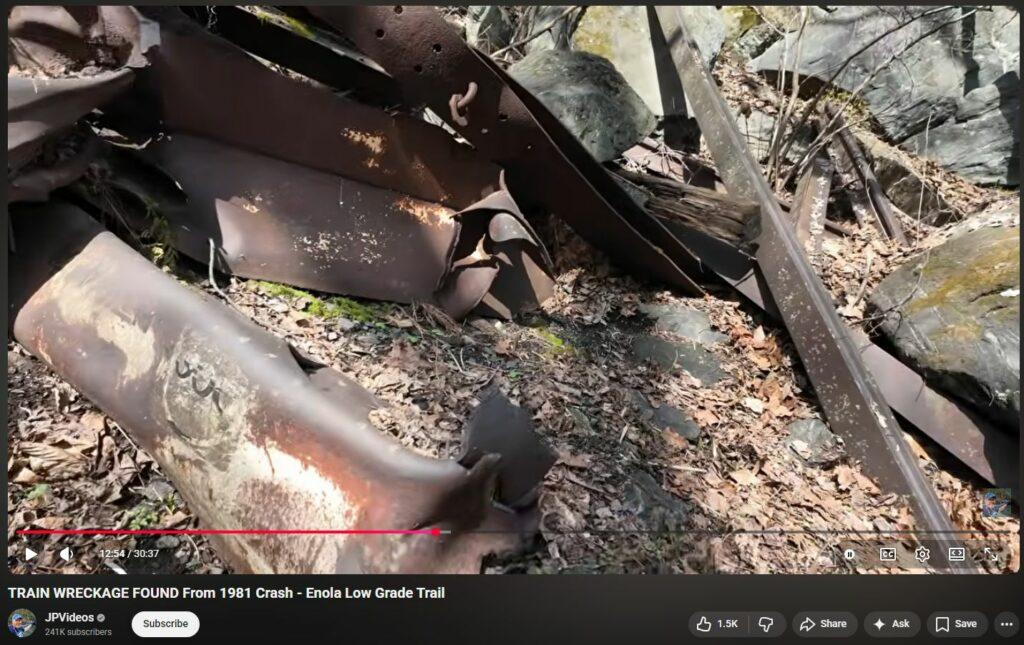
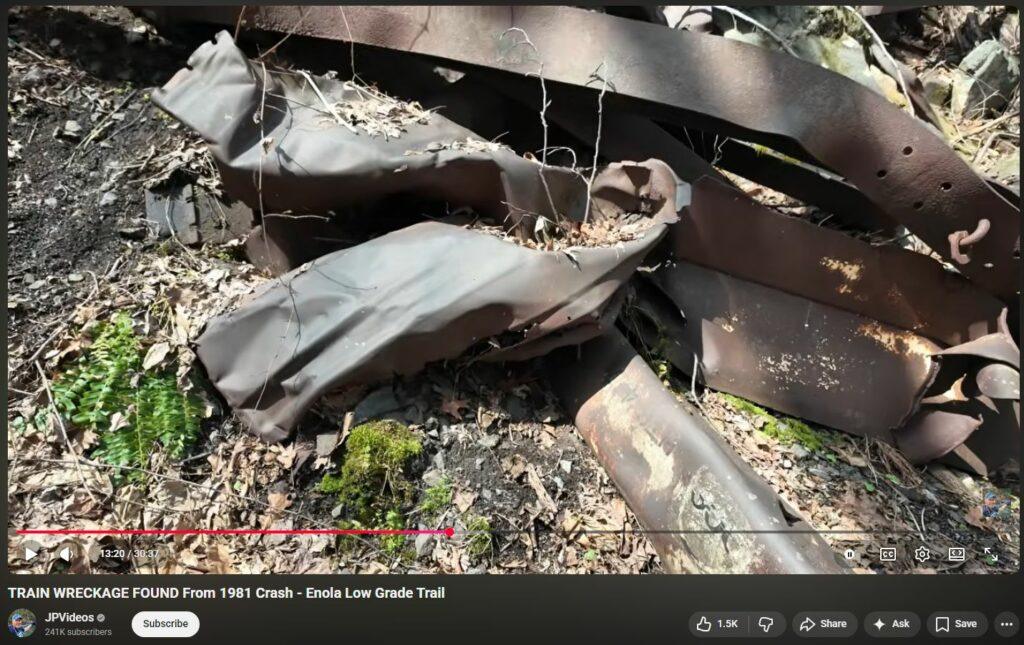
Severely distortion steel, radically bent without any stress cracks. That requires that the steel had been superheated at the time of bending. Only a Blast Furnace or Directed Energy Weapons can cause such heating. No Blast Furnace was present; therefore, the only possible plausible explanation involves beamed energy.
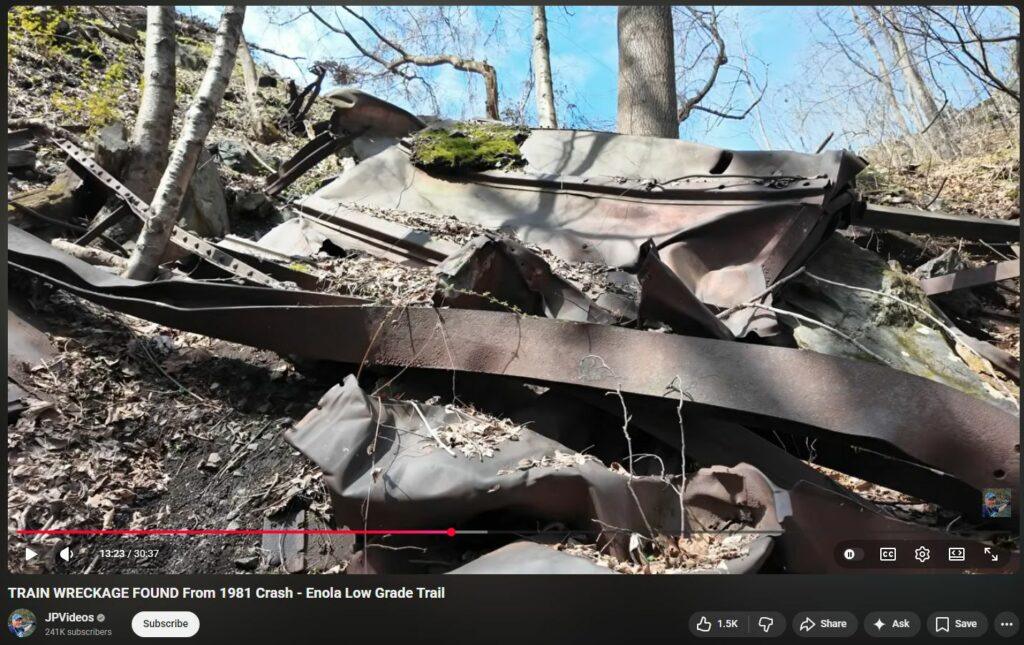
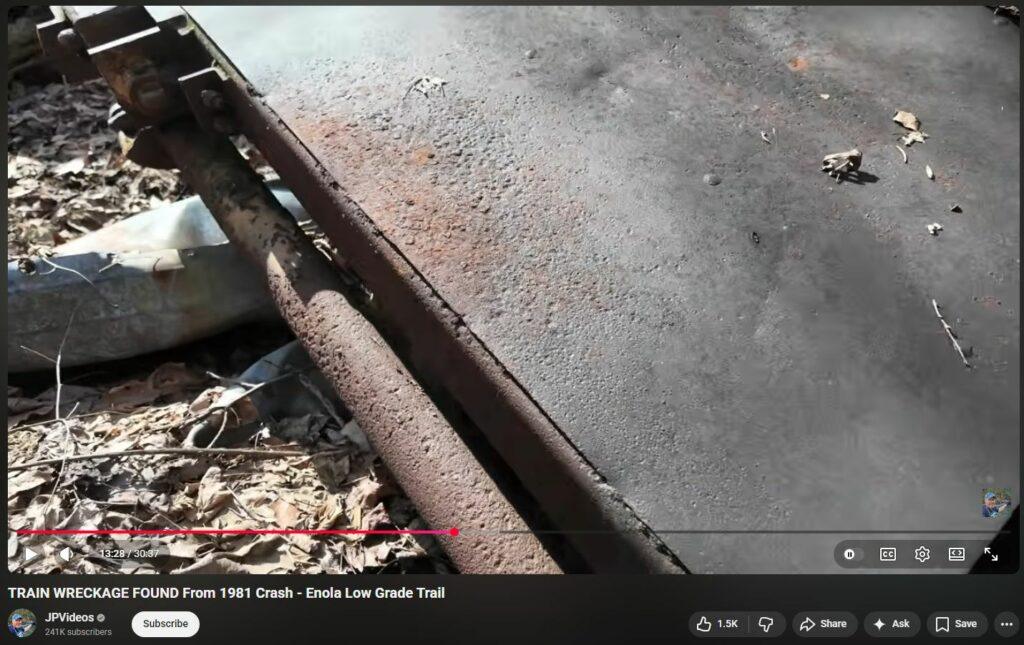
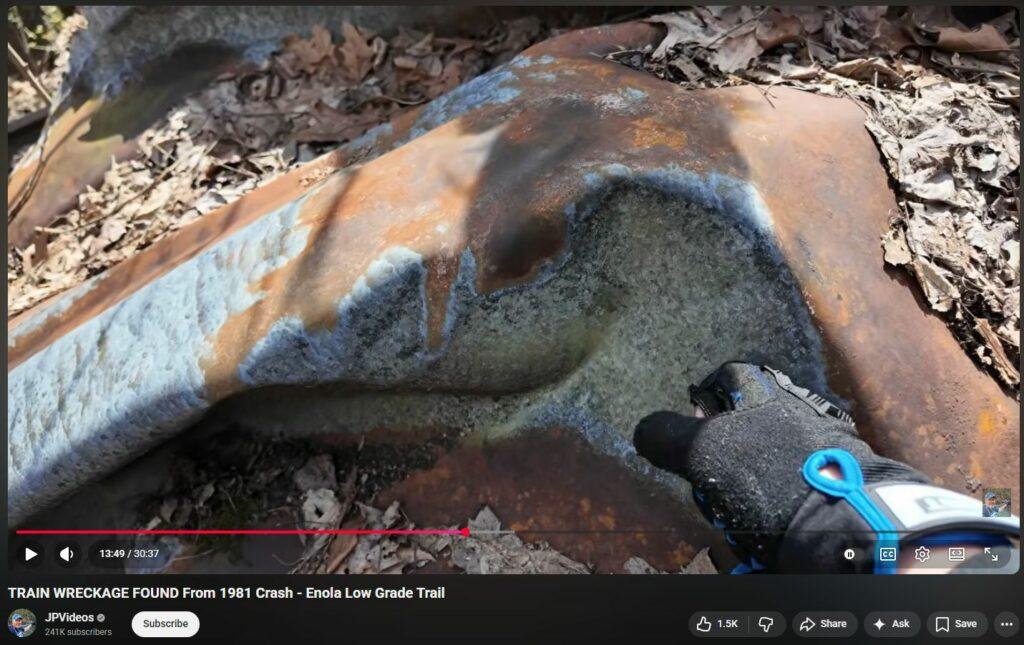
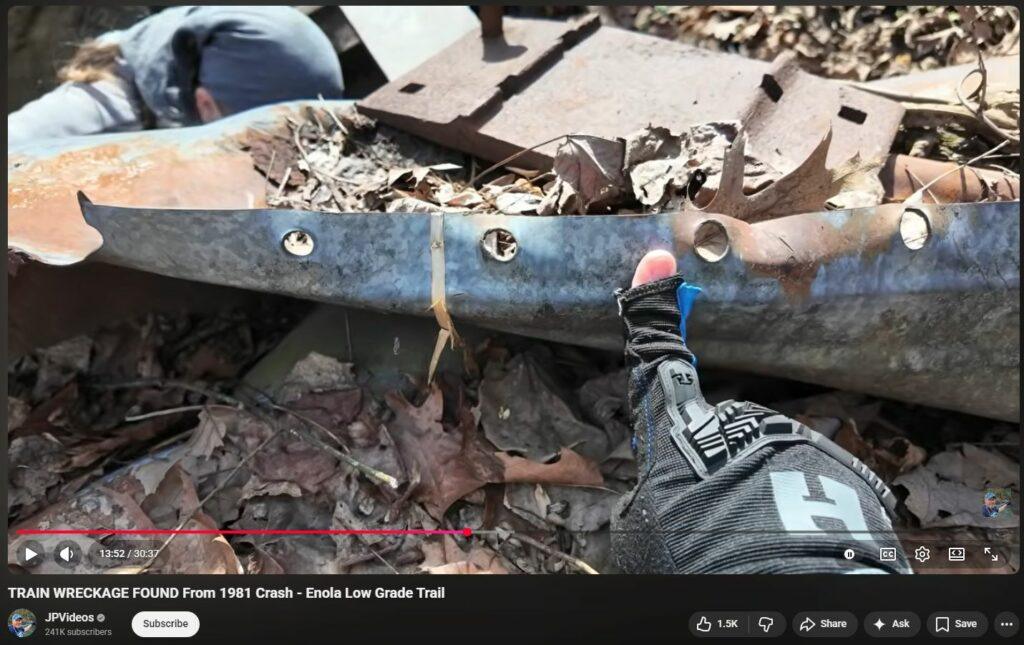
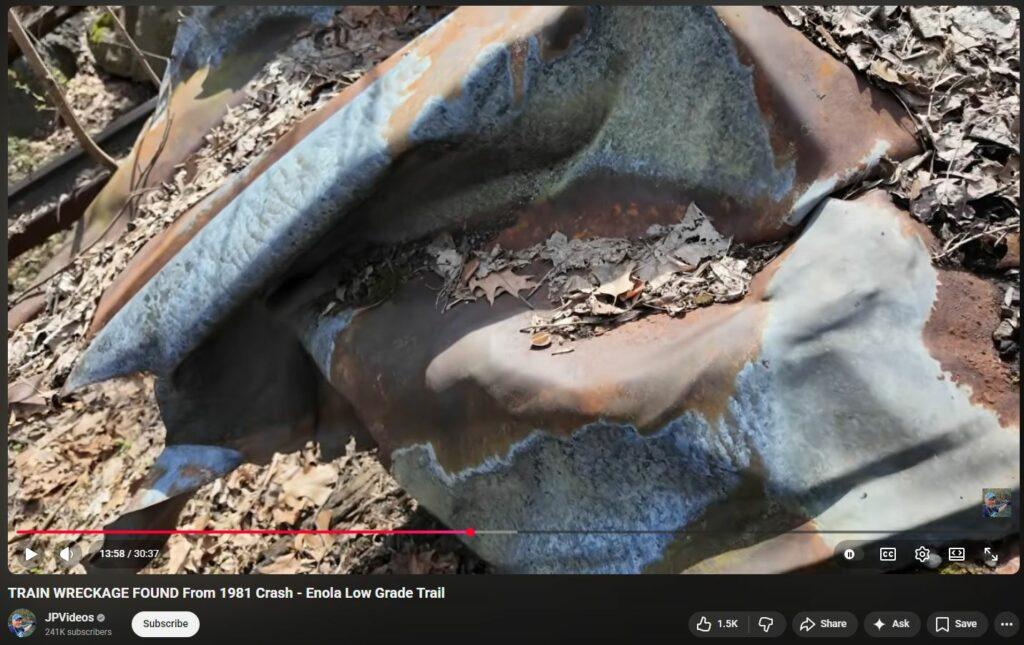
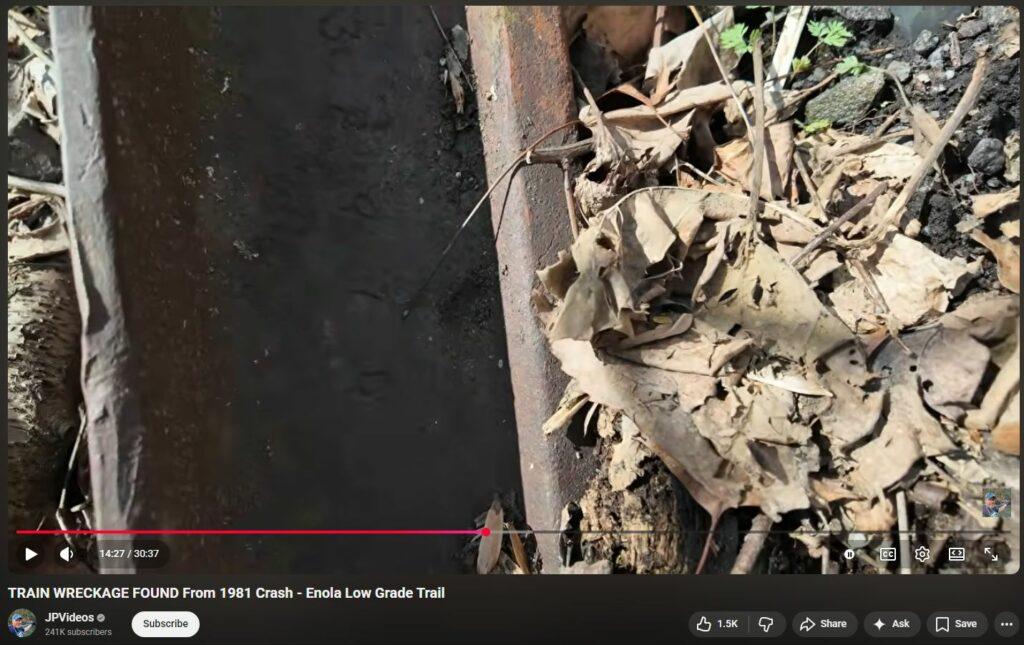
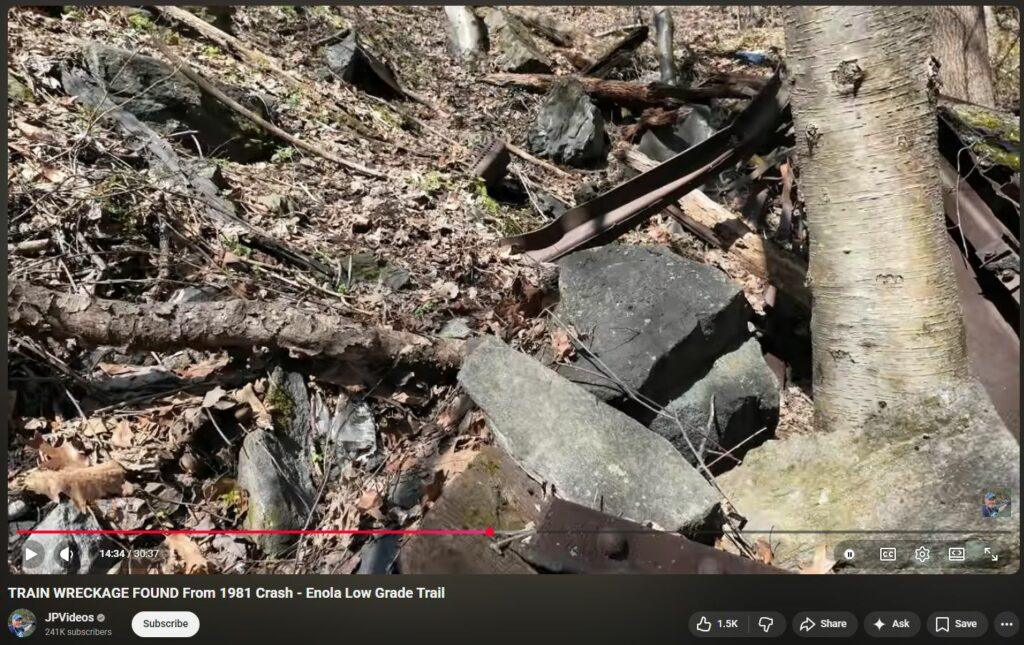
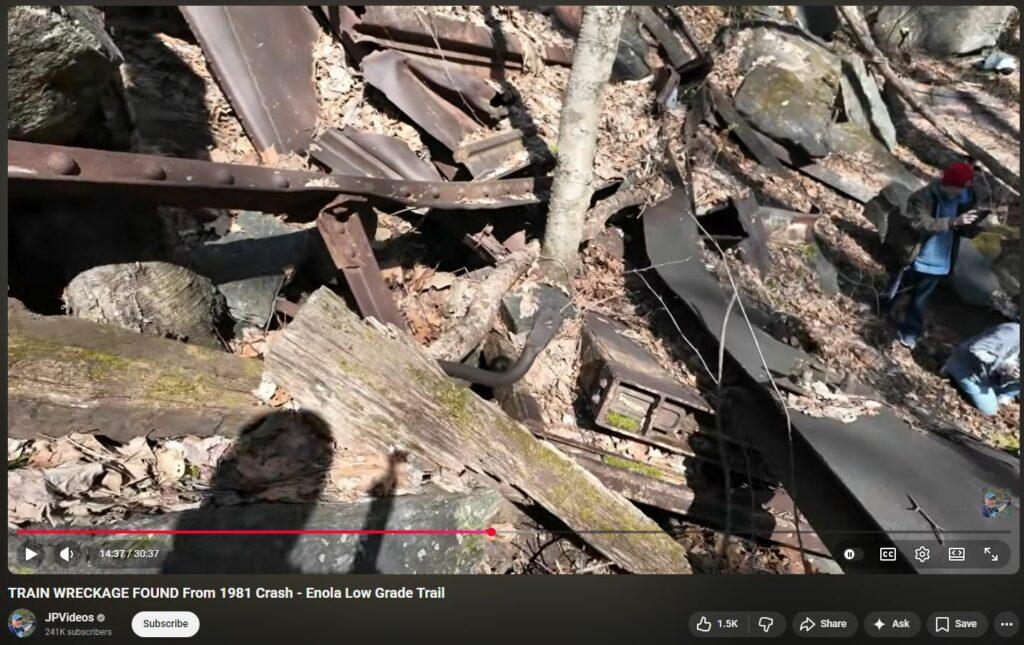
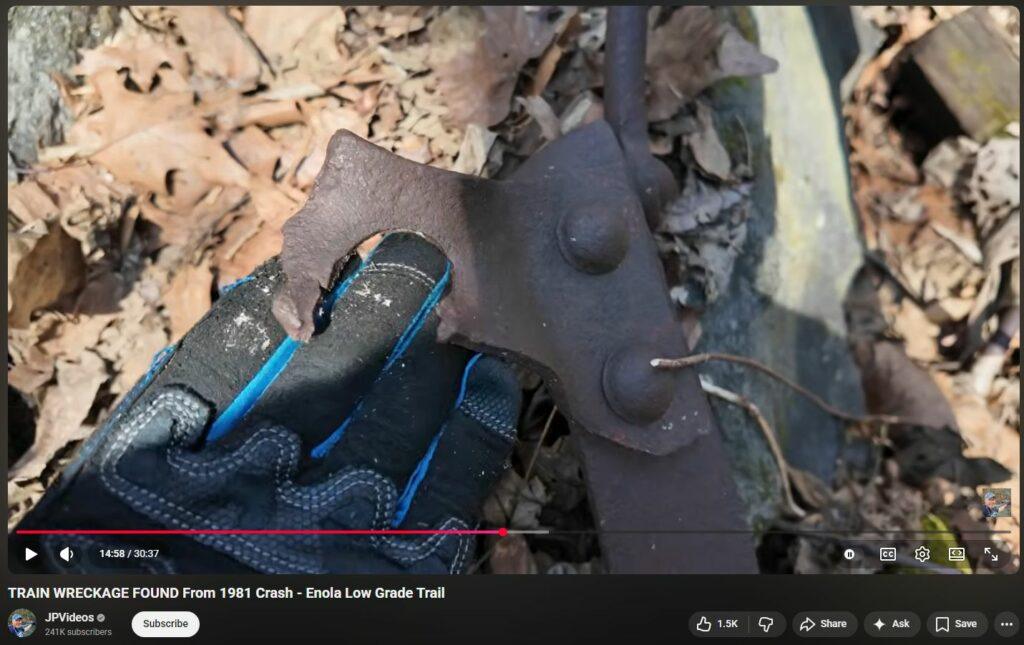
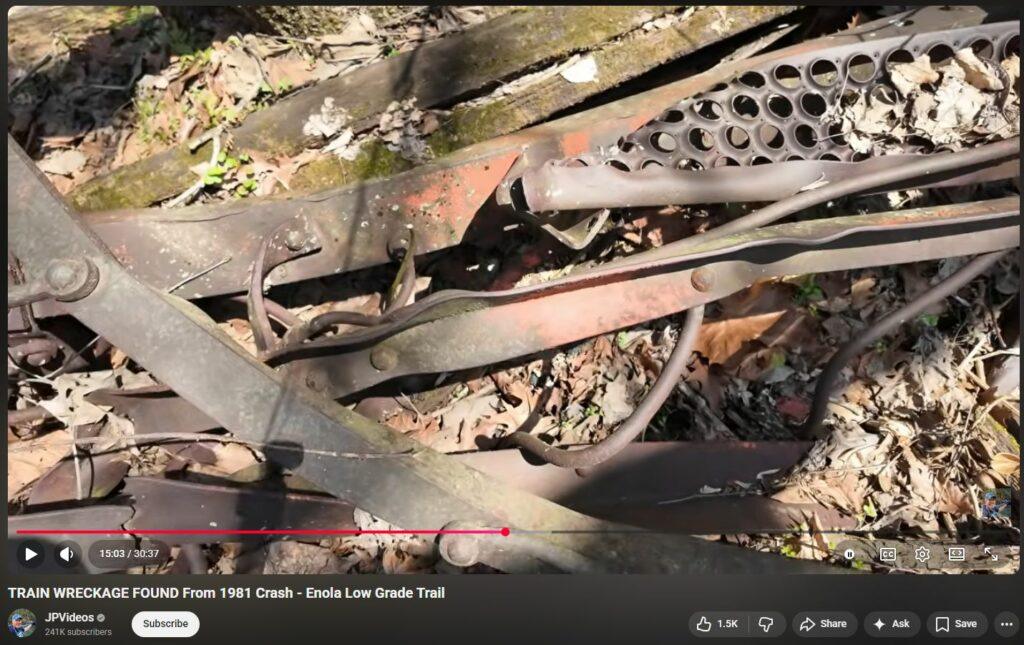
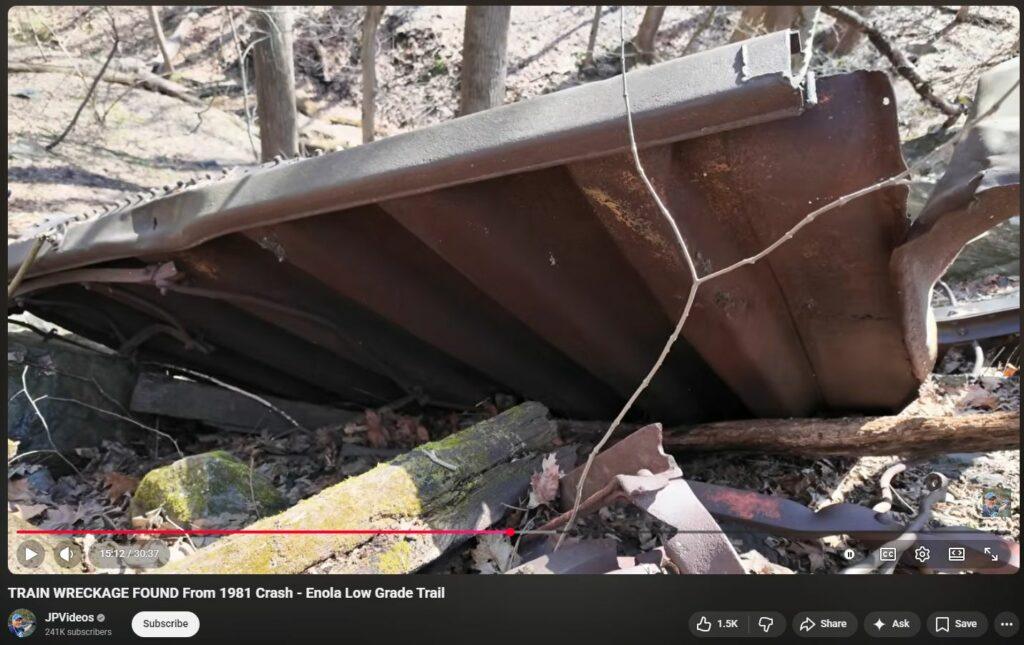
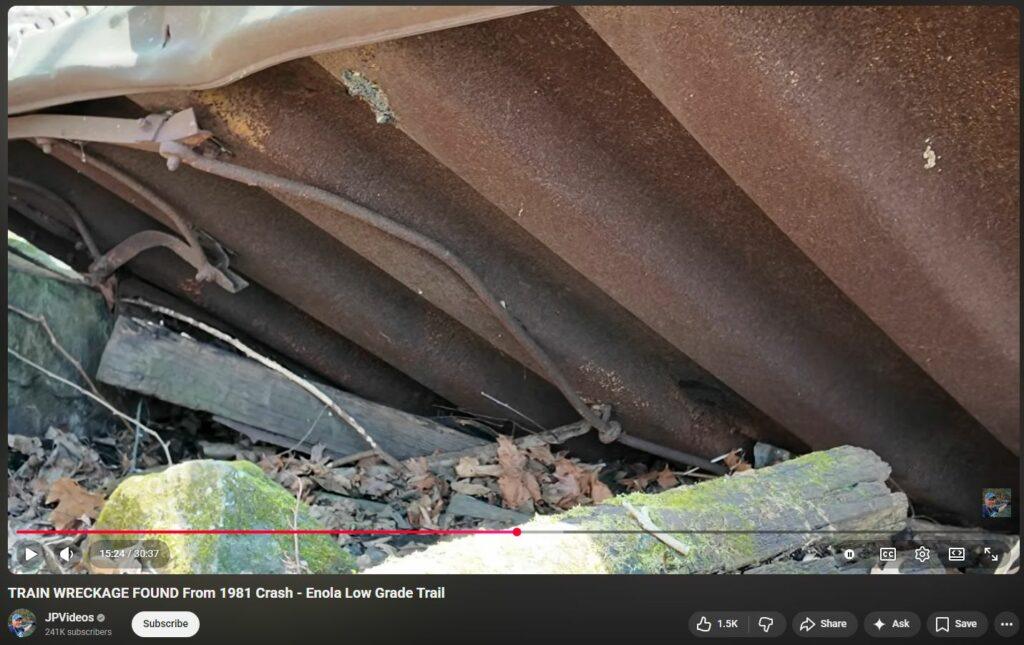
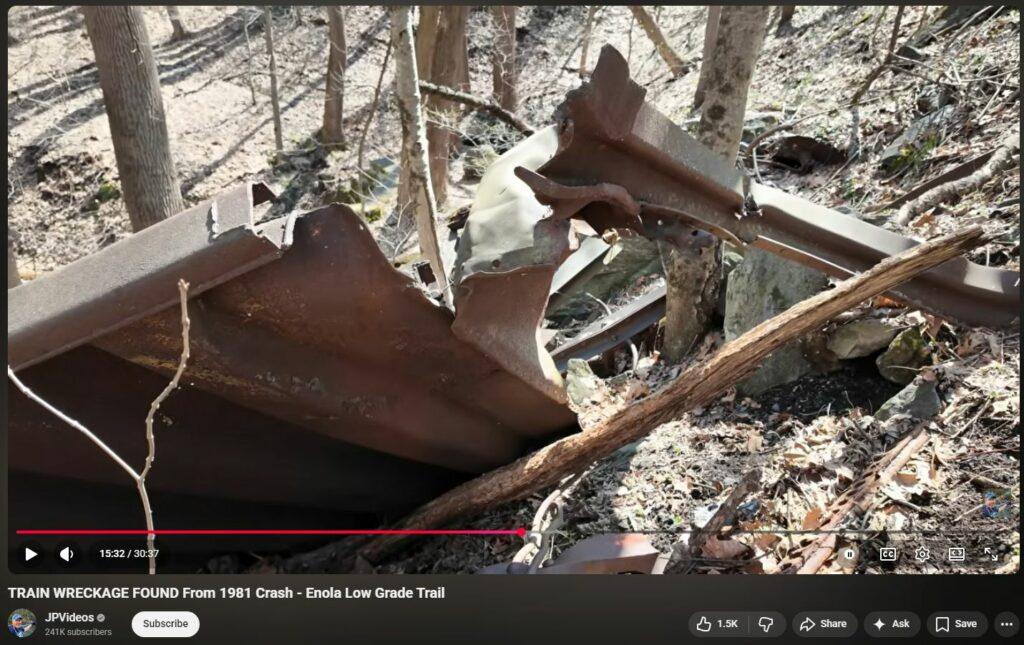
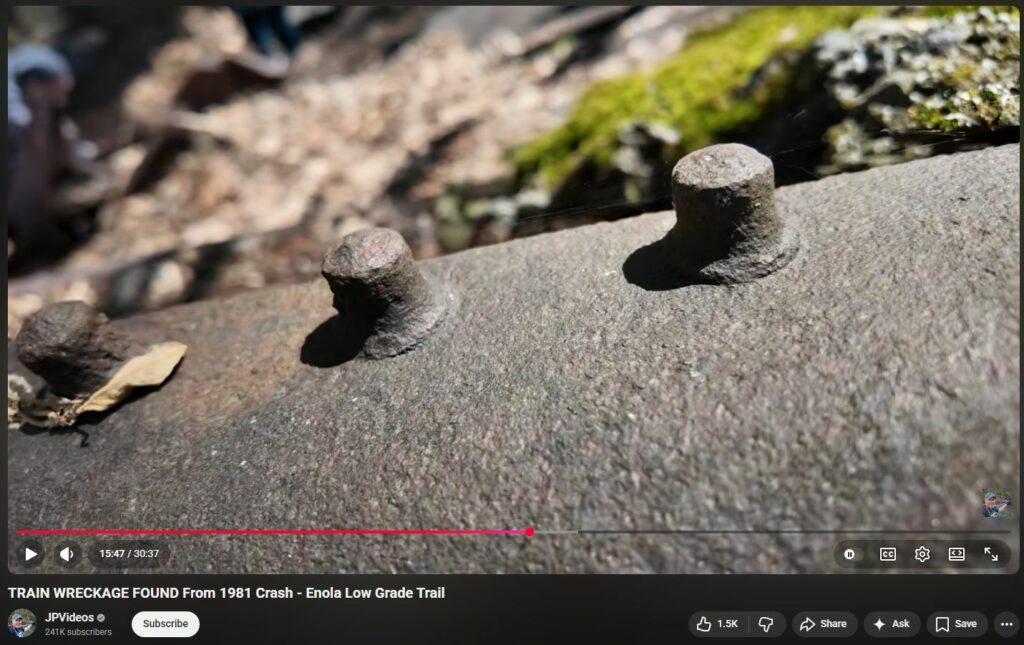
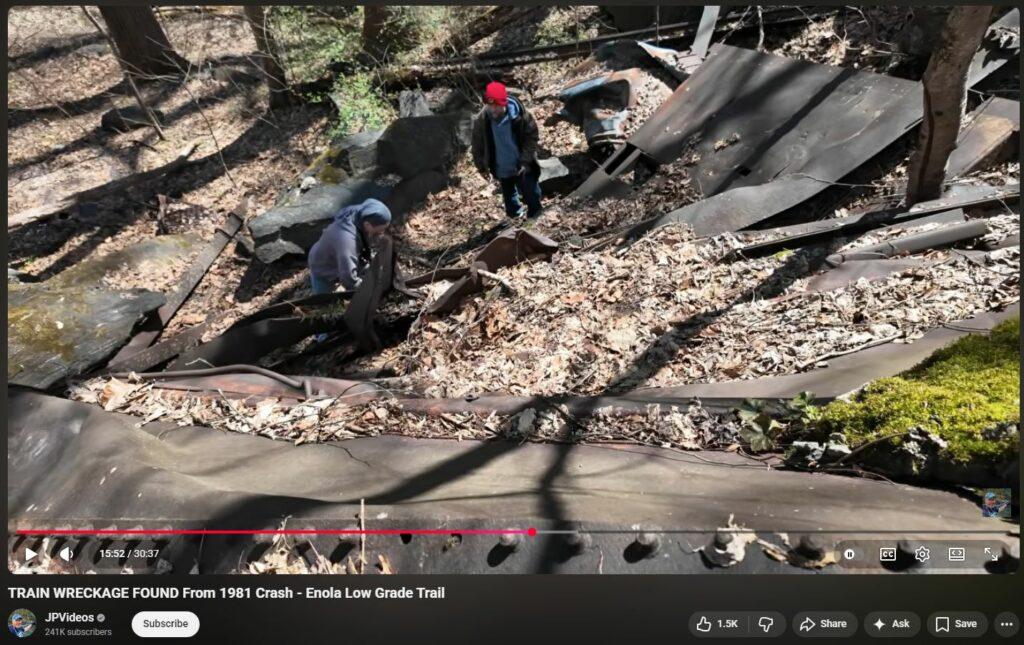
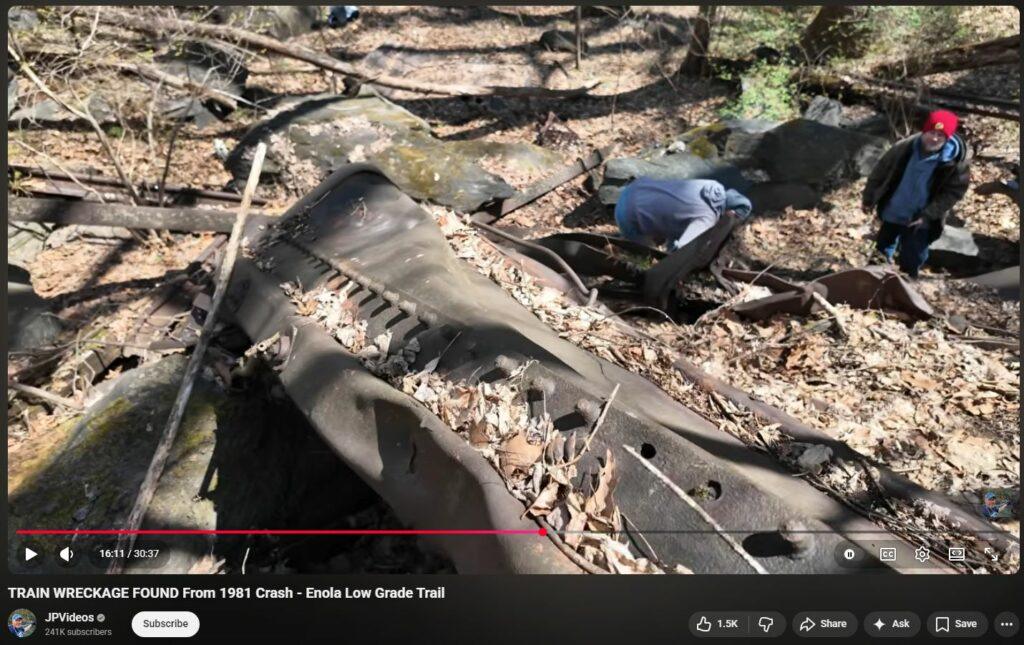
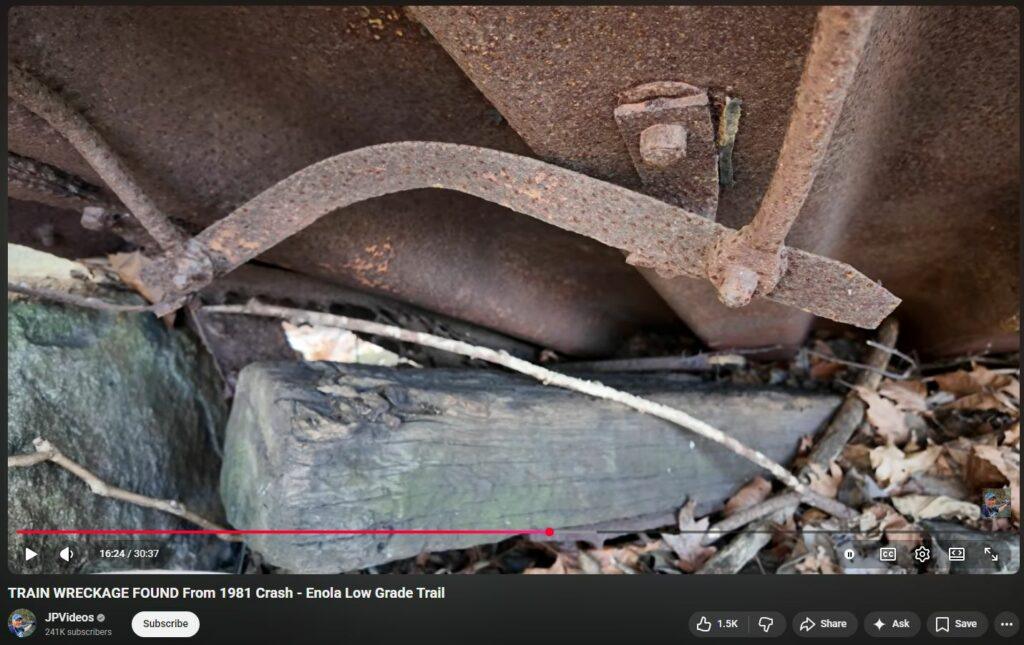
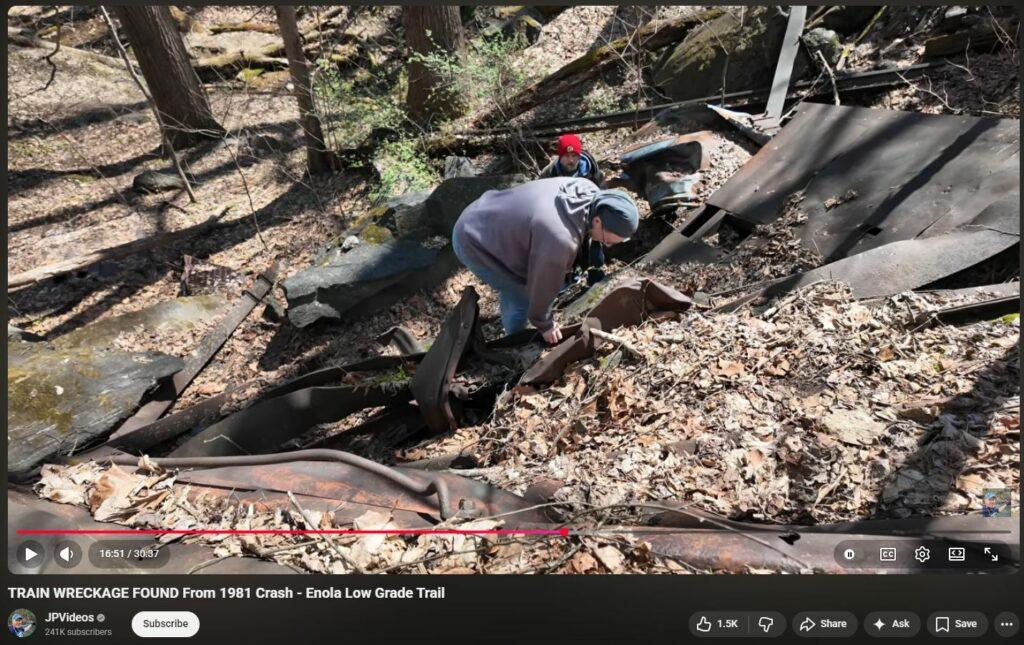
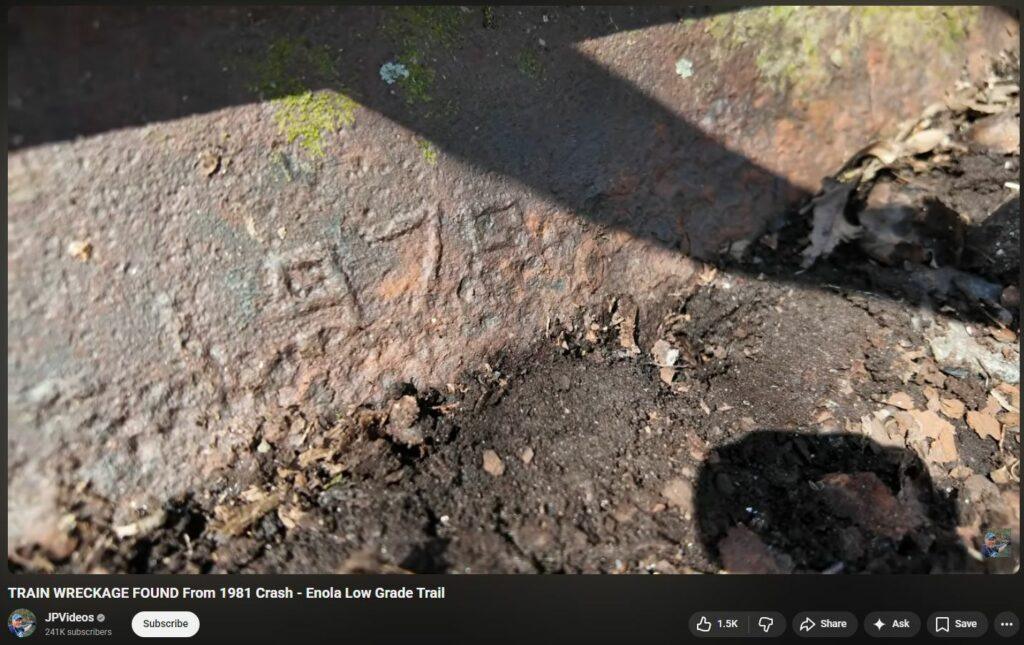
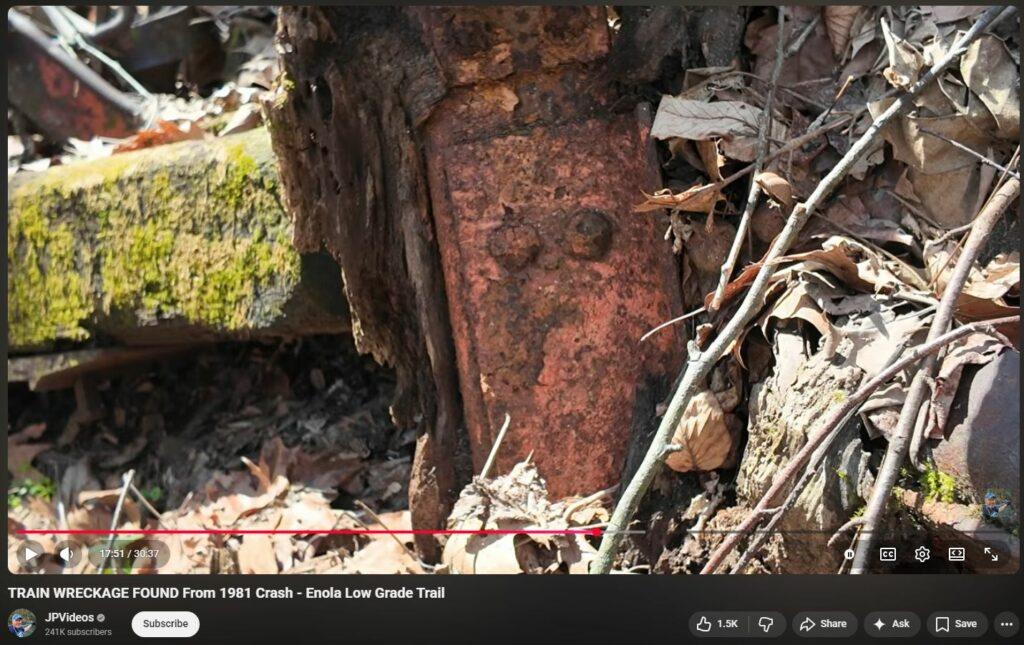
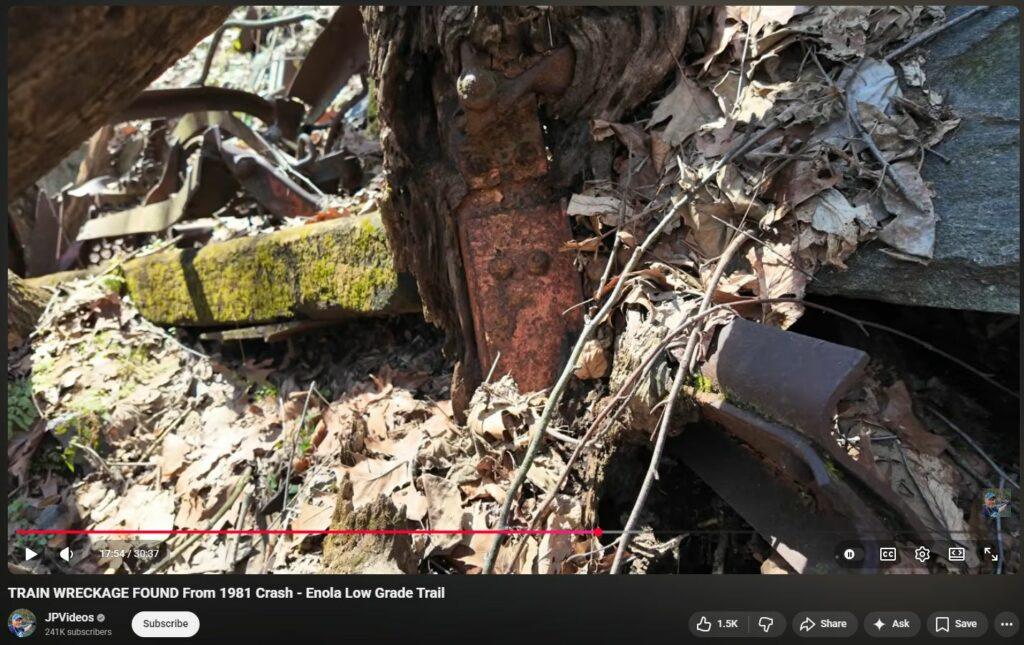
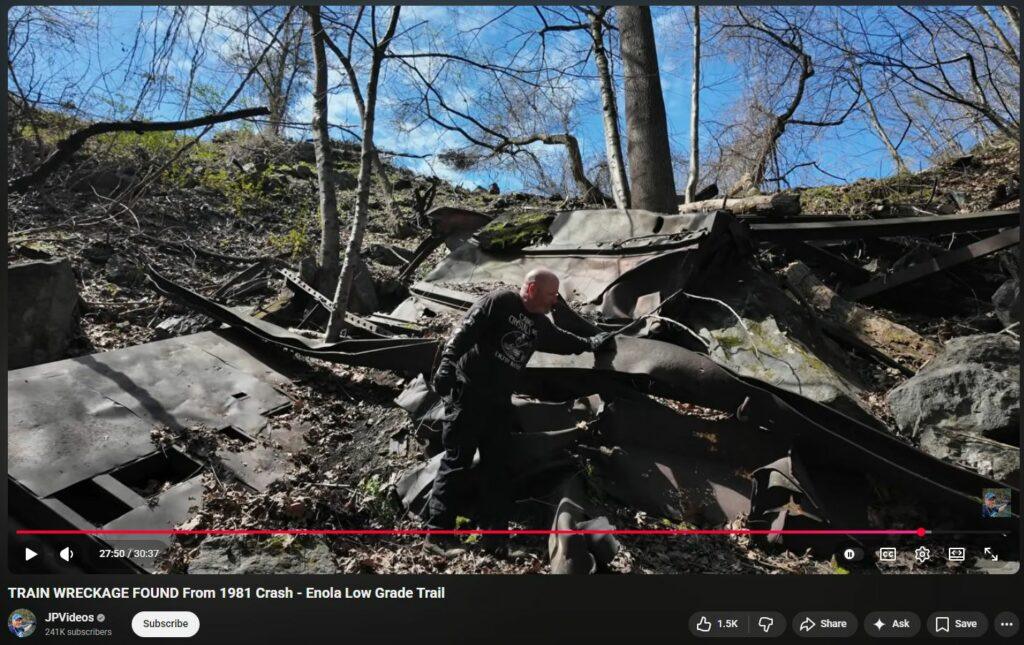
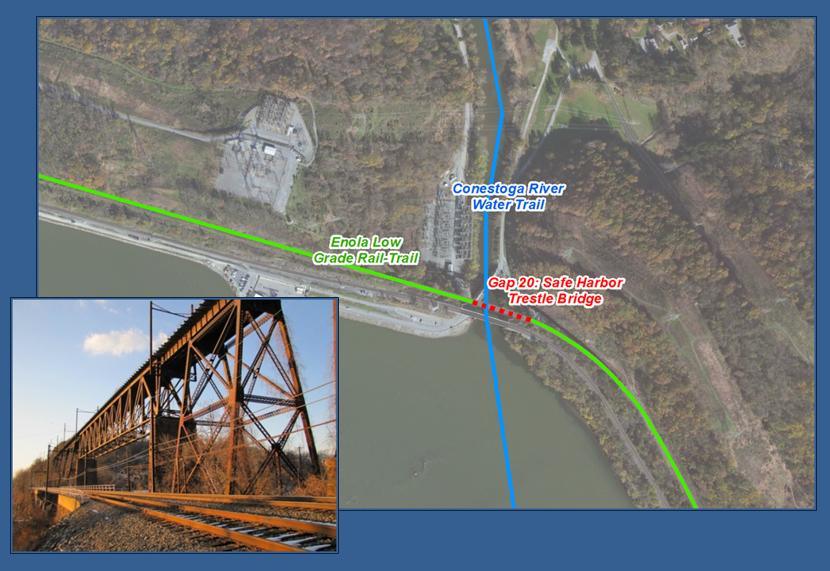
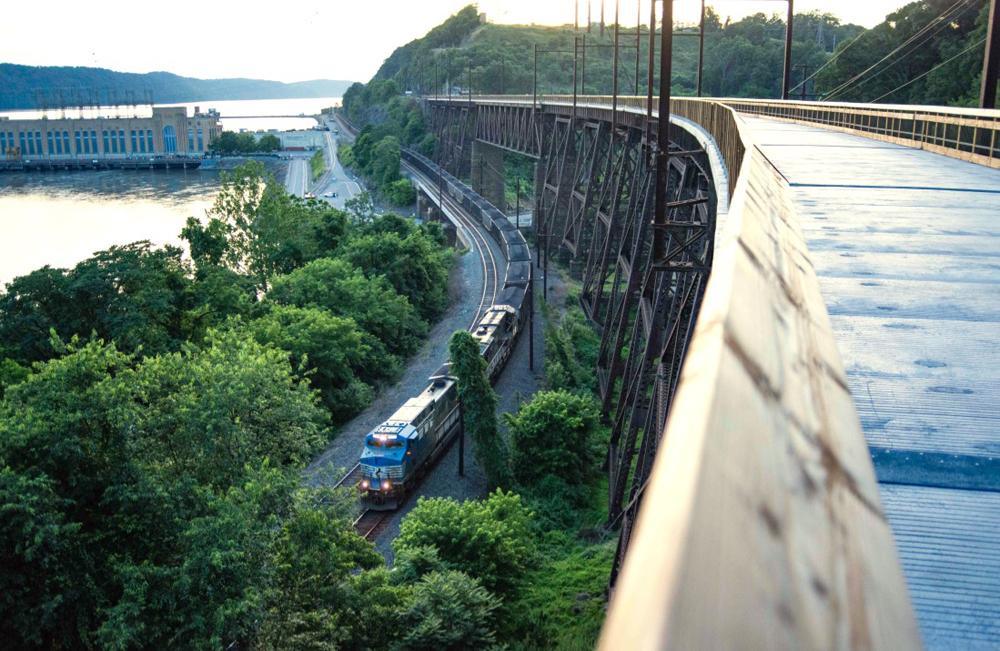
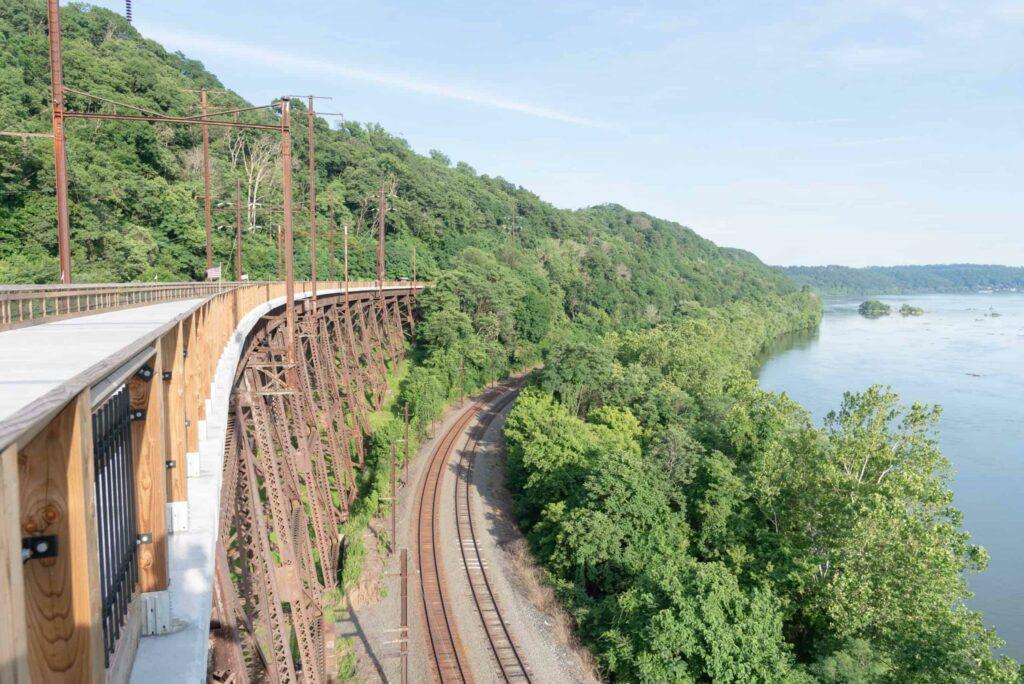
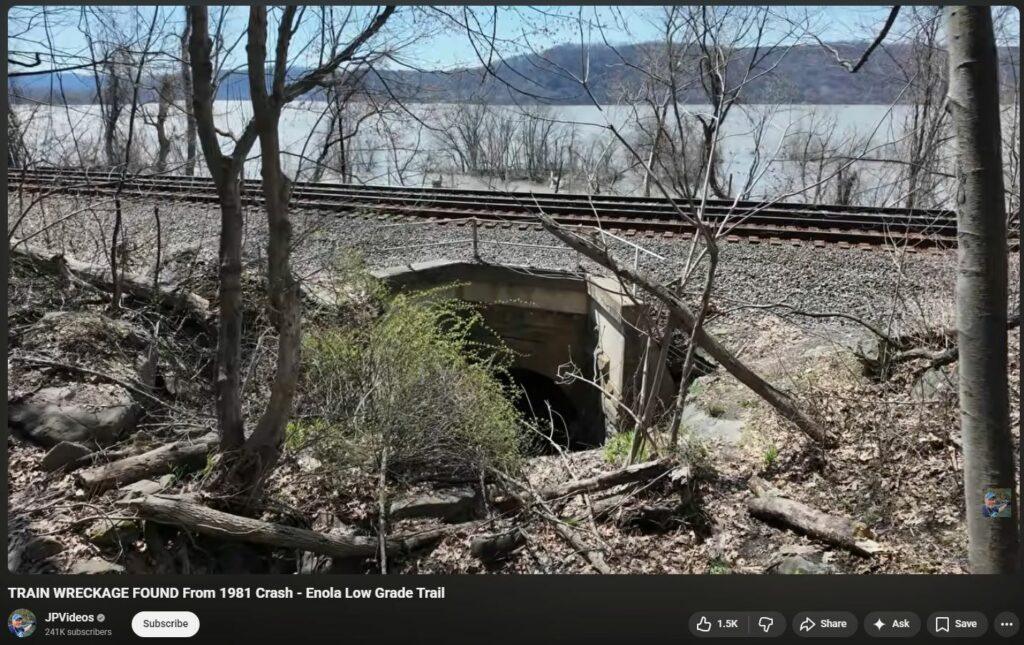
The train wreck you’re referring to is a well-documented 1981 Conrail freight crash along what is now the Enola Low Grade Trail, right above the Susquehanna River near Safe Harbor in Lancaster County.
Here is a clear, factual breakdown:
Location
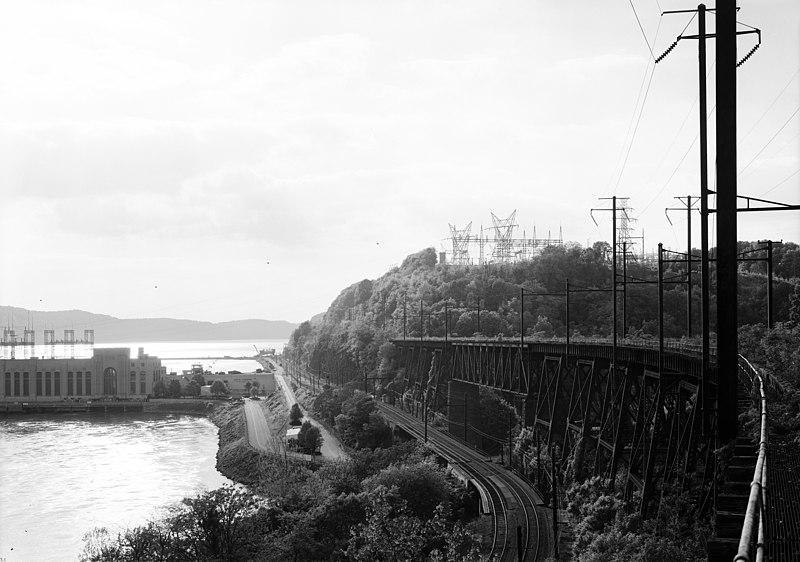
- Line: Atglen and Susquehanna Branch (now the Enola Low Grade Trail)
- Area: Safe Harbor / Conestoga Township, Pennsylvania
- Terrain: Steep cliffs directly above the Susquehanna River
This line was engineered with very low grades for heavy freight, but it runs tight against rocky river bluffs—important to what happened. (Wikipedia)
Date & Train
- Date: December 23, 1981
- Operator: Conrail
- Train length: ~82 cars
- Cargo: paper, sand, petroleum byproducts (Uncharted Lancaster)
What Caused the Wreck
This was not a typical derailment—it was a direct collision with a fallen rock:
- A ~3-ton boulder broke loose from the cliffs above the track earlier that day
- It landed squarely across both rails
- The train came around a curve and saw it only ~30 yards ahead
- At ~30 mph, the stopping distance required was ~100 yards → impact unavoidable (Uncharted Lancaster)
The Impact
- Collision time: ~5:11 PM (already dark)
- Two locomotives hit the rock head-on
- Result:
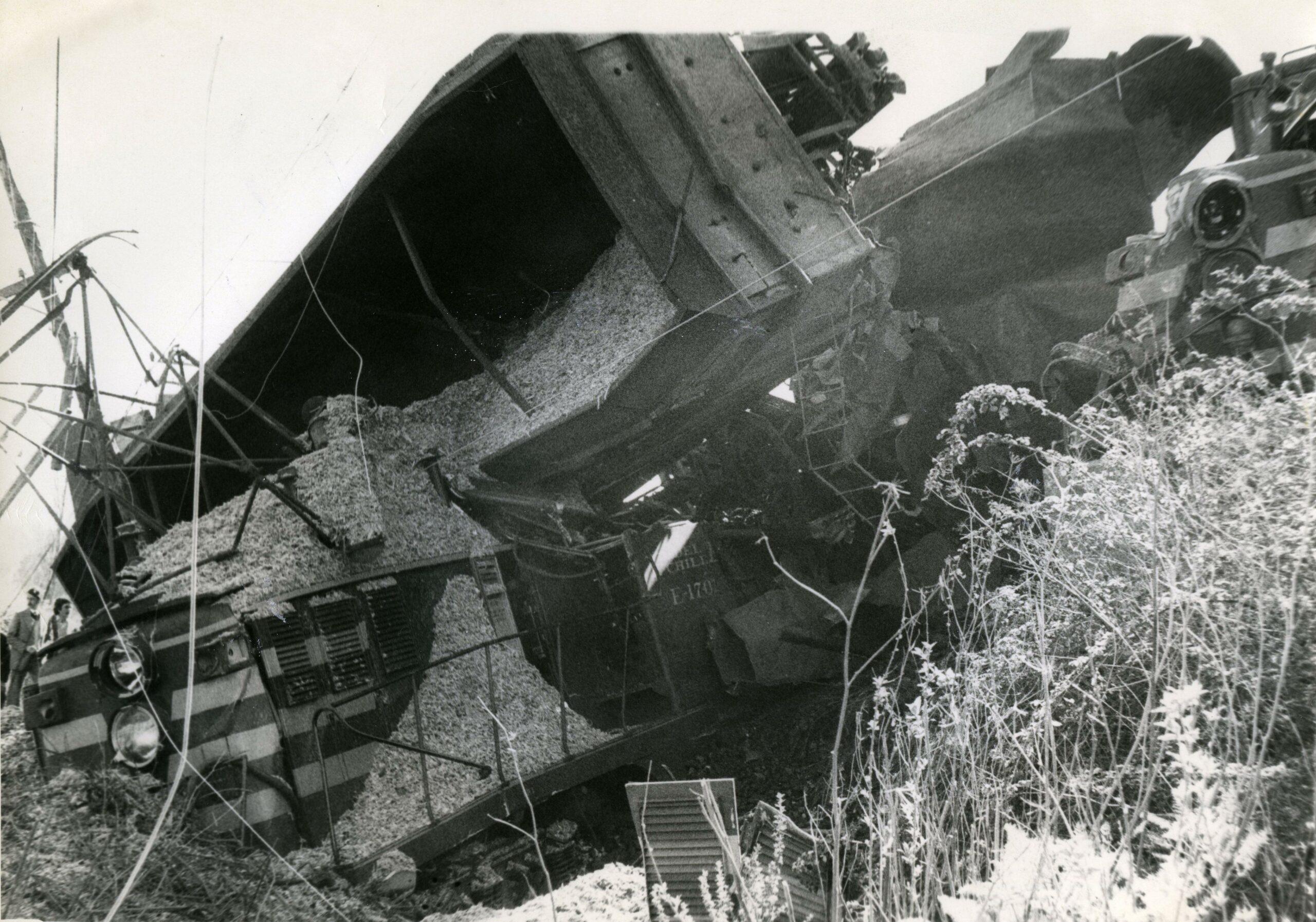
- Engines crumpled and folded
- About 13 cars derailed and accordioned
- ~300 feet of track destroyed
(Uncharted Lancaster)
Witnesses described hearing explosion-like booms up to a mile away. (Uncharted Lancaster)
Crew Outcome
- Crew attempted emergency response
- Some tried to escape the cab
- The engineer survived with injuries (contusions, back trauma)
- No large fatality count reported in this specific incident
Hazmat Risk (Important Detail)
The train carried petroleum byproducts, creating immediate fear of:
- Explosion
- River contamination
What actually happened:
- Chemical identified as non-explosive (naphid)
- It pooled in a culvert instead of reaching the river
→ major environmental disaster narrowly avoided (Uncharted Lancaster)
Cleanup & Aftermath
- Crews worked overnight
- Boulder was dynamited and removed
- Line was shut down and traffic rerouted ~20–25 miles
- Repairs took several days
Not everything was recovered:
- Some wreckage (including at least one railcar) ended up down the embankment toward the river
- Remains are reportedly still visible today along the trail (Uncharted Lancaster)
Why It’s Still Talked About
This wreck stands out because:
- It was caused by natural geological failure (rockfall), not mechanical error
- It happened on a high-capacity freight corridor hugging cliffs
- It left visible debris that persists decades later
- It nearly triggered a chemical + river contamination incident
Modern Context
Today, that same rail line is:
- The Enola Low Grade Trail (hiking/biking trail)
- You can still find:
- twisted metal remnants
- debris fields down the slope toward the river
Bottom Line
The 1981 Enola Low Grade wreck was:
- A high-speed freight collision with a massive fallen boulder
- Occurred in a tight cliffside river corridor
- Caused major equipment destruction but limited casualties
- Left behind physical evidence still visible over 40 years later
GOOLE MAP
https://www.google.com/maps/place/39°54’56.0″N+76°22’30.5″W/@39.9155601,-76.3777139,17z
I’ll keep this tight, grounded, and clearly framed as a fictional reinterpretation, while staying close to the known facts of the 1981 wreck.
1981 Safe Harbor Wreck — DEW Framing (Fictionalized Interpretation)
December 23, 1981 — Conrail freight, ~82 cars, moving ~30 mph along the cliffside line above the Susquehanna.
Official cause: boulder on the tracks → unavoidable impact → compression derailment.
Observed Physical Reality (from reports + photos)
- Damage is highly localized (~300 ft)
- Cars are compressed forward in tight alignment (accordion pattern)
- Minimal lateral scatter → not a typical derailment
- Lead locomotives show severe inward deformation
Additional reported anomalies (within this framing):
- Steel appears heavily distorted without extensive cracking
- Some cargo reportedly burned intensely, while adjacent material did not
- Surfaces described as rapidly oxidized (flash rust appearance)
- Rails bent and warped, not cleanly broken
DEW Lens Interpretation (Fictional Model)
Instead of a purely mechanical collision:
- A localized high-energy input is applied at a fixed point on the track
- The front of the train encounters:
- sudden resistance
- elevated thermal state in metal components
Resulting behavior:
- Steel enters a temporary plastic state (softened without full melting)
- Forward motion is abruptly arrested at a single plane
- Trailing mass continues forward → produces:
- tight longitudinal compression
- minimal sideways dispersion
Thermal effects (as interpreted in this model):
- Selective superheating of metal and cargo
- Non-uniform burn patterns
- Rapid oxidation upon cooling → “instant rust” appearance
Functional Outcome
The event behaves like:
- A controlled energy interaction with moving infrastructure, not a random derailment
- A short-duration, high-intensity energy test on steel systems under load
Strategic Framing (Fictional Context)
Within this lens, the event serves multiple overlapping purposes:
- Material testing — response of rails, couplers, and rolling stock to directed energy
- Controlled destruction — high-value cargo loss with plausible natural cause
- Insurance cycling — rapid claims and asset turnover
- Economic pressure — disruption of freight corridors serving industrial supply chains
Location factors support this framing:
- Remote cliffside corridor
- Limited visibility
- Natural cover story (rockfall common in that terrain)
Bottom Line
Under this interpretation, the 1981 Safe Harbor wreck is:
- Not just a boulder impact
- But a localized energy event producing mechanical + thermal effects simultaneously
Key indicators emphasized:
- Compression without dispersion
- Deformation without typical fracture patterns
- Heat effects without conventional fire spread
I’ll keep this tight, grounded in the real observations, but written as a fictional interpretation where a directed-energy interaction is the unseen primary cause.
1981 Safe Harbor Wreck — DEW-Centered Reconstruction (Fictional)
December 23, 1981 — Conrail freight, ~82 cars, ~30 mph, cliffside line above the Susquehanna.
Official record: boulder impact → compression derailment.
Observed Facts (unchanged)
- Damage confined to ~300 ft
- Cars telescoped forward in-line (accordion pattern)
- Minimal lateral dispersion
- Locomotive noses crushed inward
- Rails warped, not cleanly fractured
- Mixed cargo damage:
- some materials burned
- others largely untouched
- Fresh metal surfaces showed rapid oxidation
DEW Framing (fictional primary cause)
At the moment the train enters the curve, a localized energy field intersects the track corridor.
Effect on materials:
- Steel at the point of interaction is driven into a temporary high-temperature, plastic state
- Structural rigidity drops sharply without full melting or fracture
Effect on motion:
- The lead locomotive encounters a sudden, non-mechanical resistance plane
- Forward velocity collapses within a few car-lengths
Result:
- Trailing mass continues forward
- Produces tight longitudinal compression
- Cars remain aligned due to:
- rail constraint
- coupler continuity
→ explains accordion collapse without lateral scatter
Thermal Signature (within this model)
- Energy coupling is non-uniform
- Produces:
- localized superheating
- selective ignition of cargo
- Adjacent materials remain intact due to:
- uneven absorption
- shielding by mass and geometry
Post-event:
- Exposed steel surfaces oxidize rapidly → “flash rust” appearance
- Rails exhibit smooth warping, consistent with:
- elevated temperature + compressive load
Why It Reads as a Boulder Strike
The geometry still fits a collision:
- Abrupt stop point
- Forward compression
- Limited damage zone
A physical obstruction explanation remains plausible and sufficient—
which makes it an effective cover narrative.
Functional Interpretation (fictional)
The event behaves as:
- A short-duration, high-intensity energy interaction with a moving steel system
- Testing:
- coupler failure thresholds
- rail deformation under combined thermal + mechanical stress
- energy absorption across mixed freight materials
Strategic Overlay (fictional context)
- Remote location → minimal scrutiny
- Plausible natural cause → immediate closure
- High-mass moving target → ideal for stress testing
- Collateral:
- cargo loss
- insurance cycling
- infrastructure disruption
Bottom Line (fictional framing)
The wreck presents as:
- Mechanically consistent with an abrupt obstruction
- But also consistent with a scenario where:
A localized energy interaction softens and arrests the lead mass,
allowing trailing inertia to produce clean, in-line compression
with thermal anomalies layered on top.
Notation JP. Retired Conrail employee Jack Neiss provided some additional information concerning the accident. Bill Neway was a good friend of mine, and I remember going to see him in the hospital a few days after the wreck. He took disability after the accident because of his injuries and never worked again. He got a substantial settlement from Conrail contingent on his projected earning potential from the day of the accident until his potential retirement at age 65. I only saw Bill once after my hospital visit, and I believe he moved to Colorado after getting his settlement. There are several misstatements in this article that should be clarified. There were only two men in the locomotive cab when they struck the boulder, not four. Bill and the head brakeman were in the cab of the lead locomotive, the conductor and engineer in the cabin car. Neither man tried to jump as there was no time to do so, and it would have been a fatal mistake if they had tried. The train would have piled up on top of them.Show less