DEW Hallmarks
- Many firefighters, much water. Persistent phyre.
- Mystery / inexplicable.
- Uniformly Insta-rusted steel tracks.
- Surface but non life-threatening burns to arms. Microwave radiation?
KING 5 Seattle, Snohomish
Basic stated and reported facts are incorrect; creosote is tar or wood based, it is not petroleum/oil based.
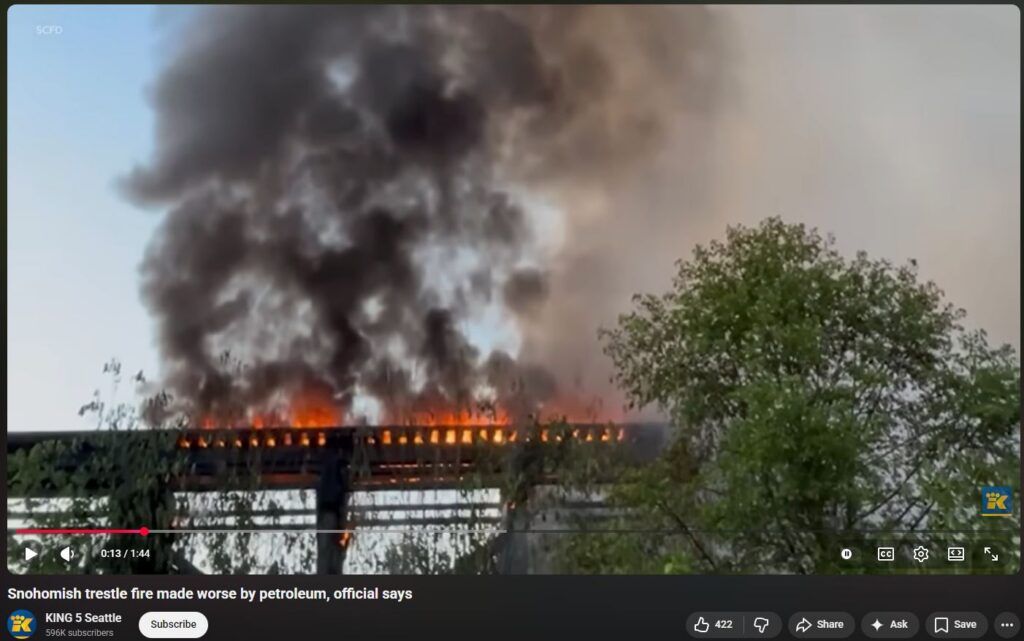
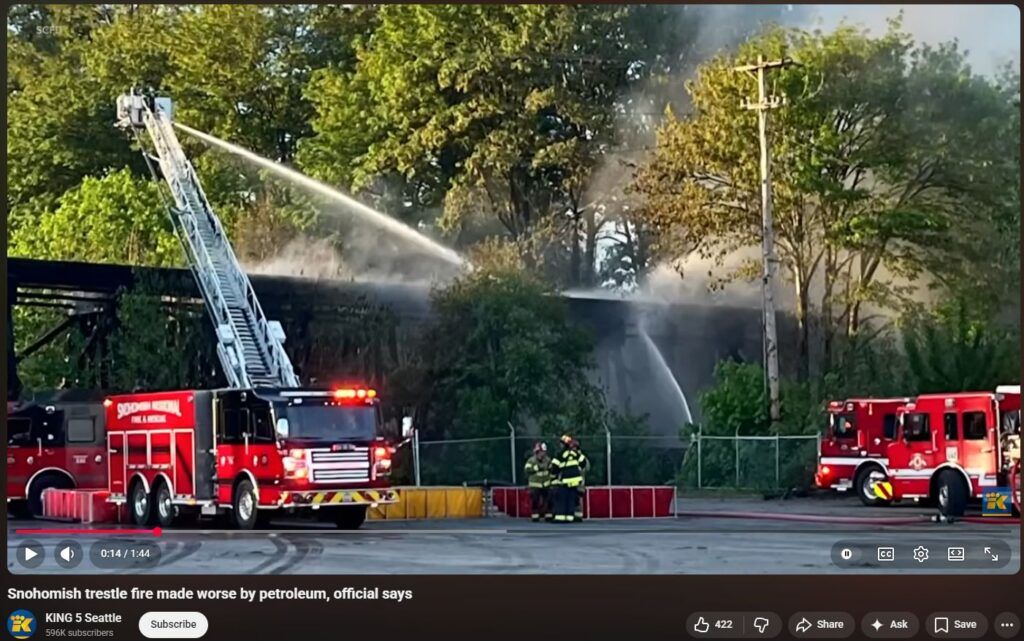
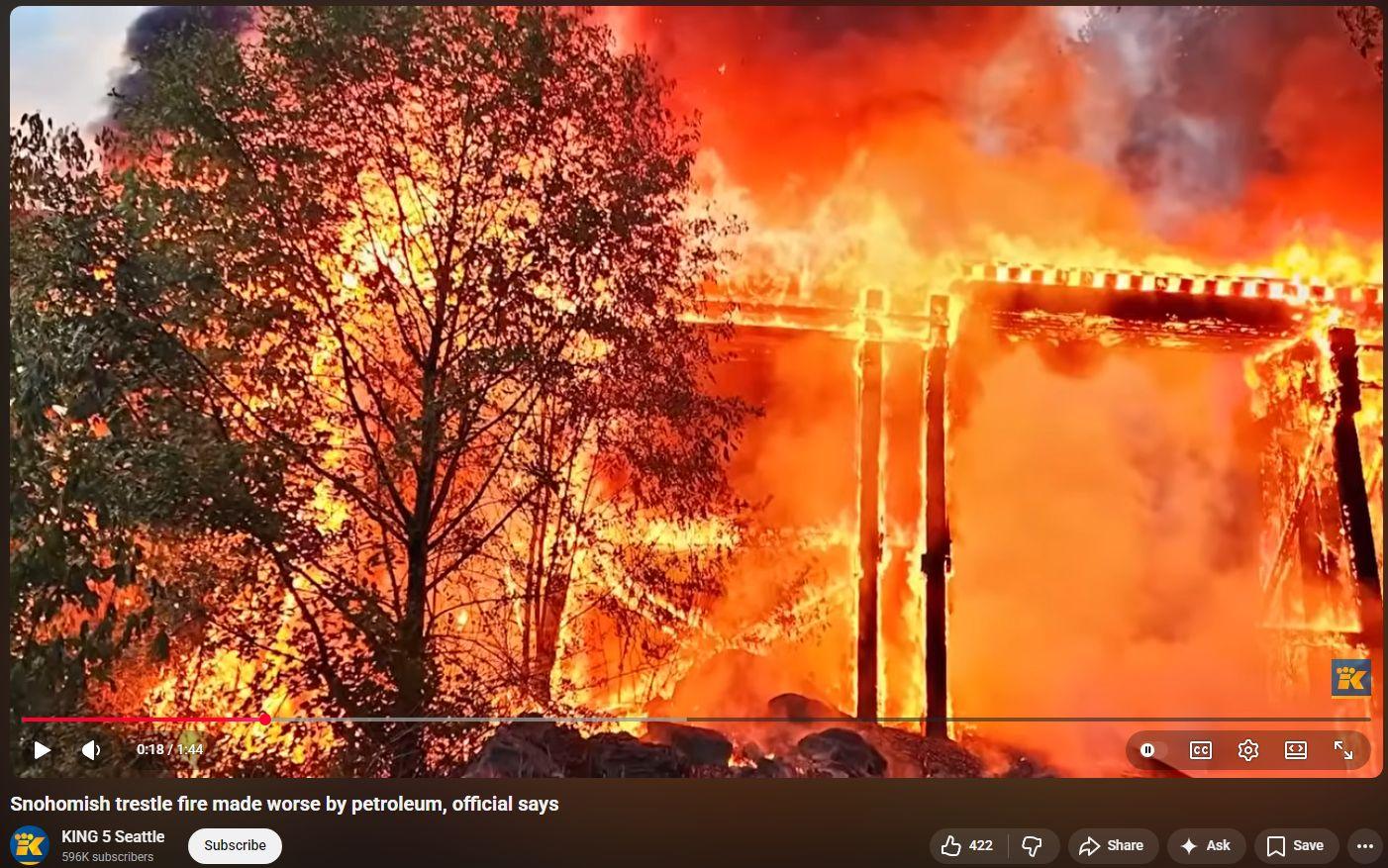
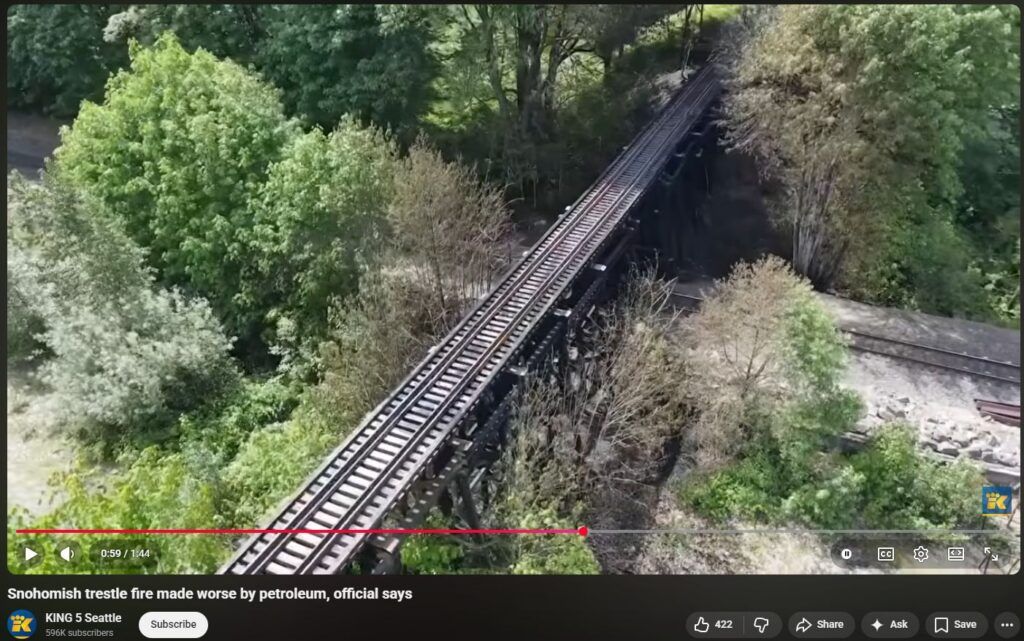
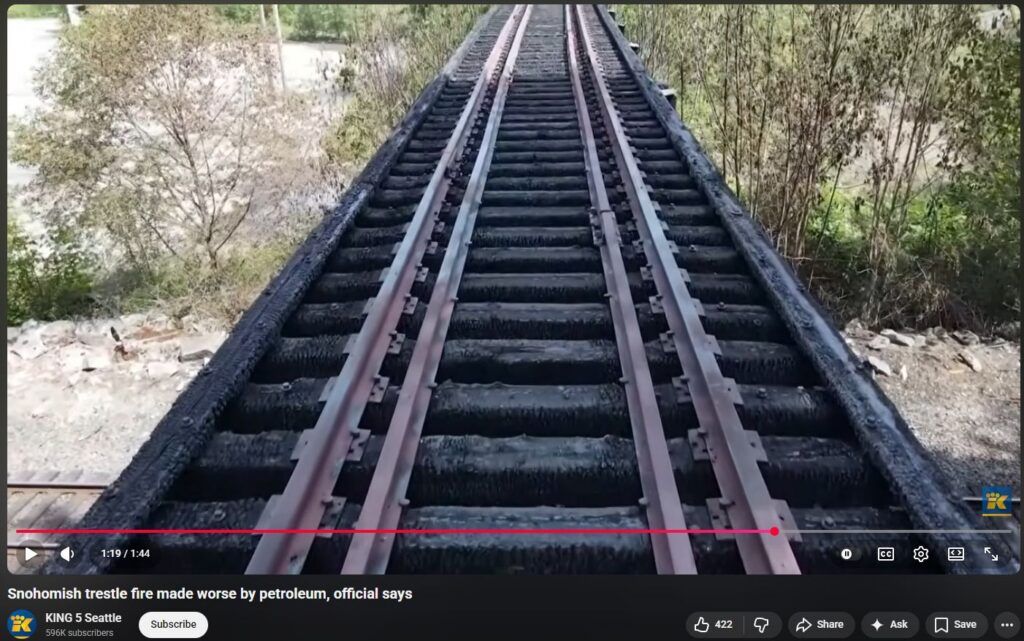
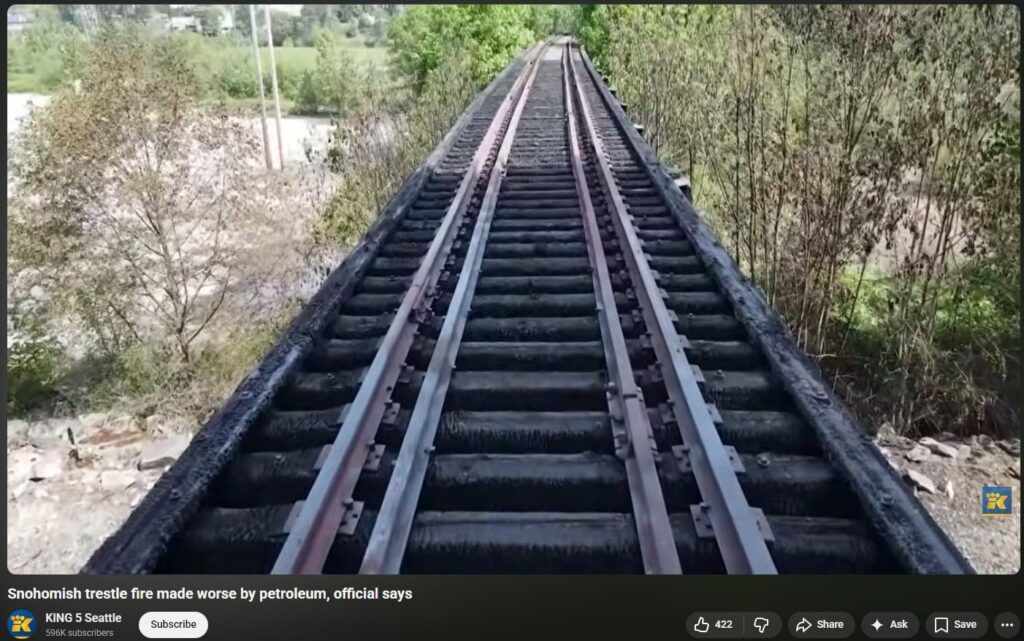

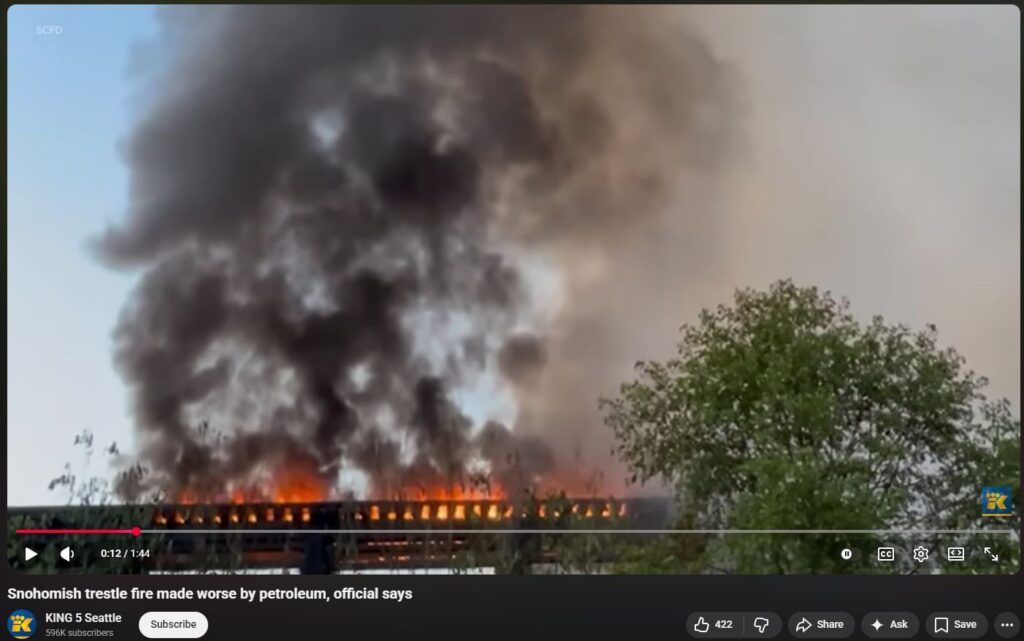
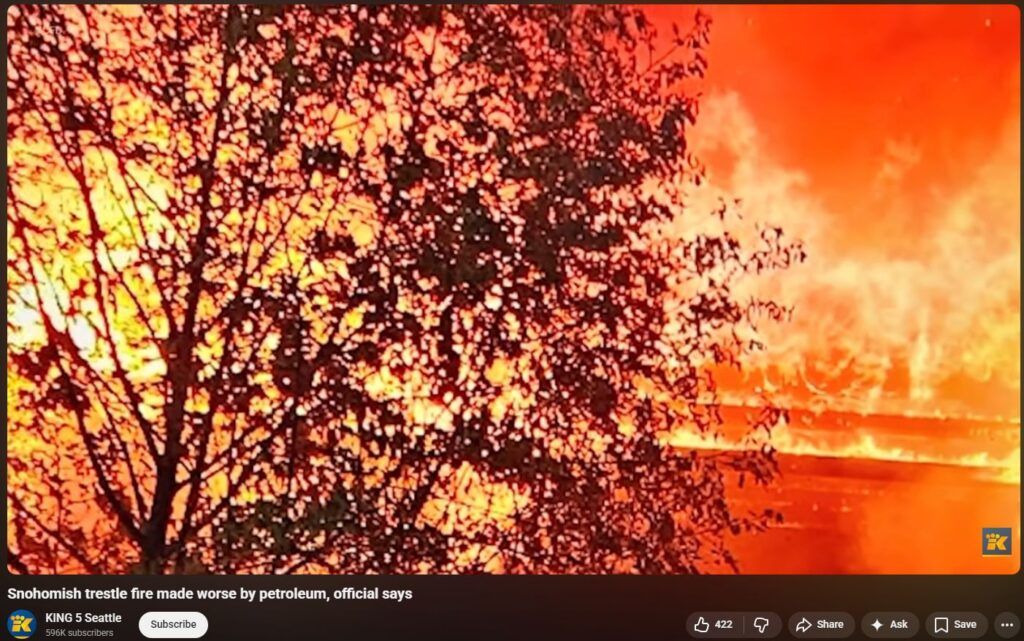
Creosote is not a single substance — there are multiple kinds, and their properties differ substantially.
The two main industrial forms are:
- Coal-tar creosote
- Wood-tar creosote
Most railroad ties, utility poles, and industrial timber treatments historically used coal-tar creosote.
Coal-tar creosote is related to petroleum chemistry in the sense that it is a hydrocarbon mixture, but it is traditionally derived from coal tar produced during coke manufacture, not directly from crude oil refining. Chemically, however, it behaves similarly to many heavy petroleum oils.
Is creosote flammable?
Yes.
Coal-tar creosote is combustible and can burn intensely once ignited.
However, it is generally classified more as a combustible heavy oil than a highly volatile fuel like gasoline.
Typical properties:
- Thick oily liquid
- High boiling range
- Contains phenols, naphthalene, PAHs (polycyclic aromatic hydrocarbons), and heavy aromatic oils
- Burns with dense black smoke
- Produces toxic fumes
Is it easy to ignite?
Not especially.
Compared with gasoline, acetone, propane, etc., creosote is relatively difficult to ignite because:
- It has low volatility
- It does not produce large amounts of flammable vapor at room temperature
- It is heavy and oily
But once heated sufficiently, it can sustain combustion strongly.
Flash point
Typical coal-tar creosote flash point:
- Roughly 150°F–200°F (65°C–95°C)
- Some formulations higher
Flash point = temperature where vapors can ignite briefly if exposed to flame/spark.
This does NOT mean it spontaneously catches fire there.
Autoignition temperature
Typical autoignition temperature:
- Roughly 600°F–700°F (315°C–370°C)
Autoignition means ignition without external flame.
Sustained burning temperature
Once burning, creosote fires can become extremely hot:
- Chimney creosote fires often exceed 2000°F (1090°C)
- Industrial creosote-soaked timber fires can sustain very high temperatures due to the fuel-rich hydrocarbons
Creosote buildup inside chimneys is notorious because repeated heating partially distills lighter hydrocarbons and creates porous carbon-rich deposits that ignite much more readily than fresh liquid creosote.
Is it self-extinguishing?
Generally no.
Creosote itself is not considered self-extinguishing.
Once sufficiently heated and ignited:
- It tends to sustain combustion
- It can wick into porous materials (wood, brick soot, insulation)
- Smoldering can persist internally even after visible flames diminish
However:
- Fresh liquid creosote exposed to small flame may not ignite easily
- Thin surface films may extinguish if heat source removed
- Heavy masses or soaked wood can continue burning for long periods
Railroad ties and utility poles
Creosote-treated wood:
- Is harder to ignite than dry untreated lumber initially
- But once fully involved in fire, it burns intensely and toxically
- Can smolder internally for hours or days
This is partly because the oil penetrates deeply into the wood fibers.
Chimney creosote vs industrial creosote
Chimney creosote is especially dangerous because it evolves through stages:
Stage 1
Flaky soot-like deposits
Stage 2
Crunchy tar deposits
Stage 3
Glazed hardened creosote
Stage 3 creosote is highly combustible and difficult to remove.
Toxicity during burning
Burning creosote releases:
- Benzene derivatives
- Phenols
- PAHs
- Soot
- Carbon monoxide
- Carcinogenic smoke compounds
This is one reason creosote-treated lumber is generally prohibited from residential indoor burning.
Typical classification
Coal-tar creosote is usually classified as:
- Combustible liquid
- Hazardous material
- Toxic preservative oil
—not as a highly flammable liquid like gasoline.
Summary
Coal-tar creosote:
- Is generally coal-derived rather than petroleum-derived
- Is combustible and can sustain severe fires
- Is NOT especially easy to ignite cold
- Typically flashes around 65–95°C
- Autoignites around 315–370°C
- Is not self-extinguishing once deeply involved in combustion
- Burns with heavy toxic smoke and intense heat once established