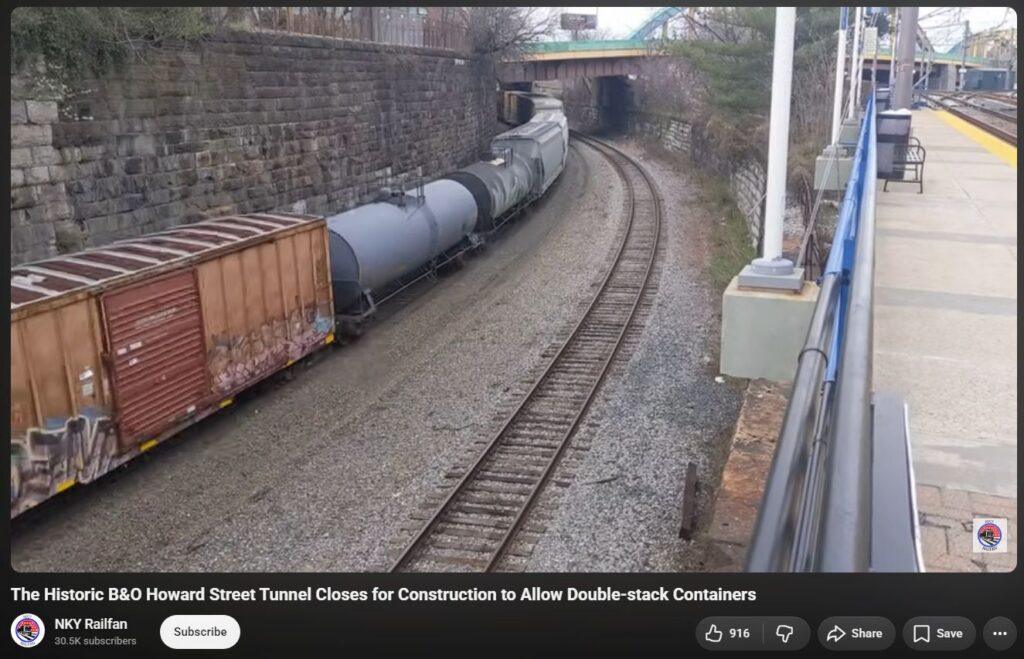
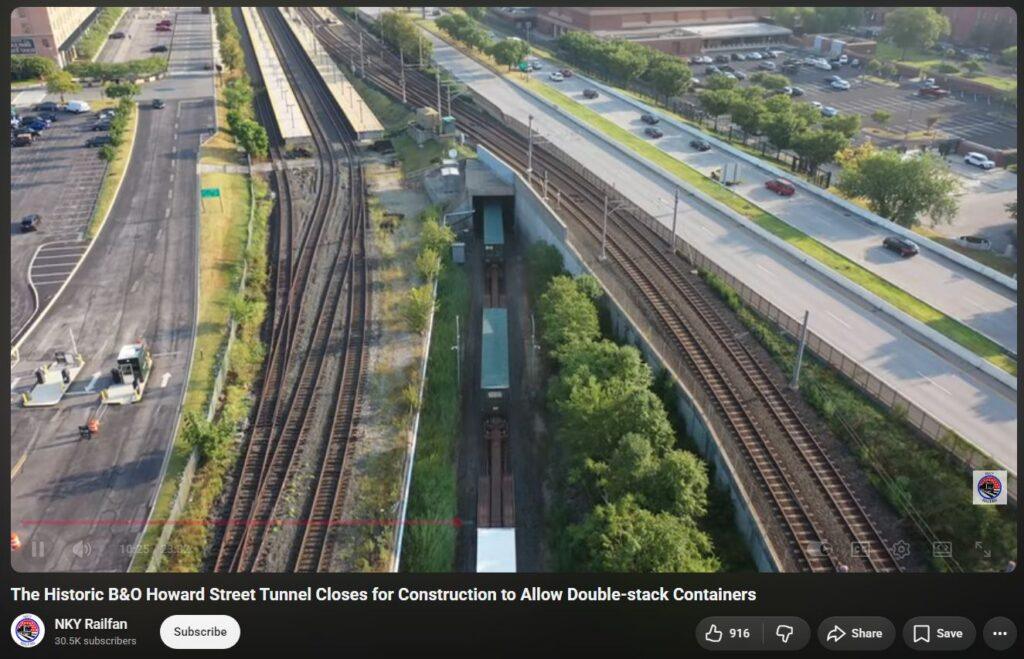
ALL PART OF THEIR LONG-RUNNING DIABOLICAL PLANS — Two years ago we proposed that the DEW-takedown of the Francis Scott Key Bridge was done to bring Baltimore into Mega-Port status. This coincided with the massive cargoship crane upgrade that had happened a few years prior. It also coincides with the coming take-down / replacement of the Chesapeake Bay Bridge heightening. It also coincides with this massive, decades-long undertaking. All geared to boost (nearly double) Baltimore port / rail / cargoship capacity.
The Howard Street Tunnel’s double-stack debut looks less like a standalone infrastructure win and more like one move in a much larger consolidation of Maryland’s trade arteries: rail clearances upgraded to push Baltimore toward “mega port” status, the Chesapeake Bay Bridge replacement looming as a massive reordering of east-west movement, and the Francis Scott Key Bridge replacement now forced into the same historic window after catastrophe severed a critical harbor crossing. Together, these projects suggest a state being quietly rebuilt around freight power, port expansion, and controlled chokepoints—where public necessity, disaster recovery, and economic ambition blur into one enormous machine, remaking Maryland’s roads, rails, bridges, and waterways for a future driven less by everyday travelers than by the cold logistics of cargo, capital, and control.
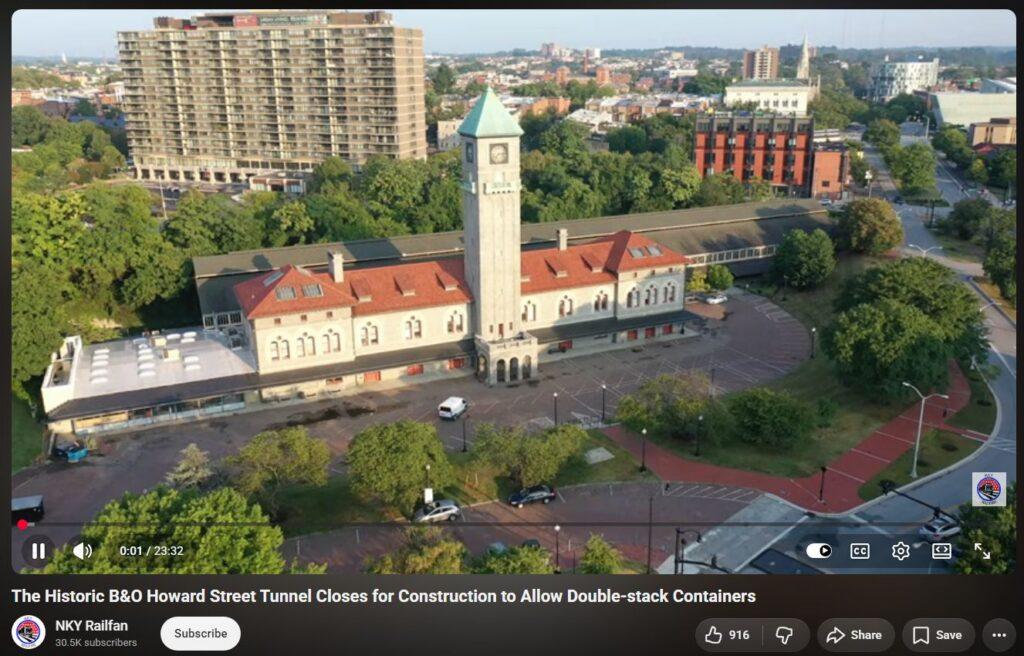
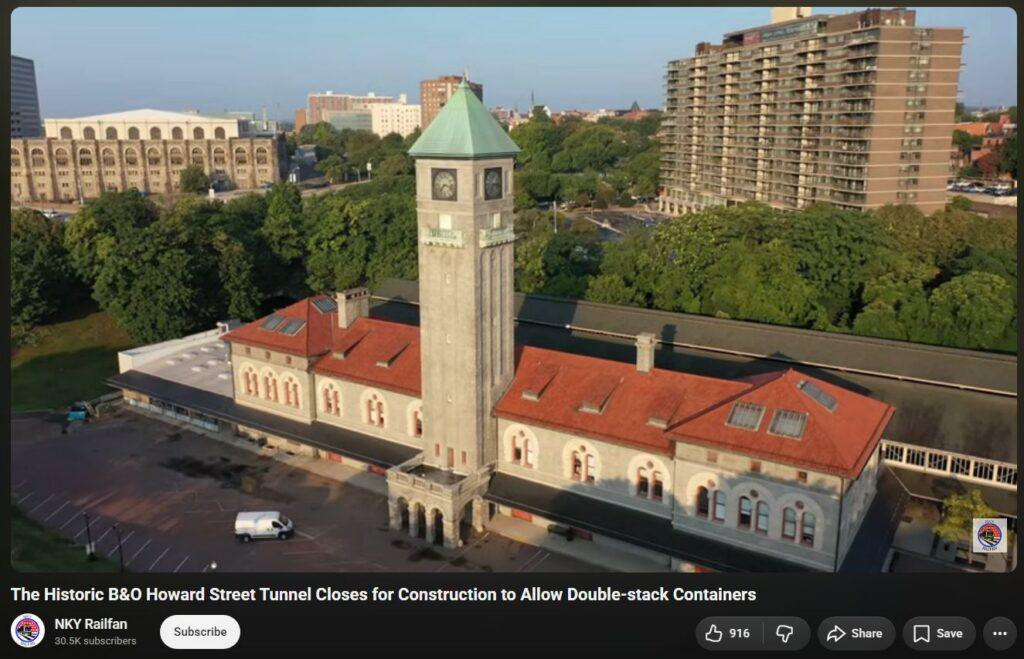
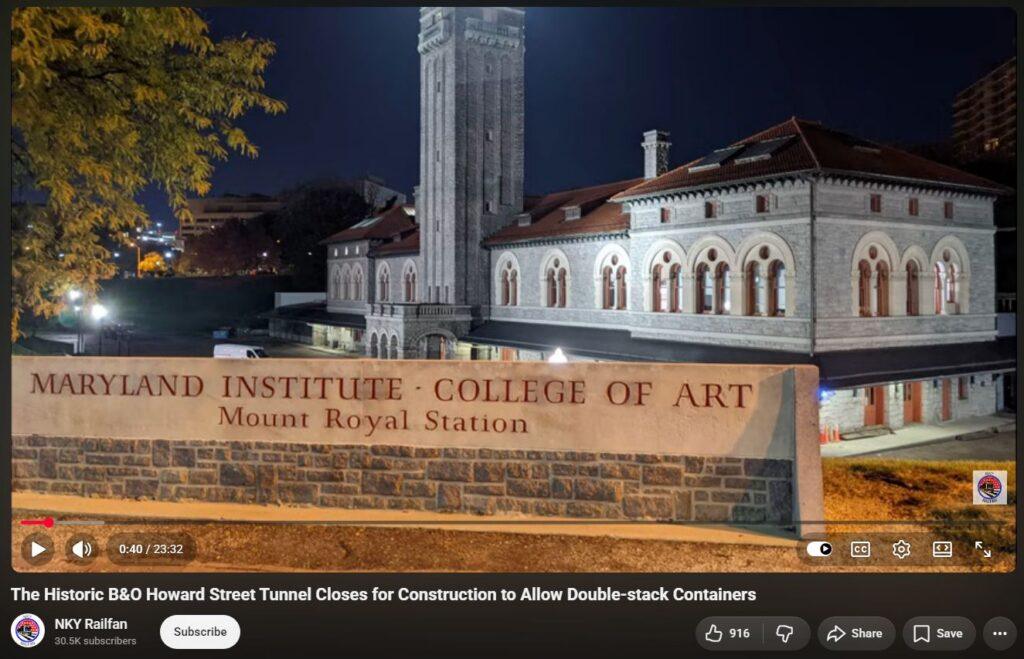
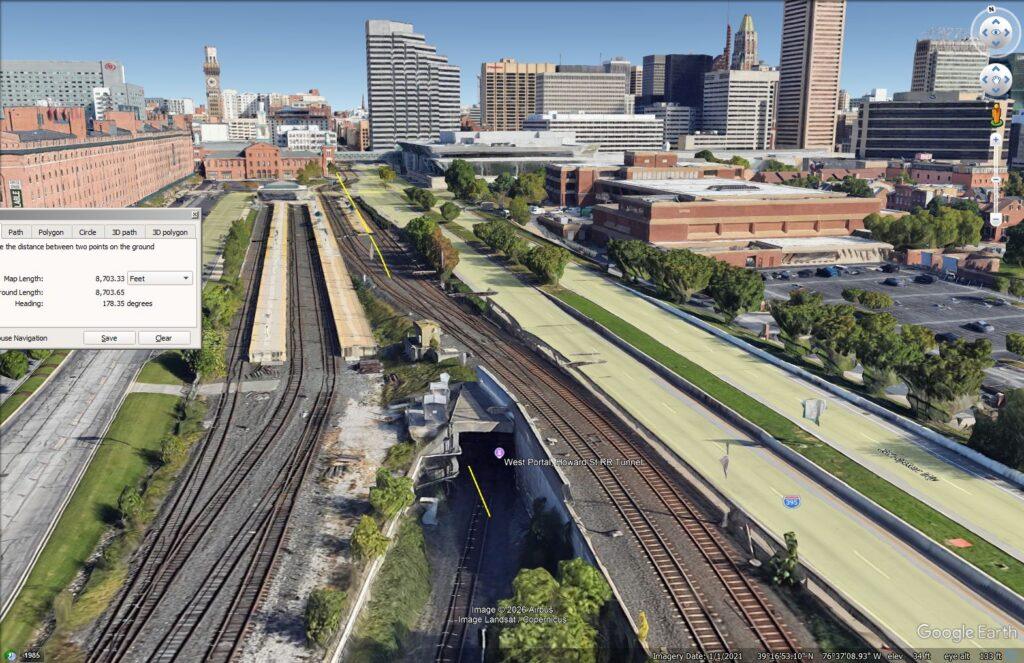
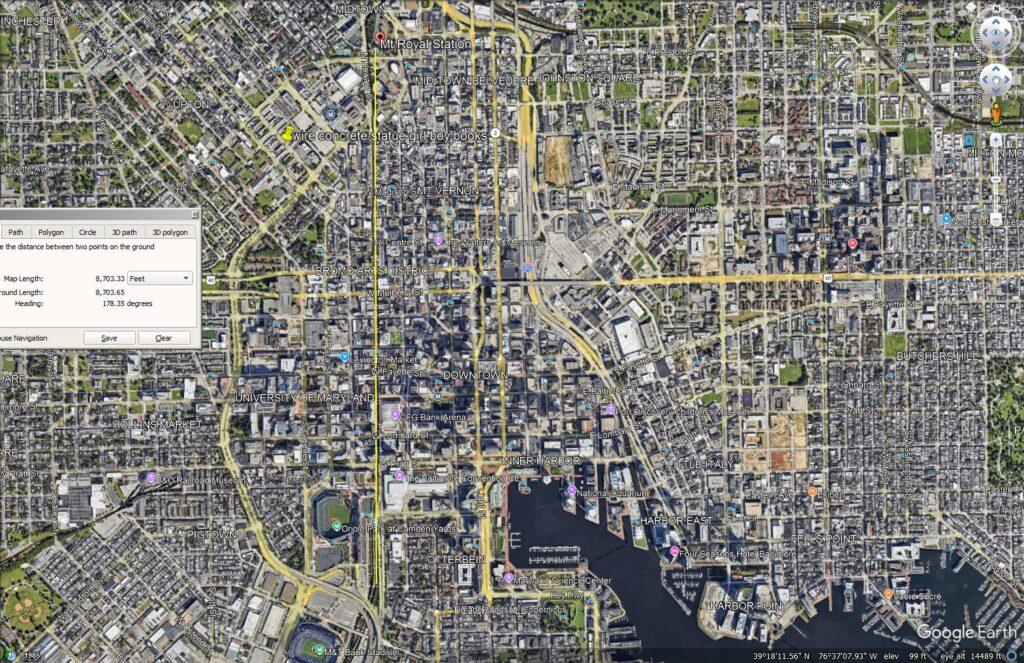
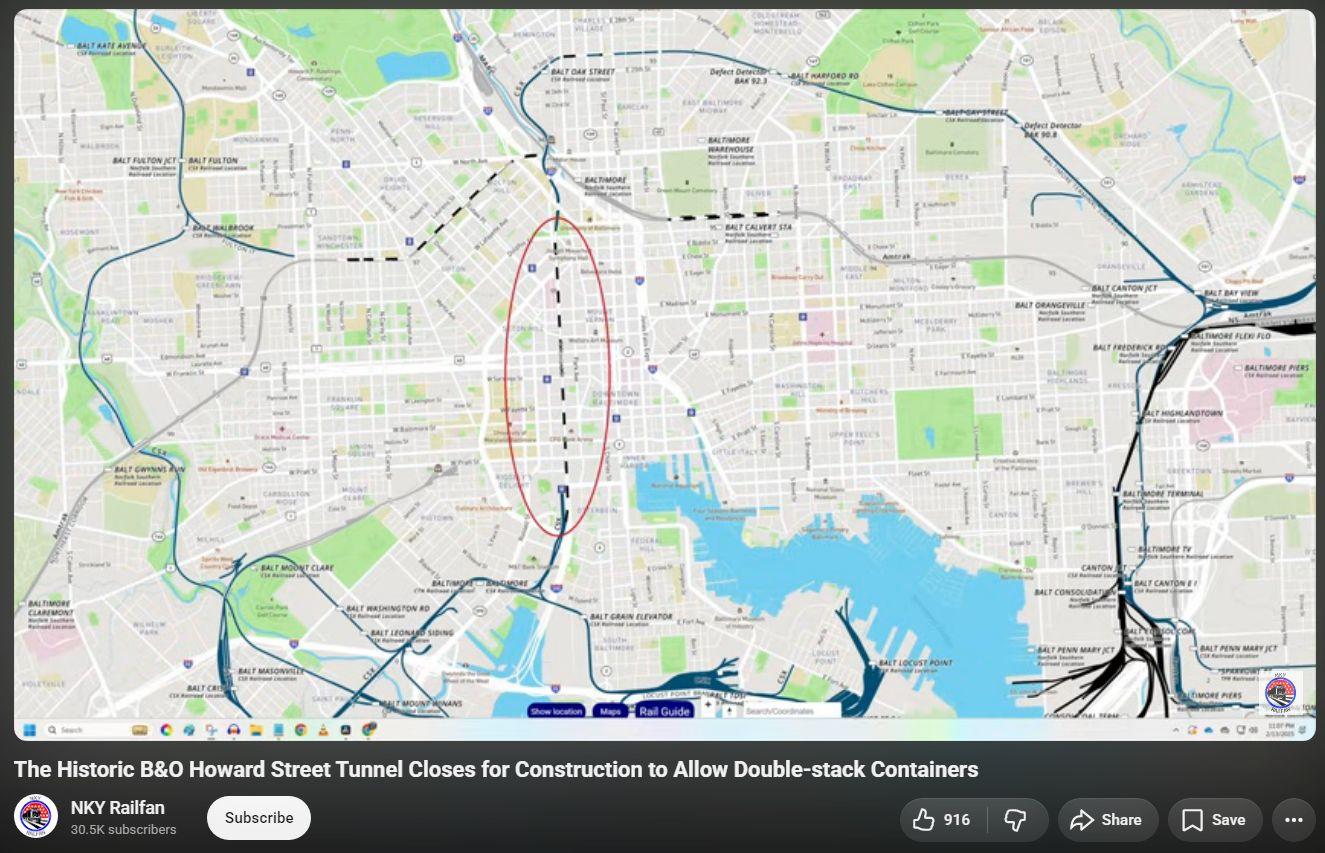
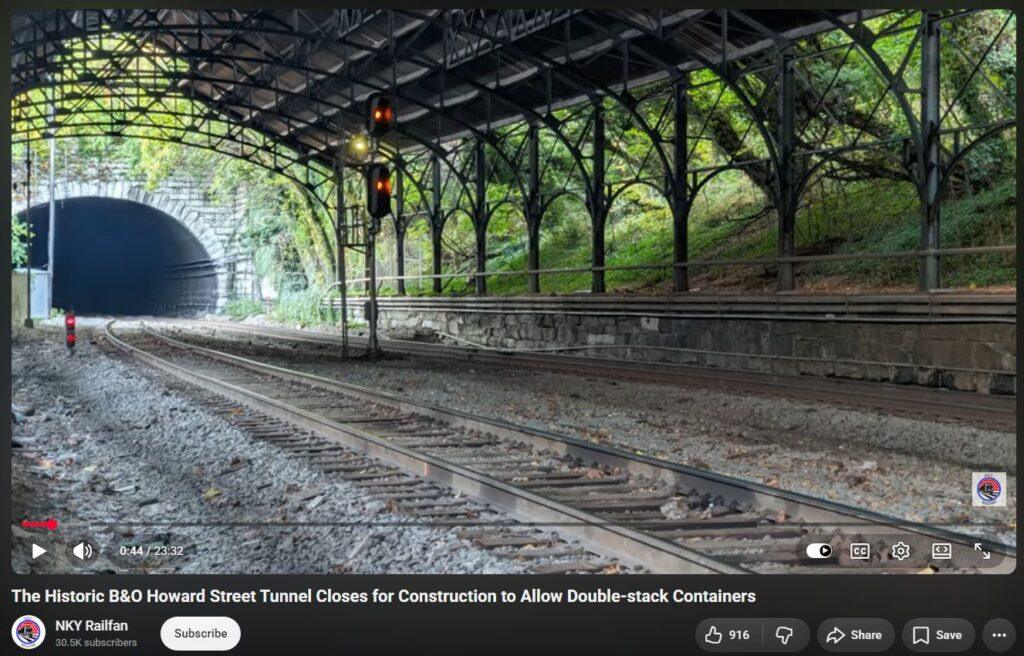
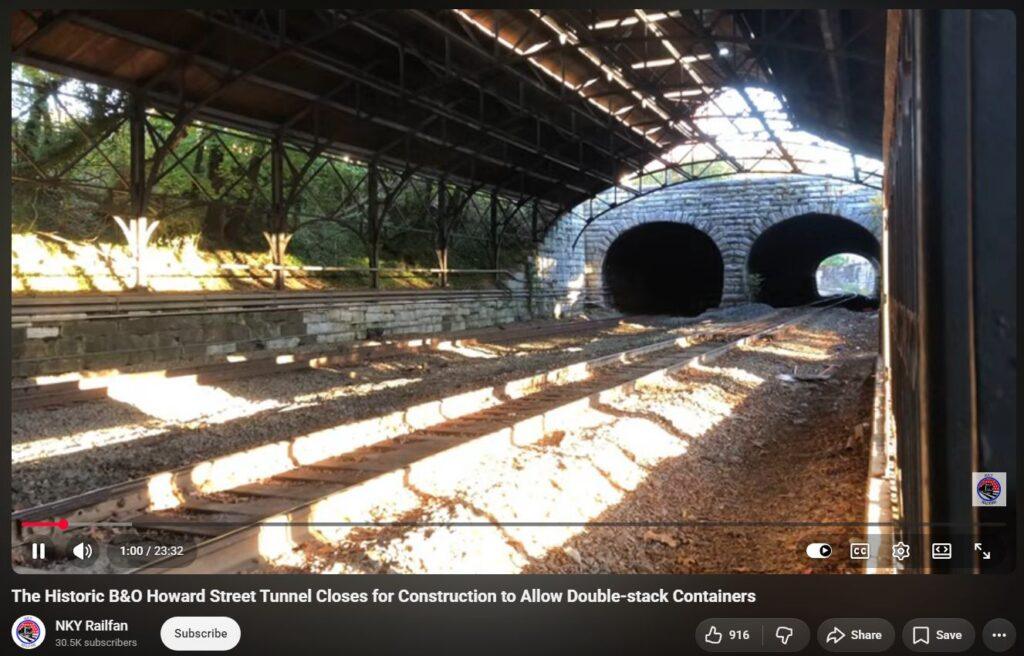
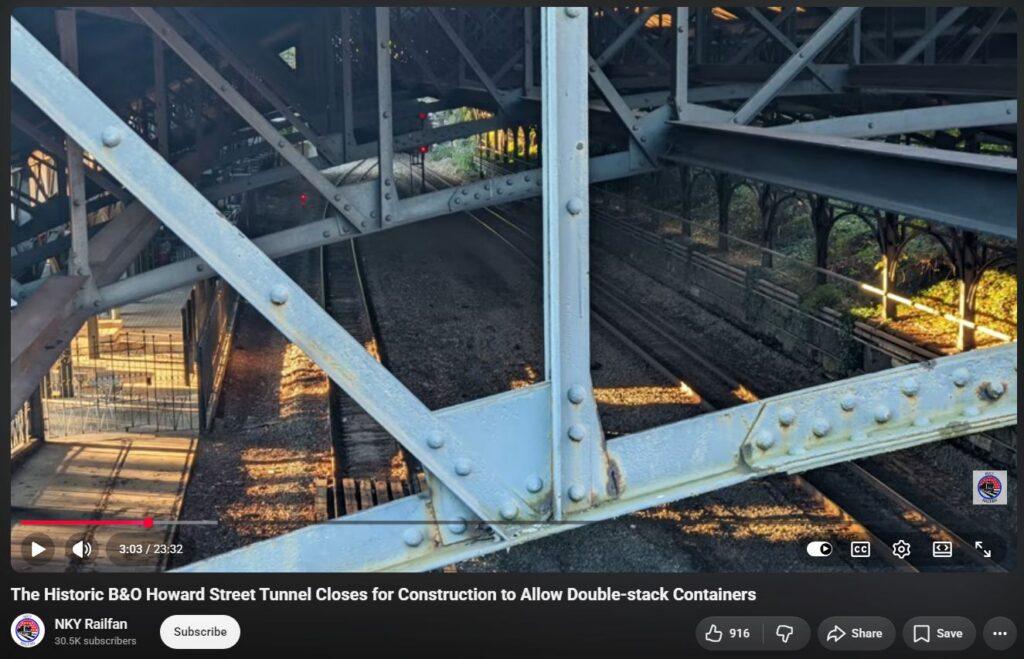
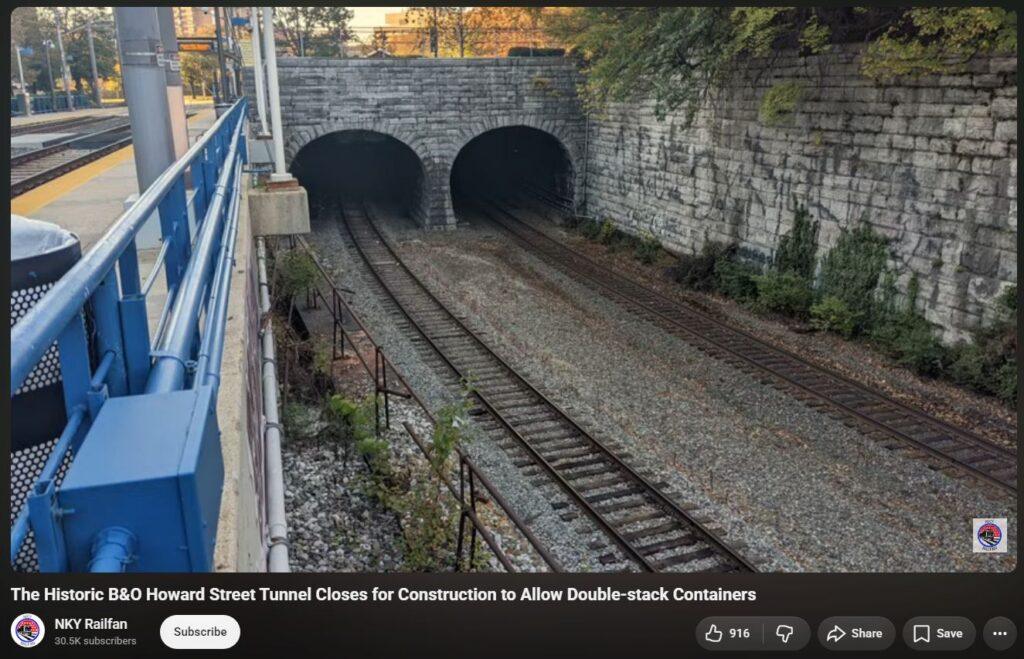
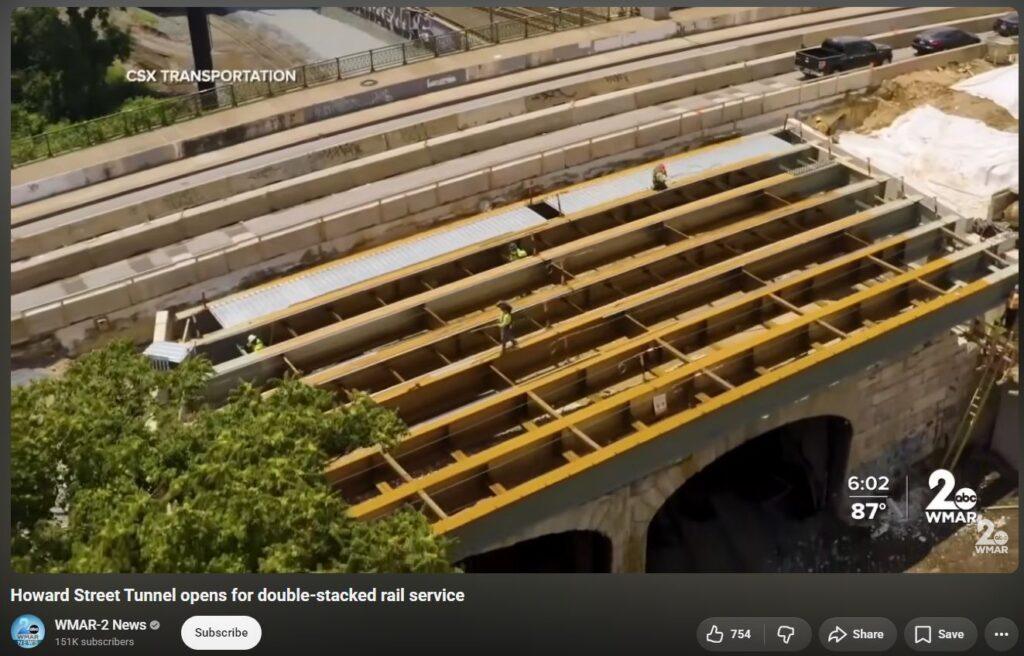
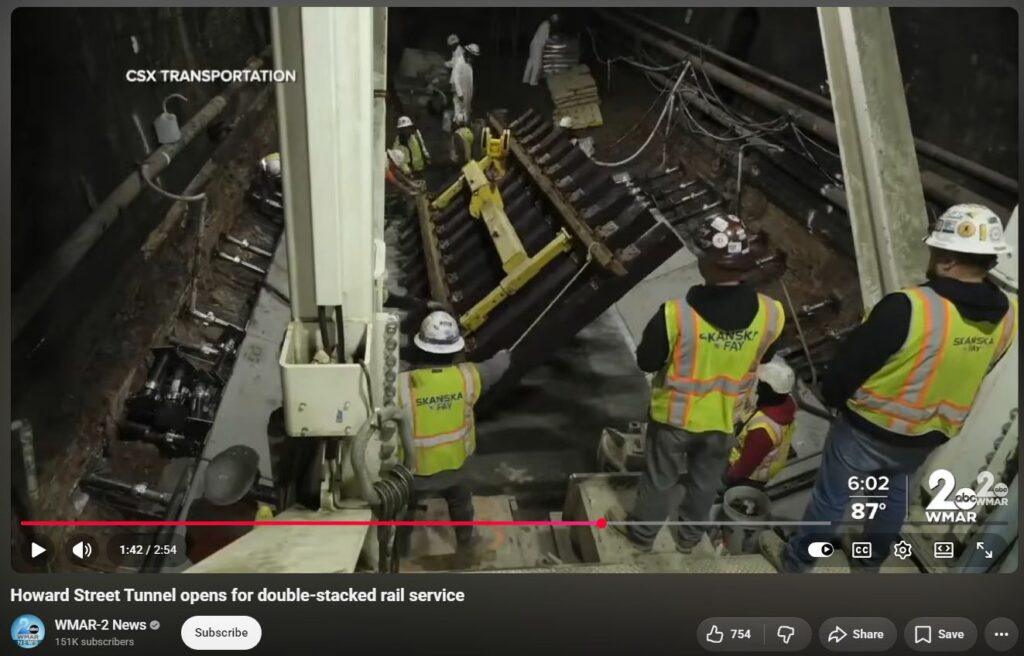
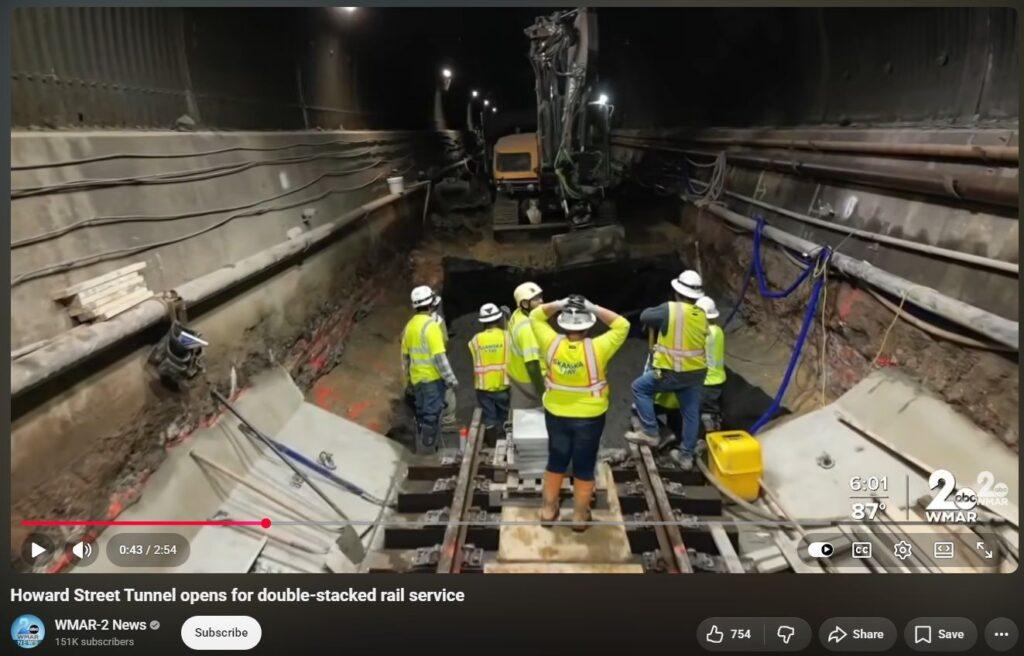
Bottom of historic, 8,700-foot (1.7 miles) long tunnel was lowered to achieve required clearance for double-stack container cars. ~24 other underpasses and obstructions also needed clearance increase. This is a rail line underneath the entire west section of the inner city. Its northern portal is at historic Mt Royal Station, and its southern portal is just southeast of Camden Yards. Curiously, the height was 18 inches too short to accomodate the double-stacked railcar standard. The Chesapeake Bay Bridge and the (downed-by-DEW) FSK Bridge were both within 18 inches clearance (for cargo container ships at mean tide) of each other.
Additional 166,000 containers expected to be added annually (plus 13,000 direct jobs), bringing Baltimore another critical step closer to Mega-Port status — the reason that the FSK bridge was taken down; same reasons Chesapeake Bay Bridge will be taken down / replaced.
Comment to video https://www.youtube.com/watch?v=bdGf2MY6q84 “Another obstacle to double-stack trains was the Virginia Avenue tunnel in Washington DC which was also built in the late 1800s. About three years ago, they remedied the issue there by doing the same.”
“The Baltimore Francis Scott Key Bridge take-down was a trillion-dollar costly event, ongoing, and yet all culpable persons remain unnamed, kept totally anonymous, with some reportedly having been slyly ‘escaped’ from the country! There is, in fact, zero publicly-verifiable evidence that any genuine Captain, Pilots or Crew ever existed: Was DALI a remote-controlled ghost-ship on kamikazee mission from its outset? No waves or creaking metal nor splash-down sounds at all were recorded nor (initially) noted by any (reportedly) nearby persons; cameras recorded zero shaking, seismometers measured zero vibration. Anomalies and oddities galore overwhelm the aftermath, beguile reason, confound explanation. No genuine interviews exist with supposed survivors, raw, uncut and devoid of presumed “duper’s delight” — “family and friends” etc interviews suggest ‘dupers-delight’ micro-facial-expressions with other hallmarks suggestive of glee at successfully duping. No independent verifications of claimed deaths have yet been publicized. Rampant is the extremely suspicious damage with blatantly visible, verifiable anomalies (including massive, five-storys tall fireballs in both original night-time videos) totally inexplicable and wholly ignored by official theory or story. Grand payola galore is already underway with loads more coming. This event appears to involve another shabby yet audacious crime, militarized from gov to salvage to rebuild. There was no rescue skiff on scene as required by OSHA. No horn blasts from ship warned of danger let alone imminent collision. The DALI ship departed despite (supposed) dire electrical problems, illegal at any time and even more highly unusual in the cold, dark night-time (part #94 first ‘after-sundown departure’ in two years and part #126 night time ship departures). It goes on and on and on. Criminal was this manufactured event, through and through, and that’s before considering the absurd number of other anomalies ignored by the complicit, owned, ‘kept-pet’ mass-media…”
Above from Part #91 adapted from a video comment.
Precursor Tampa Bay Sunshine Skyway Bridge take-down test-run in 1981.
DALI test-run (M/V Delta Mariner, Kentucky Lake, Eggner Ferry Bridge) Jan 2012.
Contrast the nearly-absent splash-down, video-shaking, audible or seismic-signal of the BFSKB takedown versus the much shorter, lighter, and less massive yet far greater splash-down of the Eggner Ferry Bridge takedown.
Index . Oddity List . Official Story . Summary
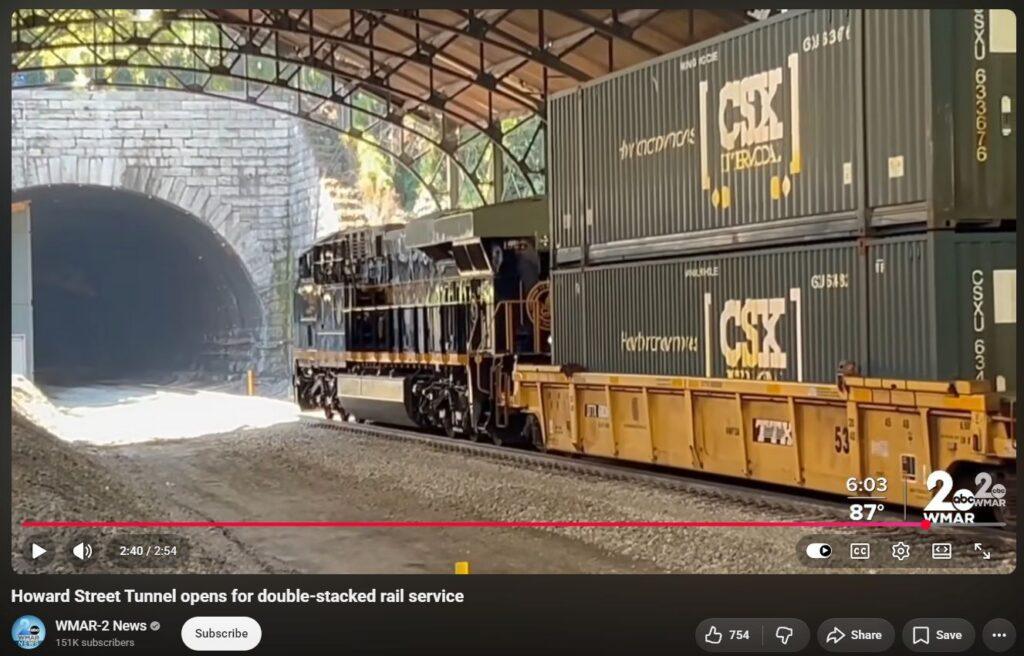
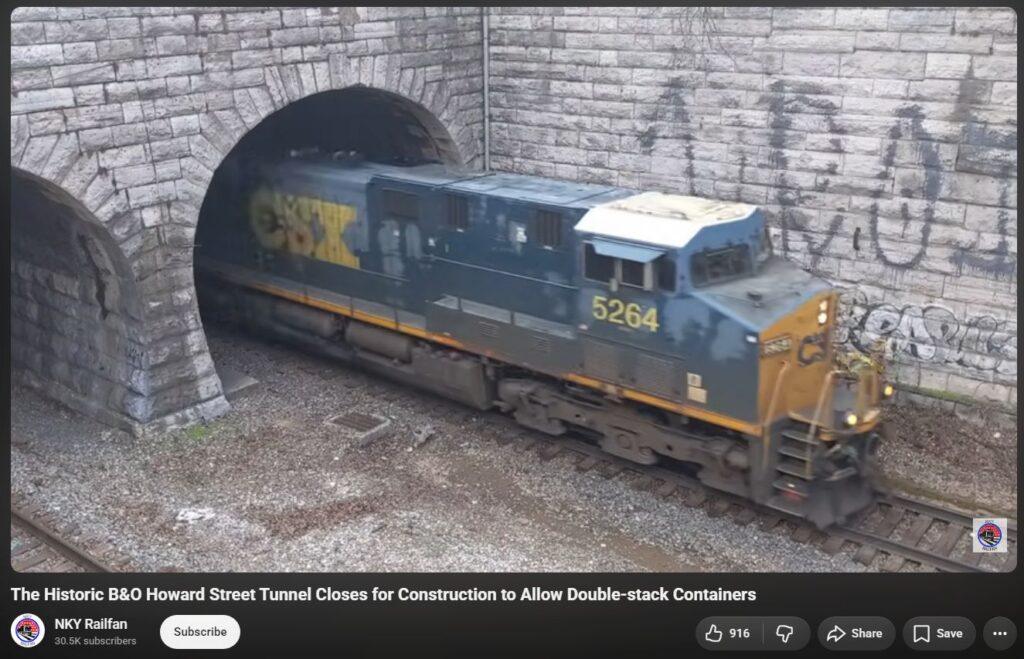
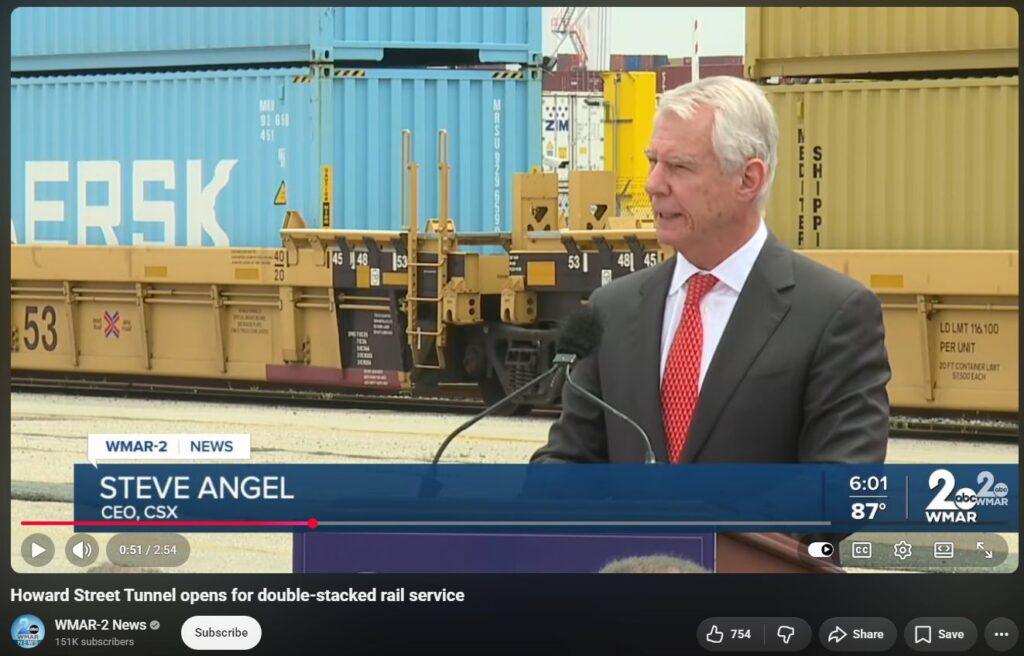
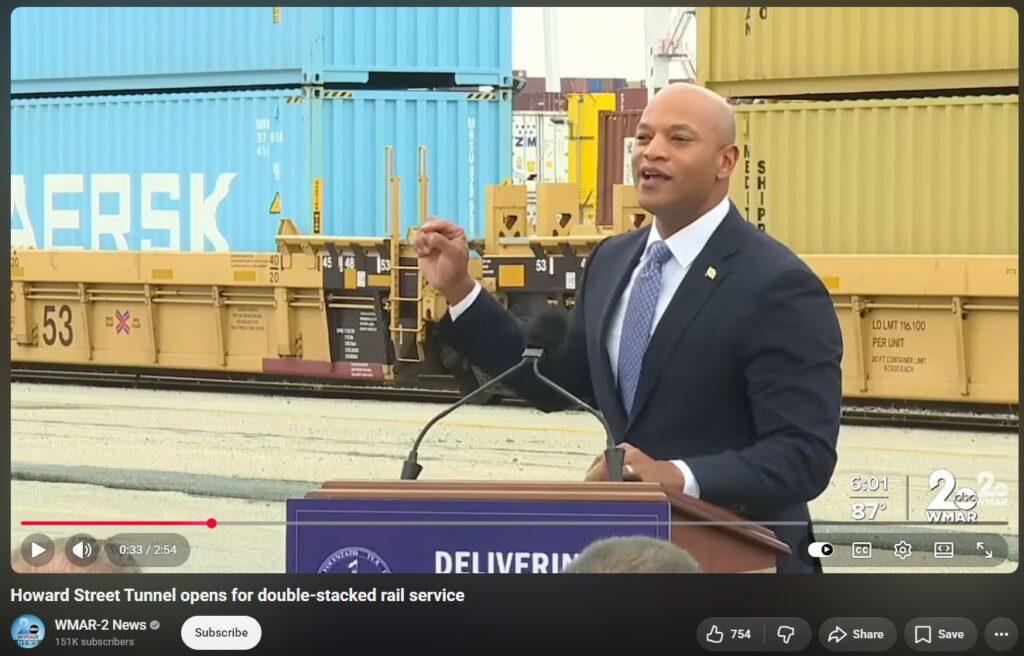
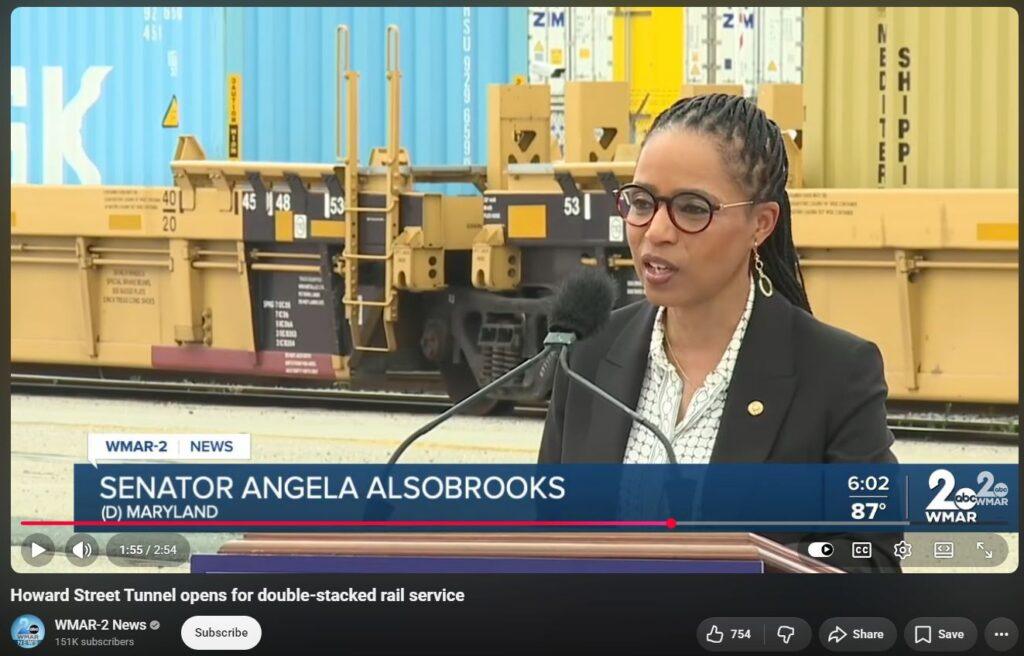
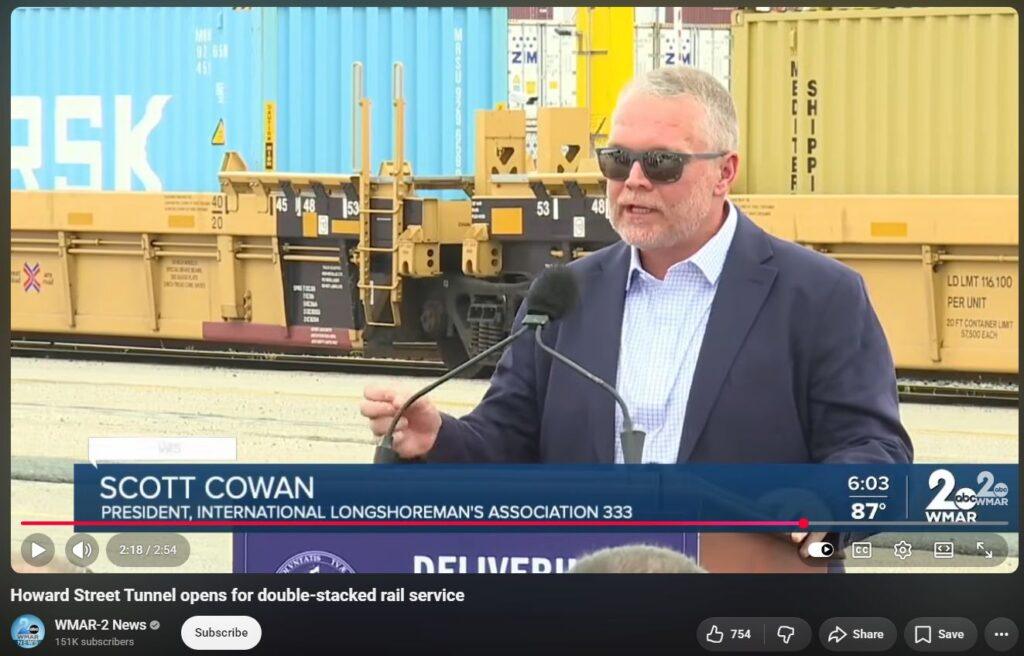
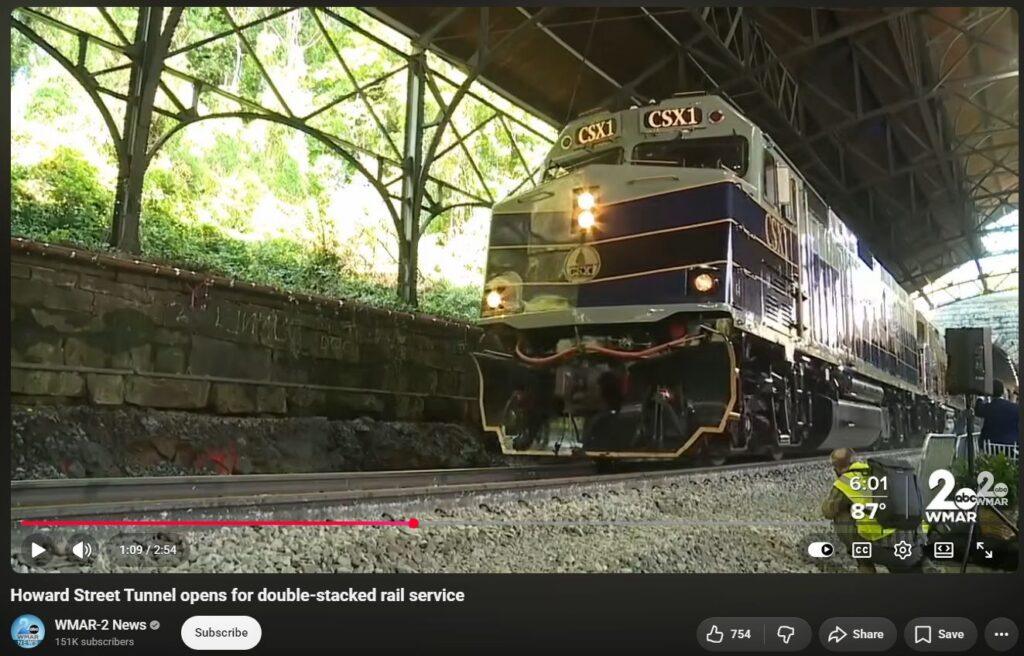
Jun 22, 2026 – Monday marked the official start of double-stack rail service through the newly reconstructed Howard Street Tunnel, a project decades (50 years) in the making that federal, state, and local leaders say is one of the most important infrastructure investments in Maryland’s history. More than $466 million was invested in the project’s completion. “Officially double stack is now here in the state of Maryland,” Governor Wes Moore said.
The launch of double-stack rail service through the rebuilt Howard Street Tunnel is more than a freight-rail milestone; it is part of a larger generational reset of Maryland’s transportation infrastructure. For decades, Baltimore’s port ambitions were constrained by rail clearance limits that prevented modern double-stacked container trains from moving efficiently to and from the Port of Baltimore. With that bottleneck removed, the port is positioned to compete at a higher level, strengthening its claim to “mega port” status by linking maritime cargo, rail freight, and inland markets more efficiently.
That timing is especially significant because Maryland is also preparing for two other major infrastructure transitions: replacement of the aging Chesapeake Bay Bridge and reconstruction of the Francis Scott Key Bridge after its collapse. Together, these projects point to the same strategic reality: Maryland’s economy depends on resilient, high-capacity transportation links across water, rail, road, and port systems. The Howard Street Tunnel expands the port’s freight reach by rail; a new Bay Bridge would preserve and modernize the state’s critical east-west highway connection; and a replacement Key Bridge is essential to restoring a major Baltimore Harbor crossing and supporting port access, regional commuting, and freight
movement.
Seen together, these investments are not isolated construction projects. They represent a once-in-generations modernization of Maryland’s trade and transportation backbone, aimed at keeping Baltimore competitive, protecting regional mobility, and preparing the state for larger ships, heavier freight demands, and long-term economic growth.
https://www.youtube.com/watch?v=o_S_8E7aOTg
https://en.wikipedia.org/wiki/Baltimore_Belt_Line#Howard_Street_Tunnel
https://www.google.com/maps/place/39°18’17.5″N+76°37’12.7″W/@39.3048721,-76.6214785,439m