The Crucible of the Global Village: An Exhaustive Analysis of COMSAT Laboratories (1969–2001)
Introduction: The Geopolitical Imperative for Orbital Communications
The genesis of modern global telecommunications is inextricably linked to the geopolitical realities of the Cold War, the aggressive expansion of the American space program, and the theoretical frameworks established by mid-century visionaries. Long before the first silicon chips were fabricated for orbital use, the scientist and science-fiction author Arthur C. Clarke conceptualized the theoretical utility of the geosynchronous orbit in a seminal October 1945 article for Wireless World. Clarke posited that a relay station placed approximately 35,000 kilometers above the Earth would match the planet’s rotational period, appearing stationary in the sky and enabling continuous line-of-sight communications across vast geographic expanses. For nearly two decades, this concept remained confined to the realm of theoretical physics. However, in 1961, President John F. Kennedy articulated a visionary mandate that extended far beyond the Apollo lunar missions, challenging the United States to pioneer an operational, global communications satellite network.
This presidential directive was not merely a scientific endeavor; it was a strategic geopolitical maneuver designed to project American technological supremacy, foster international alliances, and democratize access to information on a planetary scale. To realize this vision, the United States Congress passed the Communications Satellite Act of 1962, a landmark piece of legislation that led to the incorporation of the Communications Satellite Corporation (COMSAT) as a publicly traded, yet heavily regulated, private company on February 1, 1963. Operating initially as a “carrier’s carrier”—a corporate entity explicitly authorized by the Federal Communications Commission (FCC) to sell satellite circuits wholesale to other communications carriers rather than directly to the public—COMSAT rapidly became the linchpin of international telecommunications.
By August 1964, COMSAT was instrumental in the creation of the International Telecommunications Satellite Consortium (Intelsat), an intergovernmental organization that eventually expanded to include 143 member countries and signatories, fundamentally altering the architecture of global information exchange. COMSAT served as the United States’ signatory and primary technical manager for Intelsat, overseeing the historic deployment of the Early Bird satellite (Intelsat I) on April 6, 1965. Early Bird definitively proved the commercial viability of geosynchronous communications, though its capabilities were modest by modern standards: it possessed an 18-month design life and could handle either 240 concurrent telephone calls or a single black-and-white television channel.
The rapid pace of aerospace engineering quickly rendered these early systems obsolete. By 1971, the deployment of Intelsat IV demonstrated exponential advancement, boasting a seven-year design life and the capacity to handle 4,000 telephone calls alongside color television broadcasts. However, this rapid deployment illuminated severe, underlying technical limitations in radio frequency transmission, orbital power storage, and digital signal processing. To maintain its monopoly, fulfill its congressional mandate, and resolve the complex physics problems associated with orbital data relay, COMSAT required a dedicated, world-class research and development apparatus. In September 1969, COMSAT Laboratories was officially opened in Clarksburg, Maryland, establishing what was then the world’s first research facility exclusively dedicated to communications satellite technology. Over the ensuing three decades, COMSAT Laboratories would function as the “Bell Labs of space,” generating an unparalleled portfolio of intellectual property, fielding critical technologies for the United States military, and engineering the foundational hardware and protocols that underpin the modern global internet.
Architectural Vanguard: The High-Technology Corridor and the “Machine in the Garden”
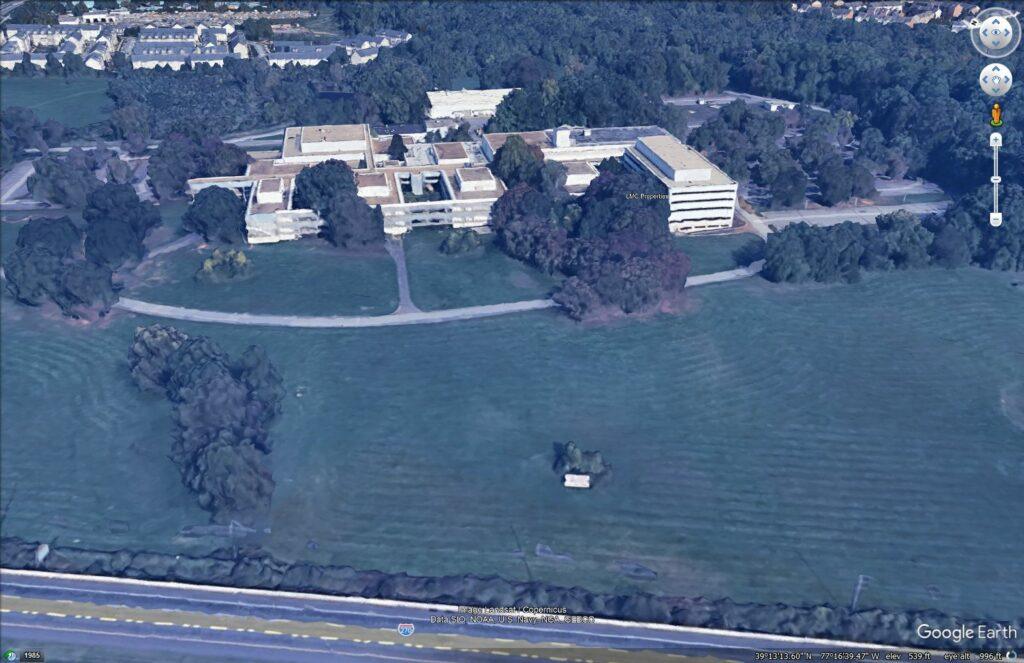
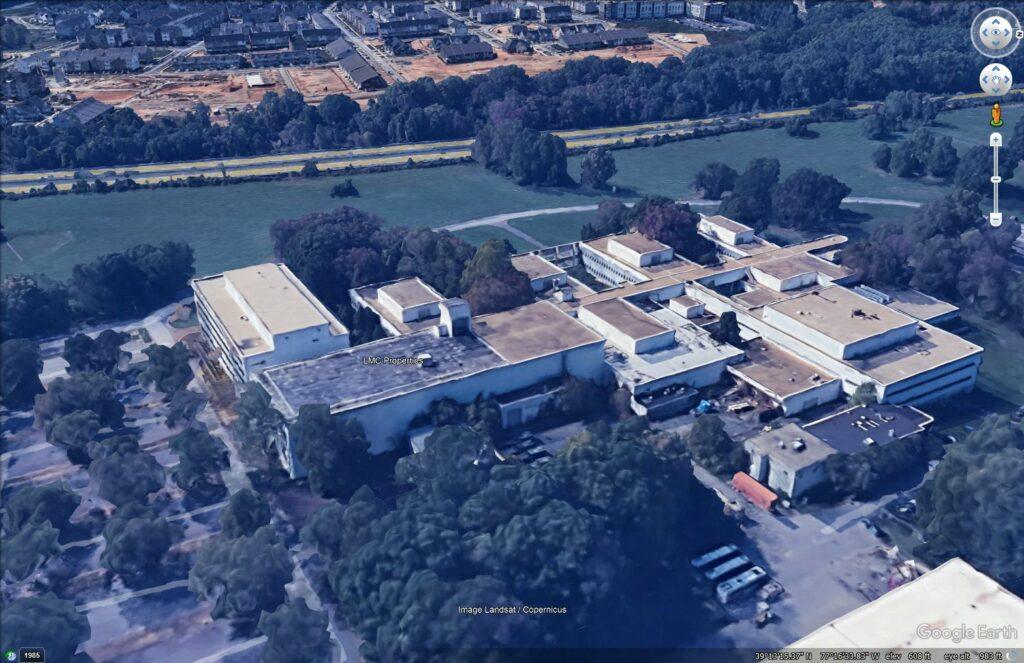
The physical environment of COMSAT Laboratories was deliberately engineered to reflect the avant-garde nature of the work conducted within its walls. Designed between 1968 and 1969 by the world-renowned master architect Cesar Pelli—who would later achieve global fame for monumental structures such as the Petronas Towers in Kuala Lumpur and the World Financial Center in New York City—the nearly 500,000-square-foot facility on a 200-acre pastoral site in northern Montgomery County, Maryland, immediately became an architectural icon.
Pelli conceived the facility as a “machine in the garden,” a modernist ideological statement that juxtaposed a highly sophisticated, futuristic structure against a rural, agrarian landscape. This design philosophy perfectly mirrored the nature of satellite communications: highly advanced, silent technology operating in the pristine vacuum of space to serve the earth below. The exterior of the building was characterized by a taut, flush aluminum and glass skin, described by architectural historians as a “glittering membrane” that stretched continuously over the structure. Pelli explicitly drew inspiration from aerospace engineering, noting that his influences were heavily rooted in “airline construction and esthetics,” eschewing traditional load-bearing masonry in favor of lightweight materials that enclosed maximum space with minimal mass.
The structural layout was highly functional and rigidly organized. The complex featured a lineal design with spaces organized along a central circulation spine, which allowed for flexible planning, the modular separation of distinct laboratory spaces, and seamless future expansion. Each laboratory wing was provided with its own separate mechanical penthouse to handle the intense HVAC and power requirements of advanced electronics testing. The building sat on a solid concrete foundation, topped with a roof composed of metal, aluminum, tar, and gravel. The fenestration was particularly notable, utilizing two distinct window styles to contribute to the machine-like aesthetic: floor-to-ceiling clear glass with thin aluminum mullions ran along the spine and catwalks, while the laboratory wings featured smaller, rectangular office windows made of solar glass with curved, porthole-like corners. These office windows were set entirely flush with the exterior skin and sealed with neoprene gaskets, heightening the aerospace motif.
The orientation of the facility was highly strategic. The principal interior spaces were designed to provide the scientific staff with optimal views of the surrounding pastoral landscape, fostering an environment conducive to deep intellectual work. Conversely, the western glass corridor was positioned to make the high-tech form highly visible from Interstate 270, acting as a structural beacon of American technological progress.
This architectural statement had profound regional economic implications. COMSAT Laboratories acted as the absolute catalyst and harbinger of the “High Technology Corridor” along I-270 in Montgomery County. Prior to 1969, the Clarksburg area was largely undeveloped farmland situated at the crossroads of Route 121 and the newly constructed highway. Following the establishment of COMSAT, the corridor evolved into a powerhouse for the technology, telecommunications, and life sciences industries, eventually housing hundreds of major corporations and earning the moniker “DNA Alley”. The building itself laid the groundwork for the High-Tech architectural movement across the United States, standardizing the use of metal-based glass curtain walls in research facilities nationwide.
The Intellectual Ecosystem: Human Capital and the Engineering Sandbox
The structural brilliance of the Clarksburg facility was matched only by the dense intellectual capital it housed. COMSAT Laboratories cultivated an environment that former employees routinely described as an “engineering sandbox”. By removing the traditional constraints of immediate commercial product delivery and supplying highly robust research budgets funded by the Intelsat monopoly, the laboratory allowed scientists to take significant technical risks to solve unprecedented problems in physics, radio frequency engineering, and materials science.
Initially populated by leading scientists recruited from the Massachusetts Institute of Technology (MIT) and various classified military research programs, the staff quickly grew. By the early 1970s, COMSAT Laboratories had assembled a professional staff of over 400 individuals, eventually peaking at roughly 600 top-tier scientists, engineers, and technicians. The organizational structure of the laboratory was highly specialized, divided into six distinct operational divisions: the Communications Techniques Division, Network Technology Division, Microwave Technology Division, Microelectronics Division, Spacecraft Technology Division, and System Development Division.
The research trajectory of the laboratory was guided by a succession of visionary directors, each of whom shaped the facility’s strategic priorities to meet the evolving demands of the global telecommunications market.
| Director | Tenure | Strategic Focus and Key Institutional Developments |
|---|---|---|
| Dr. Wilbur “Bill” Pritchard | 1969–1973 | Founding director; established the foundational six research divisions; oversaw the early development of SPADE digital routing and adaptive echo cancellation technologies. |
| Dr. Burton Edelson | 1973–1982 | Steered the transition toward digital transmission techniques; oversaw the implementation of Ni-H2 batteries, and the launch of the Marisat mobile satellite system. |
| Dr. John V. Evans | 1982–1995 | Directed the laboratory through the development of Monolithic Microwave Integrated Circuits (MMICs), ACTS ground segments, and the miniaturization of RF antennas. |
| Dr. Ramesh K. Gupta | 1995–2000 | Transitioned research aggressively toward Internet Protocol (IP) and ATM networking, developing the Linkway product lines and TCP/IP satellite optimization protocols prior to the Lockheed Martin acquisition. |
The internal culture of COMSAT was characterized by extreme technical proficiency and interdisciplinary collaboration. Notable staff members included solid-state physicists like John Reynolds, who contributed to the development of semiconductors and solar cells for orbital deployment, and engineers such as Ray Sicotte, Ken Betaharon, Bob Gruner, and Jack Singer, who spent decades navigating what Betaharon described as “cutting edge technology [that] was almost black magic” at the time. Mike Onufry, an engineer who began his tenure in 1966 and stayed for over 25 years, noted that the intellectual output of the facility was staggering, eventually resulting in a portfolio of over 300 active patents.
Beyond its permanent staff, COMSAT Laboratories executed a highly strategic, creative, and diplomatically vital international internship program. Scientists and engineers from signatory nations around the globe—including India, Japan, Taiwan, and various South American countries—took two- to three-year sabbaticals from their domestic telecommunications agencies to work directly at the Clarksburg facility. While ostensibly a philanthropic effort to share the benefits of satellite technology with developing nations in accordance with President Kennedy’s original vision, this program generated a profound second-order effect for American industry. By training the intellectual elite of foreign telecommunications monopolies on COMSAT’s proprietary hardware, algorithms, and protocols, the laboratory ensured that American technical standards became the entrenched, de facto global standards. When these engineers returned to their home countries, they built their domestic and international ground stations based on the architectures they had mastered in Maryland, securing Intelsat’s and COMSAT’s technological hegemony for decades.
Eradicating Latency and Expanding Capacity: SPADE, TDMA, and Echo Cancellation
In the late 1960s and early 1970s, the physical realities of orbital mechanics presented severe bottlenecks to the commercial viability and public acceptance of satellite telecommunications. Geosynchronous satellites operate at an altitude of approximately 35,000 kilometers (22,000 miles) above the Earth’s equator. A radio frequency signal traveling at the speed of light requires nearly 250 milliseconds to make the journey from a transmitting ground station up to the satellite and back down to a receiving station. This results in an absolute minimum round-trip delay of over half a second for any two-way conversation.
The Invention of the Adaptive Echo Canceller
In analog voice communications, impedance mismatches in the two-wire to four-wire conversion hybrids within terrestrial telephone networks caused a portion of the transmitted voice signal to reflect back to the speaker. In local terrestrial calls, this reflection occurs nearly instantaneously and is perceived by the human ear merely as a slight reverberation (sidetone). However, due to the massive orbital distance of satellite links, this reflection manifested as a distinct, highly disruptive, half-second delayed echo that made fluid conversation nearly impossible, threatening the entire commercial foundation of the technology.
To resolve this critical vulnerability, researchers at COMSAT Laboratories—most notably including engineers S.J. Campanella and O.A. Horna—developed the “echo canceller” in the early 1970s. Prior attempts to suppress echo relied on crude analog voice-operated switches (echo suppressors) that simply muted the return channel when a person was speaking, which awkwardly cut off the other party and prevented natural double-talk. COMSAT’s breakthrough was the pioneering application of adaptive digital signal processing techniques.
The COMSAT echo canceller utilized a highly sophisticated algorithm to dynamically model the echo path in real-time. By continuously monitoring the incoming audio signal, the device’s adaptive filter calculated and updated tap coefficients necessary to generate a mathematically precise “quasi-echo,” or synthetic replica, of the anticipated reflection. This synthetic signal was then inverted and subtracted from the transmission line, virtually eliminating the echo without clipping the audio of the speaker on the other end. This invention was nothing short of revolutionary. It elevated the subjective quality of international satellite calls to absolute parity with local terrestrial telephone circuits, driving massive consumer and enterprise adoption of international calling. In recognition of its historical significance, COMSAT Laboratories donated the original 1970s echo canceller artifact to the Smithsonian National Air and Space Museum in 1999.
SPADE and the Transition to Digital Routing
Concurrently, COMSAT Laboratories recognized that the traditional method of allocating satellite capacity was fundamentally flawed and highly inefficient for a growing, dynamic global network. Early networks utilized Frequency Division Multiple Access (FDMA) with preassigned channels. Preassigned channels meant that a specific bandwidth block dedicated to a link between two countries (e.g., New York and Paris) remained active and isolated 24 hours a day, even when no calls were being placed. This wasted the most expensive real estate in the solar system: satellite transponder bandwidth.
To optimize transponder utilization, COMSAT developed SPADE, an acronym for “Single channel-per-carrier Pulse Code modulation multiple Access Demand Assignment Equipment”. SPADE represented a monumental leap forward as the world’s first international digital voice communications service. Instead of hardwiring frequencies between specific nations, SPADE utilized a distributed-demand assignment facility. The system reserved a massive pool of available frequency pairs. When an earth station needed to place a call, its local equipment randomly selected an available pair from the centralized pool to establish a circuit, releasing the frequencies back to the pool immediately upon call termination so they could be used by any other nation.
The technical ingenuity of SPADE relied on a dedicated Common Signaling Channel (CSC). The CSC operated at a bandwidth of 160 kHz, with its center frequency positioned precisely 18.045 MHz below the pilot frequency to avoid interference. Through this channel, all earth stations continuously updated their dynamic lists of available frequencies. To prevent data collisions on the CSC, COMSAT pioneered the use of Time Division Multiple Access (TDMA) for the signaling network. TDMA allocates satellite capacity based on precise, synchronized time slots rather than distinct frequencies, allowing up to 49 earth stations to transmit routing data to the CSC in rapid, microsecond bursts.
The implementation of SPADE yielded 794 one-way or 397 full-duplex voice circuits out of a single transponder block. This architecture drastically lowered the barrier to entry for developing nations. Instead of paying exorbitant fees for dedicated, continuous bandwidth that they rarely filled, smaller countries could install SPADE terminals and pay purely for demand-assigned, fractional usage. The development of TDMA and SPADE at Clarksburg established the fundamental digital routing protocols that govern modern cellular networks and satellite communications today.
Revolutionizing Spacecraft Hardware: Power, Miniaturization, and Antennas
While signal processing innovations solved the software and protocol challenges of satellite communication, COMSAT Laboratories simultaneously attacked the severe physical limitations of spacecraft hardware. The economics of the space industry are dictated entirely by the ratio of launch cost to operational lifespan. In the 1960s and early 1970s, the primary limiting factor for a satellite’s lifespan was its power storage mechanism.
The Nickel-Hydrogen (Ni-H2) Battery
Satellites rely on photovoltaic solar panels for primary power, but they require robust secondary batteries to maintain critical operations during solar eclipses when the Earth blocks the sun. Early satellites utilized standard Nickel-Cadmium (Ni-Cd) batteries. However, Ni-Cd chemistry suffered from severe degradation after repeated charge-discharge cycles in the extreme temperature fluctuations of space, typically limiting a satellite’s useful life to a mere five to seven years before battery failure rendered the multi-million-dollar asset useless.
Beginning in 1970, COMSAT Laboratories, in collaboration with external partners like Tyco Laboratories, initiated intense research into Nickel-Hydrogen (Ni-H2) battery chemistry as a superior aerospace alternative. The engineering challenge was formidable, requiring the long-term containment of highly pressurized, volatile hydrogen gas within the vacuum of space. COMSAT researchers developed Individual Pressure Vessel (IPV) cells utilizing Inconel 718, an extremely high-strength superalloy, equipped with sophisticated plastic compression seals for the negative and positive terminals. Furthermore, they engineered catalyzed wall wicks on the interior surface of the pressure vessel; these wicks safely and chemically recombined oxygen and hydrogen back into water during overcharge scenarios at the end of the charge cycle, preventing catastrophic vessel rupture.
The Ni-H2 battery was first deployed in space in 1977 aboard the U.S. Navy’s Navigation Technology Satellite-2 (NTS-2) to stunning success. The technology provided a substantial increase in specific energy—achieving 60.1 W-h/kg for high-pressure 50-A-h modules—and unparalleled cycle life. The adoption of Ni-H2 batteries single-handedly extended the standard design lifespan of commercial and military geosynchronous satellites from 5–7 years to a minimum of 15 years.
The second-order economic implications of this invention were profound. By tripling the operational lifespan of a satellite, COMSAT effectively slashed the annualized capital expenditure of global satellite networks by nearly 70%. This dramatic reduction in overhead made satellite communications significantly cheaper, directly enabling the economic viability of emerging industries such as direct-to-home television broadcasting and affordable global maritime communications.
RF Component Miniaturization and Advanced Antennas
Beyond power storage, COMSAT Laboratories led the global industry in radio frequency (RF) hardware miniaturization. In the 1990s, the lab achieved major breakthroughs in Monolithic Microwave Integrated Circuits (MMICs). By integrating multiple high-frequency RF functions onto a single microscopic semiconductor chip, COMSAT radically reduced the mass, volume, and power requirements of satellite transponders, drastically lowering payload weights and thus reducing launch costs. Additionally, the lab developed specialized, high-precision microwave filters that permitted multiple separate signal carriers with well-defined bandwidths to be multiplexed through a single transponder without cross-channel interference, maximizing the data throughput of existing space assets without sacrificing transmission quality.
COMSAT also pioneered critical ground-segment antenna technology. The laboratory constructed full-size engineering models of Torus antennas, which possessed the unique geometric property of communicating with multiple satellites simultaneously across the geostationary arc without the need to physically move or steer the dish. This represented a major cost advantage over traditional, mechanically complex Cassegrain steerable antennas, drastically reducing maintenance costs for earth stations. Furthermore, COMSAT’s development of the first commercially viable flat plate and phased-array antennas catalyzed the direct-to-home broadcast industry, eventually replacing massive parabolic dishes with the compact, unobtrusive receivers seen on modern residential rooftops worldwide.
The Network Layer: Forging TCP/IP for the Space Environment
As the global telecommunications infrastructure transitioned from analog voice circuits to digital data packets in the 1990s, the explosive growth of the Internet presented a new, formidable challenge for satellite systems. The Internet relies on the Transmission Control Protocol and Internet Protocol (TCP/IP) suite to ensure the reliable delivery of data. However, TCP was fundamentally designed for terrestrial wireline networks, specifically Ethernet and fiber optics, where latency is minimal and bit error rates (BER) are near zero.
In a standard TCP architecture, packet loss is universally interpreted by the algorithm as an indication of network congestion. The protocol responds to perceived congestion by drastically reducing the transmission rate (a mechanism known as “slow start” and congestion avoidance back-off) to prevent network collapse. When applied to a satellite link, this mechanism causes catastrophic performance degradation. The inherent 500-millisecond round-trip latency results in a massive bandwidth-delay product, meaning the TCP “sliding window”—which was originally standardized at a mere 216 bytes—was vastly too small to keep the high-bandwidth link full. Furthermore, atmospheric attenuation (such as rain fade), scattering, and ionospheric scintillation cause natural packet loss that has nothing to do with congestion. Terrestrial TCP inherently misinterprets this natural satellite signal loss as network overcrowding, violently throttling the bandwidth and restricting throughput to a mere fraction of the available transponder capacity.
COMSAT Laboratories positioned itself at the absolute vanguard of solving this satellite-Internet integration problem, contributing heavily to Internet Engineering Task Force (IETF) standards and authoring definitive Requests for Comments (RFCs). Researchers at COMSAT, including prominent network engineers such as Mark Allman and Dan Glover, conducted seminal research into TCP/IP satellite optimization.
| Key TCP/IP over Satellite RFC Contributions by COMSAT Researchers | Strategic Focus Area |
|---|---|
| RFC 2488 | “Enhancing TCP Over Satellite Channels using Standard Mechanisms.” Detailed mitigations such as window scaling, selective acknowledgments (SACK), and path MTU discovery to bypass legacy protocol limitations. |
| RFC 2760 | “Ongoing TCP Research Related to Satellites.” Explored experimental methodologies including the use of multiple parallel connections, header compression, and enhanced congestion control algorithms. |
| RFC 3135 | “Performance Enhancing Proxies (PEPs).” Co-authored to define network architectures that intercept, spoof, and optimize TCP connections across degraded, high-latency links. |
To operationalize these academic standards, COMSAT developed the concept of the “Split TCP Proxy”. Rather than forcing a single, fragile TCP connection to stretch from a terrestrial server, over the satellite, to a terrestrial client, the proxy split the connection into multiple discrete segments. A ground-based or on-board satellite proxy would terminate the terrestrial TCP connection, artificially spoof acknowledgments back to the sending server to prevent the slow-start throttling mechanism from engaging, and then utilize a proprietary, highly optimized protocol to blast the data across the high-latency space segment.
This breakthrough technology was seamlessly embodied in COMSAT’s commercial product lines, including the ALA 2000, ALE 2000, CLA-IP, and the highly successful Linkway 2000 systems. The Linkway product family, which eventually included the Linkway 2000, Linkway 2100, linkway.IP, LinkStar, and the advanced LinkWayS2, represented a masterclass in hybrid networking. Utilizing Multi-Frequency Time Division Multiple Access (MF-TDMA), these modems allowed for secure, full-mesh, star, and hybrid network topologies over C-band, Ku-band, and Ka-band frequencies.
The LinkWayS2, in particular, incorporated DVB-RCS turbo coding, 8PSK modulation, and dynamic bandwidth-on-demand allocations, allowing it to seamlessly integrate voice, video, and IP data across multiple transponders. These modems were tailored for ISP Point-of-Presence (PoP) connectivity, corporate intranets, distance learning, telemedicine, and disaster recovery. By engineering these systems, COMSAT essentially translated terrestrial ATM and IP architectures for the physics of space, ensuring that satellite technology remained highly relevant and competitive in the emerging broadband era.
Serving the State: Military Space and Strategic Communications
While COMSAT’s public face was heavily oriented toward commercial telecommunications and the Intelsat consortium, COMSAT Laboratories operated as a critical, highly classified adjunct to the United States Department of Defense (DoD) and the National Aeronautics and Space Administration (NASA). The technologies pioneered in Clarksburg for commercial efficiency were directly translatable to military requirements for survivability, anti-jamming, and global force projection.
Marisat and the Birth of Mobile Satellite Communications
In 1976, COMSAT developed and deployed Marisat, a constellation of three geosynchronous satellites initially designed to fulfill the urgent, global communication needs of the United States Navy. Operating on the UHF spectrum for military vessels and the L-band for commercial shipping, Marisat represented the world’s first mobile satellite communications system. To manage this dual-use military and commercial infrastructure while satisfying strict Federal Communications Commission (FCC) anti-monopoly regulations—which required the separation of monopoly Intelsat business from domestic and specialized systems—COMSAT formed a dedicated subsidiary, Comsat General.
The second-order impact of Marisat was the total transformation of global maritime safety and logistics. By 1982, the Marisat satellites and their specialized ground stations (located in Southbury, Connecticut; Santa Paula, California; and Japan) were leased to form the initial operating system for the International Maritime Satellite Organization (Inmarsat). Through Marisat, COMSAT proved the viability of small, gimbal-stabilized mobile earth stations (such as the Startrack system), eventually paving the way for aeronautical satellite communications (like the Swift 64 waveform) and modern mobile broadband networks.
Advanced Strategic Systems: DSCS, Milstar, and GBS
COMSAT Laboratories heavily influenced the architecture of the United States’ most secure and complex military networks, particularly the Defense Satellite Communications System (DSCS) and the Milstar program. Designed as the ultimate nuclear-survivable command and control communication system during the height of the Cold War, Milstar required technologies that eliminated any reliance on vulnerable terrestrial ground relay stations. COMSAT’s deep expertise in onboard signal processing and satellite-to-satellite crosslinks was vital to Milstar’s architecture, allowing the constellation to route secure Low Data Rate (LDR) and Medium Data Rate (MDR) data entirely in space, reducing the probability of terrestrial interception.
Furthermore, COMSAT’s commercial Linkway technology became deeply integrated into the military’s tactical networking infrastructure. The LinkWayS2 modems were battlefield-proven, providing highly secure Communications On-The-Move (OTM) and At-The-Halt (ATH) capabilities for the Army’s Warfighter Information Network-Tactical (WIN-T) and the Marine Corps’ Support Wide Area Network (SWAN). As the military realized the critical need for massive, asymmetrical bandwidth to transmit high-definition drone video and intelligence imagery to tactical units, COMSAT’s expertise supported the Global Broadcast Service (GBS). The GBS system operated much like commercial direct-to-home television, leveraging COMSAT’s pioneering work in asymmetric traffic flows to blast data to small “DirecTV-like” terminals in active combat theaters, revolutionizing Battle Damage Assessment (BDA).
COMSAT Laboratories also served as a rapid-response engineering team for the federal government. In 1990, when a critical satellite was stranded in a low, unusable orbit, COMSAT personnel designed, built, and flight-qualified an experimental re-boost package on an extraordinary 90-day schedule. This hardware was successfully installed by astronauts aboard the Space Shuttle in the equipment bay, saving a multi-million-dollar national asset and publicly demonstrating the unmatched agility and technical prowess of the Clarksburg engineering teams. In the civilian government sector, COMSAT partnered heavily with NASA to design and implement the ground segment and control station for the Advanced Communications Technology Satellite (ACTS) program, the world’s first all-digital communications satellite.
Commercial Triumphs, Regulatory Walls, and the SNG Revolution
The intersection of brilliant engineering and complex corporate mandates led COMSAT Laboratories to both spectacular commercial triumphs and frustrating business failures. COMSAT was structurally hindered by its founding congressional charter; as a “carrier’s carrier,” it was legally barred from competing directly for end-consumer dollars, forcing it to act exclusively as a wholesale provider to other telecommunications corporations.
The Emmy Awards and Satellite News Gathering (SNG)
Despite these severe regulatory constraints, the hardware developed at Clarksburg revolutionized consumer media and global journalism. In 1974, COMSAT’s President, Joseph Charyk, accepted the prestigious International Directorate Emmy Award from the International Academy of Television Arts and Sciences in recognition of the corporation’s monumental role in facilitating live international television broadcasting via the Intelsat network.
Nearly two decades later, COMSAT’s relentless push toward hardware miniaturization fundamentally altered the mechanics of television news. By engineering highly transportable, lightweight earth terminals, COMSAT enabled the birth of the Satellite News Gathering (SNG) industry. Prior to this innovation, transmitting live video required massive, fixed infrastructure or cumbersome microwave relay trucks. COMSAT’s portable terminals—first effectively utilized during the 1976 National Bicentennial Celebration—allowed journalists to broadcast live from active war zones, remote disaster areas, and isolated geographic regions, effectively creating the 24-hour global news cycle. For this specific achievement in the sciences of television technology, COMSAT Laboratories was awarded a highly coveted Technical Emmy Award in 1993. Four years later, the laboratory was further honored as a recipient of the 1997 NASA/U.S. Space Foundation Space Technology Hall of Fame Award.
The STC Direct Broadcast Failure
Seeking to capitalize on their mastery of flat plate antennas and digital video compression, COMSAT attempted an aggressive, highly ambitious expansion into consumer media in 1980 by establishing a subsidiary named the Satellite Television Corporation (STC). STC was designed to be the United States’ first Direct Broadcast Satellite (DBS) provider, envisioning a future where small, inexpensive roof-mounted dishes received high-quality programming directly from space, bypassing the entrenched terrestrial cable monopolies.
However, this visionary venture collided violently with strict regulatory oversight and industry lobbying. The FCC denied STC’s application, ruling somewhat paradoxically that the company had failed to adequately demonstrate how its satellite programming would differ substantially from existing cable or network television offerings. After investing hundreds of millions of dollars into the DBS initiative over five years, COMSAT was forced to abandon the STC project entirely in 1984. This failure yields a critical analytical insight into the limits of COMSAT’s business model: while the laboratory possessed the technical foresight to perfectly predict the massive DBS market that companies like DirecTV and Dish Network would later dominate, its identity as a quasi-governmental utility rendered it incapable of navigating the fiercely competitive and highly politicized consumer media landscape.
The Innovation Diaspora and the Post-Acquisition Era
As the telecommunications industry rapidly deregulated following the FCC’s 1972 “Open Skies” policy—which authorized domestic broadcast satellites and encouraged competition—the immense talent pooled within COMSAT Laboratories began to spill over into the private sector, initiating a massive technological diaspora. COMSAT alumni became the founding fathers of the modern commercial space and terrestrial telecommunications industries.
The I-270 Tech Corridor Spin-Offs
Most notably, a group of seven engineers and a lawyer, led by former COMSAT executives John Puente and Dr. Burton Edelson, left the laboratory in 1971 to found Digital Communication Corporation (DCC), which would eventually evolve into Hughes Network Systems. Operating out of Germantown, Maryland—just miles from Clarksburg—Hughes Network Systems grew into a multibillion-dollar enterprise, pioneering consumer satellite internet (HughesNet) and dominating the Very Small Aperture Terminal (VSAT) enterprise market.
Similarly, COMSAT alumni David Thompson, Bruce Ferguson, and Scott Webster leveraged their expertise to found Orbital Sciences Corporation, a major aerospace manufacturer and defense contractor that revolutionized the commercial launch and small satellite markets.
| Prominent Companies Founded or Directed by COMSAT Alumni | Industry Focus |
|---|---|
| Hughes Network Systems (Formally DCC) | VSAT enterprise networks, consumer satellite broadband (HughesNet), aeronautical connectivity. |
| Orbital Sciences Corporation | Commercial launch vehicles, small satellite manufacturing, missile defense systems. |
| IOT Systems | Specialized satellite In-Orbit-Test systems, founded by Steve Teller (who also serves as Custodian of the COMSAT Archives). |
This localized spin-off effect was not an anomaly. COMSAT Laboratories served as the ultimate incubator for upper Montgomery County. Alumni of the laboratory went on to found, direct, or aggressively populate dozens of high-technology firms, defense contractors, and life sciences companies in the immediate geographic vicinity. The profound economic density of the I-270 technology corridor is a direct, third-order consequence of the government’s 1969 decision to construct COMSAT Laboratories in the rural farmland of Maryland.
The Enduring Security Implications of Aerospace Human Capital
The extreme caliber of talent fostered within the COMSAT ecosystem and the broader U.S. aerospace sector highlights a critical, enduring reality: individuals possessing deep knowledge of orbital mechanics, advanced sensor systems, and secure communications are invaluable national security assets.
This reality was starkly underscored by a string of highly publicized, mysterious disappearances and deaths of advanced aerospace and nuclear scientists between 2024 and 2026. Figures such as Frank Maiwald (NASA JPL), Anthony Chavez (Los Alamos), Monica Reza, Melissa Casias, and retired Air Force Gen. William “Neil” McCasland all vanished or died under unexplained circumstances. While these individuals were not necessarily direct COMSAT employees, their disappearances highlight the extreme sensitivity and geopolitical vulnerability of the highly classified human talent pool that COMSAT Laboratories originally helped to cultivate and define. The knowledge required to build, maintain, or compromise secure global satellite networks remains a prime target for international espionage, demonstrating that the intellectual foundation built at Clarksburg is as critical today as it was during the Cold War.
Acquisition and Dissolution
By the late 1990s, the global telecommunications landscape had irrevocably shifted. The aggressive proliferation of high-capacity, trans-oceanic fiber optic cables severely undercut the economic monopoly of satellite voice circuits, and the privatization of Intelsat diminished COMSAT’s exclusive role as the U.S. signatory. Despite COMSAT Laboratories holding over 100 active patents and 70 pending applications in ATM, Frame Relay, RF engineering, and encryption, the corporate parent was struggling to define its identity in a deregulated, fiber-dominated market.
In 2000, the aerospace behemoth Lockheed Martin acquired COMSAT Corporation, operating it briefly as a wholly-owned subsidiary under the Lockheed Martin Global Telecommunications (LMGT) unit. However, the strategic rationale for the acquisition quickly unraveled. In December 2001, Lockheed Martin abruptly announced its total exit from the global telecommunications services business, disbanding LMGT. The intellectual property, physical assets, and highly specialized personnel of COMSAT Laboratories were systematically divested, scattered, or absorbed into Lockheed’s military space systems. By the end of 2004, the remnants of Comsat General were sold to Intelsat, officially closing the book on COMSAT as an independent entity.
Archival Legacy and the Battle for Preservation
Following the corporate dissolution, a dedicated group of alumni, recognizing the monumental historical significance of their work, formed the COMSAT Legacy Project, the COMSAT Legacy Foundation, and the COMSAT Alumni & Retirees Association (COMARA) to preserve the archival history, oral traditions, and artifacts of the corporation. Spearheaded by individuals such as Maury Mechanick (COMARA President) and Steve Teller (President of IOT Systems and Custodian of the COMSAT Archives), these organizations worked tirelessly to safeguard the institutional memory of the facility. Key historical documents, including papers from former executives like John McLucas and Joseph Charyk, were transferred to Johns Hopkins University and George Washington University for academic study, while significant artifacts were donated to national museums.
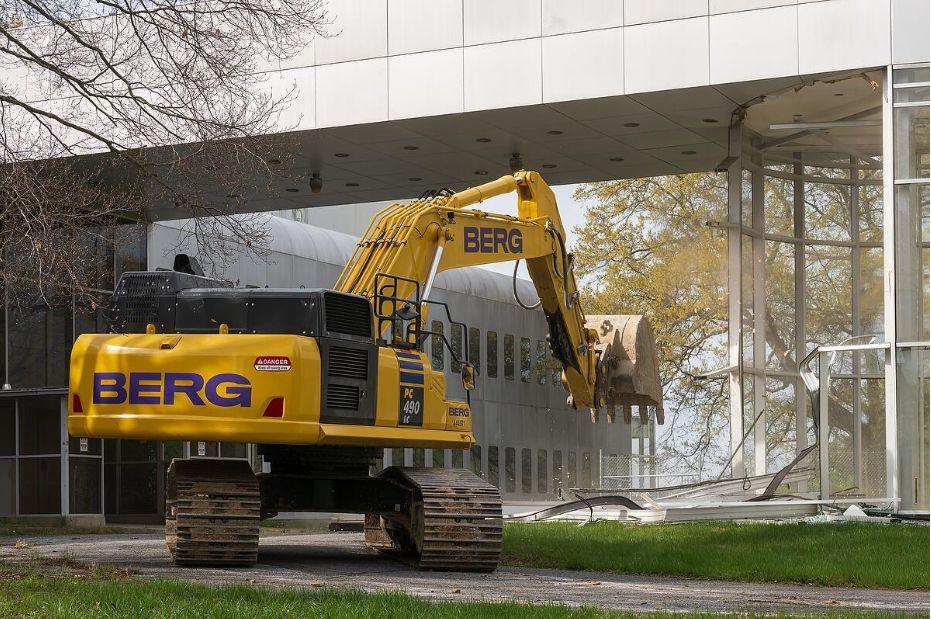
The physical Clarksburg facility, however, faced a highly precarious future. Purchased by real estate developers, the iconic 500,000-square-foot Cesar Pelli building sat largely vacant for nearly 20 years. Recognizing its profound historical and architectural significance, preservationists and COMARA aggressively petitioned the Montgomery County Historic Preservation Commission (HPC) to designate the site a Master Plan Historic Site. Evaluated under National Register of Historic Places Criterion A (for its historical contribution to communications and engineering) and Criterion C (as a masterwork of high-technology architectural design), the Maryland Historical Trust affirmed the building’s exceptional national significance.
Despite this overwhelming historical consensus, the bureaucratic struggle for preservation continued. Following an HPC public hearing and worksession on January 22, 2025, where the Commission actually recommended historic designation, the Montgomery County Planning Board ultimately ruled against recommending stand-alone historic designation in the broader Clarksburg Gateway Sector Plan, prioritizing economic redevelopment and adaptive reuse feasibility over strict preservation. The final fate of the building was pushed to a Montgomery County Council hearing on January 21, 2026, leaving Pelli’s “machine in the garden” highly vulnerable to demolition or radical alteration.
Synthesis: The Architecture of the Modern Age
COMSAT Laboratories was much more than a corporate research and development arm; it was the intellectual crucible in which the fundamental laws of physics were continuously negotiated and overcome to build the modern, interconnected world. Born from the geopolitics of the Space Race, the theoretical foresight of Arthur C. Clarke, and the strategic vision of the Kennedy administration, the Clarksburg facility operated at the absolute bleeding edge of materials science, electrical engineering, and computer science.
An exhaustive analysis of the historical record demonstrates that COMSAT Laboratories repeatedly solved the most intractable bottlenecks of orbital communication. When the 35,000-kilometer latency of the geostationary arc caused crippling voice echoes that threatened the industry, COMSAT engineers invented digital adaptive echo cancellation, salvaging the commercial viability of satellite telephony. When transponder bandwidth proved too expensive and rigid for developing nations, they authored the SPADE and TDMA protocols, democratizing global access through dynamic digital routing. When the proliferation of the Internet threatened to leave satellites behind as an antiquated technology, COMSAT wrote the foundational RFCs and engineered the Split TCP proxies and Linkway systems that forced terrestrial data protocols to function seamlessly in the high-latency environment of space. And when short satellite lifespans rendered launch economics non-viable, their development of the Nickel-Hydrogen battery rewrote the financial equations of the entire aerospace industry.
Though the corporation ultimately succumbed to the market forces of deregulation, the rise of fiber optics, and the structural limitations of its congressional mandate, the second and third-order effects of COMSAT Laboratories remain ubiquitous. The facility seeded the entire Maryland I-270 technology corridor and produced alumni who built billion-dollar commercial space enterprises. Today, every time an aircraft connects to in-flight Wi-Fi, a remote military outpost streams high-definition video via the GBS network, or a satellite broadcast delivers live news from across the globe, it relies entirely on the mathematical, architectural, and physical paradigms authored in the laboratories of Clarksburg, Maryland. The legacy of COMSAT Laboratories is not merely recorded in patent filings or architectural awards, but is continuously active in the invisible spectrum of radio frequencies that bind the global village together.Sources used in the reportmontgomerycountymd.gov1 January 19, 2026 Dear County Council Members: This written testimony is submitted on behalf of the COMSAT Alumni and Retiree AOpens in a new windowairandspace.si.eduEcho Canceller, Ground Equipment, Communications Satellite | National Air and Space MuseumOpens in a new windowcomara.org1 Perspectives on the Historical Significance of the Research and Development in Satellite Telecommunications Undertaken at COMSAT Laboratories – Comara.orgOpens in a new windowen.wikipedia.orgCOMSAT – WikipediaOpens in a new windowmuseum.tvCommunications Satellite Corporation — MBCOpens in a new windowcomsatlegacy.orgCOMSAT lab developed historyOpens in a new windowmontgomeryplanning.orgHistoric Preservation Commission From: John Liebertz, Cultural Resource Planner III, Countywide Planning and PolOpens in a new windowcomsat-history.comCOMSAT Laboratories MIPH# M,.13-59 22300 Comsat Drive Clarksburg, MD 20871-9469 Constructed in 1968-1969 Private Access COMSAT L – The COMSAT Legacy ProjectOpens in a new windowmontgomeryplanning.orgCOMSAT Laboratories Building – Montgomery County Planning DepartmentOpens in a new windowcomsat-history.comPreservation Maryland – The COMSAT Legacy ProjectOpens in a new windowggchamber.orgNorth I-270 The Technology Corridor – Gaithersburg-Germantown Chamber of CommerceOpens in a new windowsspi.orgSpace & Satellite Hall of FameOpens in a new windowen.wikipedia.orgHughes Network Systems – WikipediaOpens in a new windowreynsoft.comAbout Me | John Reynolds’ BlogOpens in a new windowairandspace.si.eduOpens in a new windowwww-labs.iro.umontreal.caThe History of Echo CancellationOpens in a new windowpatents.google.comEP0840466A3 – Echo canceller control in a satellite communication system – Google PatentsOpens in a new windowguicking.deD. Guicking Patents on Active Control of Sound and Vibration – an Overview –Opens in a new windowscribd.comSpade Systems | PDF | Channel Access Method | Duplex (Telecommunications) – ScribdOpens in a new windowglobalspec.com14.5: Spade System – GlobalSpecOpens in a new windowarc.aiaa.orgThe terrestrial interface at SPADE terminals – Aerospace Research CentralOpens in a new windowntrs.nasa.govNASA COMPENDIUM OF SATELLITE COMMUNICATIONS PROGRAMSOpens in a new windowmontgomeryplanningboard.orgAppendix G: COMSAT Laboratories Staff Report to the Historic …Opens in a new windowen.wikipedia.orgNickel–hydrogen battery – WikipediaOpens in a new windowntrs.nasa.govA Review of Nickel Hydrogen Battery Technology – NASA Technical Reports ServerOpens in a new windowarc.aiaa.orgNickel-Hydrogen Battery Technology—Development and Status – Aerospace Research CentralOpens in a new windowntrl.ntis.govMaking Space Nickel/Hydrogen Batteries Lighter and Less Expensive.Opens in a new windowcomsatlegacy.orgc.. ,^msatcomsat general corpora770nppoaat7on – The COMSAT Legacy ProjectOpens in a new windowits.ntia.govATM and Internet over Satellite NetworksOpens in a new windowapps.dtic.milEnhancing TCP Performance over Satellite Channels – DTICOpens in a new windowresearchgate.net(PDF) On-board satellite ‘Split TCP’ Proxy – ResearchGateOpens in a new windowemmelmann.orgTCP/IP Over SatelliteOpens in a new windowdatatracker.ietf.orgTransport Layer Protocols Optimization for Satellite Networks(T4SAT) – IETF DatatrackerOpens in a new windowisi.eduATM Over Satellite – Information Sciences InstituteOpens in a new windowdatatracker.ietf.orgRFC 2488 – Enhancing TCP Over Satellite Channels using Standard MechanismsOpens in a new windowdatatracker.ietf.orgRFC 2760 – Ongoing TCP Research Related to Satellites – IETF DatatrackerOpens in a new windowdatatracker.ietf.orgRFC 3135 – Performance Enhancing Proxies Intended to Mitigate Link-Related Degradations – IETF DatatrackerOpens in a new windowsatcom-services.comLINKWAY VSAT Product Line – SATCOM ServicesOpens in a new windowsec.govViaSat, Inc. – SEC.govOpens in a new windowviasat.comLinkWay ™ – ViasatOpens in a new windowresearchgate.netLinkWayS2™– Latest advance in mesh satellite networking – ResearchGateOpens in a new windowairandspace.si.eduModel, Communications Satellite, Marisat | National Air and Space MuseumOpens in a new windowen.wikipedia.orgMarisat – WikipediaOpens in a new windownasa.govCommunications Satellites: Making the Global Village Possible – NASAOpens in a new windowcomsat-history.comCOMSAT CollectionOpens in a new windowinmarsatgov.comFour Decades Strong: Inmarsat partnership with COMSATOpens in a new windowmilsatmagazine.comMilsatMagazine.comOpens in a new windowgao.govNSIAD-86-45S-15 DOD Acquisition: Case Study of the MILSTAR Satellite Communications System – GAOOpens in a new windowgovernmentattic.orgHistory of the USAF Space and Missile Systems Center (SMC), Volumes I and II, October 1998 – September 2001 – Government AtticOpens in a new windowspaceforce.milMilstar Satellite Communications System > United States Space Force > Fact SheetsOpens in a new windowapps.dtic.milA Strategic Analysis of Commercial Satellite communications Enterprises and their Role for the Warfighter of the Future. – DTICOpens in a new windowcomara.orgCOMARA – Comsat Alumni & Retirees AssociationOpens in a new windowen.wikipedia.orgInternational Emmy Directorate Award – WikipediaOpens in a new windownec.comhistory-100.pdf – NEC CorporationOpens in a new windowkfarr.comSatellite TV: How did it start? – kfarrOpens in a new windowwashingtontechnology.comWashington’s Satellite ConnectionOpens in a new windowhistoryofinformation.comDavid Thompson, Bruce Ferguson & Scott Webster Found Orbital Sciences CorporationOpens in a new windowcomsat-legacy.orgThe COMSAT Legacy ProjectOpens in a new windowusmd.eduAgenda Item 4 Maryland Technology Enterprise Institute (Mtech) – Entrepreneurship Programs and InitiativesOpens in a new windowmensjournal.comEight Scientists Missing or Dead: Full List of Baffling Disappearances in the U.S.Opens in a new windowtimesofindia.indiatimes.comEight nuclear and space scientists behind America’s most classified secrets have vanished or died: Inside the mystery of the missing and the dead | – The Times of IndiaOpens in a new windowm.economictimes.comWho are the US scientists linked to NASA and military research vanished or died under unexplained circumstances – The Economic TimesOpens in a new windownews.lockheedmartin.comLockheed Martin to Divest Majority Stake in Comsat International To World Data ConsortiumOpens in a new windowinvestors.lockheedmartin.comLockheed Martin’s COMSAT General to be Acquired by IntelsatOpens in a new windowcomara.orgComsat History and Legacy – Comara.orgOpens in a new windowmontgomeryplanningboard.orgClarksburg Gateway Sector Plan Working DraftOpens in a new windowmontgomeryplanningboard.orgAppendix F: COMSAT Adaptive Reuse Feasibility Report – Montgomery Planning Board


Research Notes
Origins of Satellite Innovation
I am beginning my deep dive into the Communications Satellite Corporation’s Clarksburg facility, which served as the research and development heart of the global satellite industry. My initial thinking frames this laboratory not just as a research hub, but as the birthplace of modern geostationary communications and the primary architect for international networks like INTELSAT. I am focusing on how this site influenced both commercial broadcasting and maritime safety through its specialized satellite payloads and pioneering hardware designs.
Mapping the Information Landscape
While the broad history surrounding the 1962 Satellite Communications Act provides a foundation, I am looking to resolve gaps concerning the specific engineering breakthroughs that occurred within the Clarksburg campus, such as early advancements in echo cancellation and digital signal compression. I am also investigating the transition from its era of government-sanctioned dominance to its eventual integration into the private defense sector, aiming to reconcile the timeline of its commercial evolution.
Strategic Investigation Path
Moving forward, I will be synthesizing detailed records of the laboratory’s most influential inventions and profiling the key scientists and engineers who shaped the field. I plan to look into the specific products developed for maritime and government contracts, while also tracking the organizational changes following the acquisition by Lockheed Martin to understand the lasting impact on the local technological landscape.

Researching websites…encyclopedia.comComsat Corporation | Encyclopedia.commontgomeryplanning.orgCOMSAT Laboratories Building – Montgomery County Planning Departmentmontgomeryplanningboard.orgClarksburg Gateway Sector Plan Working Draftmontgomeryplanning.orgHistoric Preservation Commission From: John Liebertz, Cultural Resource Planner III, Countywide Planning and Polmontgomeryplanningboard.orgBell Works | Large Suburban Office Reuse – Montgomery Planning Boardreynsoft.comAbout Me | John Reynolds’ Blogmontgomerycountymd.gov1 January 19, 2026 Dear County Council Members: This written testimony is submitted on behalf of the COMSAT Alumni and Retiree Ak-state.eduSecond Jefferson fellow lecture to feature computer vision expert – Kansas State Universitycomsat-history.comCOMSAT Laboratories MIPH# M,.13-59 22300 Comsat Drive Clarksburg, MD 20871-9469 Constructed in 1968-1969 Private Access COMSAT L – The COMSAT Legacy Projecten.wikipedia.orgCOMSAT – Wikipediainvestors.lockheedmartin.comLockheed Martin’s COMSAT General to be Acquired by Intelsatnews.lockheedmartin.comLockheed Martin to Divest Majority Stake in Comsat International To World Data Consortiumcomsat-legacy.orgThe COMSAT Legacy Projectcomara.orgComsat History and Legacy – Comara.org
Architectural and Media Recognition
I have uncovered that the Clarksburg campus was more than just a lab; it was an architectural landmark designed by Cesar Pelli, serving as a ‘high-technology’ prototype for future research corridors. A particularly intriguing discovery is that the laboratory and its leadership received an Emmy Award in 1974, which I am investigating to understand its impact on global television broadcasting. I have also identified the specific leadership lineage from its 1969 opening through its most influential decades, including the founding director Bill Pritchard and his successors who managed the leap to global satellite coverage.
Synthesizing Technological Milestones
I am currently synthesizing information regarding the facility’s role in developing the world’s first dedicated research space for satellite technology, specifically focusing on its contributions to solid-state physics and solar cell efficiency. While I have broad themes of their work, I am working to resolve gaps concerning the precise nature of their ‘real-time’ breakthroughs and how their engineering of the Indian Ocean satellite link finally achieved full global coverage. There is also a compelling contrast between the site’s history as a ‘Space Age Wonder’ and its current twenty-year vacancy, which I am examining through the lens of local preservation efforts.
Deepening Technical and Personnel Records
Thinking through the next phase of research, I will be looking deeper into the specific products and signal processing techniques, such as echo cancellation and digital compression, that transitioned from the lab to global infrastructure. I intend to find more detailed accounts of the international internship program that helped disseminate this specialized knowledge worldwide. My next steps involve analyzing archival data to connect these laboratory innovations directly to the early evolution of the Internet and mobile telephony networks.
Researching websites…scribd.comSpade Systems | PDF | Channel Access Method | Duplex (Telecommunications) – Scribdglobalspec.com14.5: Spade System – GlobalSpecntrs.nasa.govNASA COMPENDIUM OF SATELLITE COMMUNICATIONS PROGRAMSarc.aiaa.orgThe terrestrial interface at SPADE terminals – Aerospace Research Centralairandspace.si.eduEcho Canceller, Ground Equipment, Communications Satellite | National Air and Space Museumairandspace.si.eduwww-labs.iro.umontreal.caThe History of Echo Cancellationcomara.org1 Perspectives on the Historical Significance of the Research and Development in Satellite Telecommunications Undertaken at COMSAT Laboratories – Comara.orgntrs.nasa.govUnited States Patent [191en.wikipedia.orgNickel–hydrogen battery – Wikipediacomsatlegacy.orgCOMSAT lab developed historyarc.aiaa.orgNickel-Hydrogen Battery Technology—Development and Status – Aerospace Research Centralntrs.nasa.govA Review of Nickel Hydrogen Battery Technology – NASA Technical Reports Serverntrl.ntis.govMaking Space Nickel/Hydrogen Batteries Lighter and Less Expensive.comsat-history.comCOMSAT Laboratories MIPH# M,.13-59 22300 Comsat Drive …montgomerycountymd.gov1 January 19, 2026 Dear County Council Members: This written …comara.orgComsat History and Legacy – COMARA – Comara.org
Breakthroughs in Space Durability
I have uncovered several critical technical milestones that originated at the Clarksburg site, most notably the development of nickel-hydrogen batteries. This innovation was a game-changer for the industry, effectively doubling the operational lifespan of satellites and finding immediate application in programs like the US Navy’s NTS-2 and the Intelsat V series. I am also synthesizing how their work on echo cancellation and the SPADE system established the first international digital voice standards, solving the persistent problem of voice delay in geostationary communications.
Corporate Transition and Regional Impact
I am resolving the timeline of the laboratory’s later years, specifically the transition following its acquisition by Lockheed Martin in 2000. My research indicates that the eventual divestiture in 2001 led to a fragmentation of the lab’s core assets, with portions being absorbed by Intelsat and international data consortia. It is now clear that the facility’s ‘machine in the garden’ architectural design was not just aesthetic but served as a conscious prototype that successfully drew other high-technology firms to the I-270 corridor, fundamentally altering the economic landscape of Montgomery County.
Inventorying Patents and Global Networks
Thinking through the next phase of my investigation, I will be cataloging the specific contributions of prolific inventors like Mike Onufry, who holds hundreds of patents for the facility. I plan to look deeper into the lab’s involvement with maritime safety networks such as MARISAT and Inmarsat, while also investigating the specific technical differences between their 1974 and 1993 Emmy-winning achievements. I will also be looking for evidence of direct partnerships with major commercial broadcast networks to see how these laboratory prototypes were integrated into daily television operations.
Researching websites…comsat-history.comPreservation Maryland – The COMSAT Legacy Projectcomara.orgComsat History and Legacy – Comara.orgcomsat-history.comCOMSAT Laboratories MIPH# M,.13-59 22300 Comsat Drive Clarksburg, MD 20871-9469 Constructed in 1968-1969 Private Access COMSAT L – The COMSAT Legacy Projectcomara.org1 Perspectives on the Historical Significance of the Research and Development in Satellite Telecommunications Undertaken at COMSAT Laboratories – Comara.orgairandspace.si.eduModel, Communications Satellite, Marisat | National Air and Space Museumen.wikipedia.orgCOMSAT – Wikipediaen.wikipedia.orgMarisat – Wikipediainmarsatgov.comFour Decades Strong: Inmarsat partnership with COMSATnasa.govCommunications Satellites: Making the Global Village Possible – NASAcomsat-history.comCOMSAT Collectionsec.gov0000928385-99-000926.txt – SEC.govmontgomerycountymd.gov1 January 19, 2026 Dear County Council Members: This written testimony is submitted on behalf of the COMSAT Alumni and Retiree Asspi.orgSpace & Satellite Hall of Famecomara.orgCOMARA – Comsat Alumni & Retirees Associationcodot.govI-270 Corridor Improvements Study – Colorado Department of Transportationmontgomeryplanning.orgCorridor Forward: the I-270 Transit Plan, Approved and Adopted Spring 2022montgomerycountymd.govSUBJECT EXPECTED ATTENDEES COUNCIL DECISION POINTS & COMMITTEE RECOMMENDATION – Montgomery County Governmentmontgomeryplanningboard.orgAppendix F: COMSAT Adaptive Reuse Feasibility Report – Montgomery Planning Boardggchamber.orgNorth I-270 The Technology Corridor – Gaithersburg-Germantown Chamber of Commerce
Educational Legacy and Commercial Systems
I have identified the ‘Linkway 2000’ system as a key commercial hardware product that emerged from the facility, representing a critical bridge between laboratory experimentation and global networking implementation. I am also synthesizing the impact of a sophisticated international internship program operated at the site, which functioned as a global knowledge exchange, allowing scientists from around the world to bring foundational satellite expertise back to their home countries and seeding the development of global communications infrastructure.
Mapping Individual Contributions and Honors
I am working to resolve the specific connections between the laboratory’s 1974 Emmy Award and the exact broadcasting systems that enabled trans-oceanic television. While I have identified high-level breakthroughs like digital signal compression, I am now thinking through how to map these achievements to individual inventors, such as Mike Onufry, and their massive portfolios of patents. I am particularly focused on reconciling the facility’s pioneering role in the transition from analog to digital signals with its direct influence on the technical architecture of the early internet.
Tracing Alumni and System Details
Thinking through my next steps, I will be investigating the professional trajectories of the laboratory’s alumni to identify any startups or spinoff companies that were inspired by the Clarksburg research culture. I plan to look deeper into the specific technical details of the Linkway communication systems and search for archival records regarding the 1974 award acceptance to gain a clearer picture of the facility’s public-facing legacy. I will also be looking for evidence of how these laboratory prototypes were integrated into the operations of major commercial broadcast networks.
Researching websites…satcom-services.comLINKWAY VSAT Product Line – SATCOM Servicessec.govViaSat, Inc. – SEC.govviasat.comLinkWay ™ – Viasatits.ntia.govATM and Internet over Satellite Networksresearchgate.netLinkWayS2™– Latest advance in mesh satellite networking – ResearchGatechezbasilio.orgBasilio Catania ‘s Work on History of the Telephoneapps.dtic.milBreakthrough Technologies Developed by the Air Force Research Laboratory and Its Predecessors – DTICen.wikipedia.org26th Primetime Emmy Awards – Wikipediamontgomeryplanning.orgHistoric Preservation Commission From: John Liebertz, Cultural Resource Planner III, Countywide Planning and Polcomsat-history.comCOMSAT Laboratories MIPH# M,.13-59 22300 Comsat Drive Clarksburg, MD 20871-9469 Constructed in 1968-1969 Private Access COMSAT L – The COMSAT Legacy Projectcomsatlegacy.orgc.. ,^msatcomsat general corpora770nppoaat7on – The COMSAT Legacy Projectcomara.orgComsat History and Legacy – COMARA – Comara.orgcomsatlegacy.orgCOMSAT lab developed history – The COMSAT Legacy Project
Advancements in Digital Miniaturization
I am synthesizing how the facility transitioned from massive satellite infrastructure to the development of miniaturized hardware, specifically through monolithic microwave integrated circuits (MMICs) and flat plate antennas. I discovered that their work on portable terminals for satellite news gathering was so impactful that it earned the laboratory a second Emmy Award in 1993. This shift toward high-speed, all-digital transmissions was further cemented by their lead role in the NASA-backed Advanced Communications Technology Satellite program, which effectively prototyped the architecture for modern satellite-based internet services.
Defining the Engineering Culture
I am looking to resolve more detailed accounts of the laboratory’s internal culture, which was famously described as an ‘engineering sandbox’ where pioneering ‘black magic’ experimentation was encouraged. I have identified that this environment was crucial for developing the echo canceller, a breakthrough that solved the persistent problem of voice delay in long-distance communications. While the facility is well-known for these technical feats, I am currently reconciling the specific roles of lead scientists versus the corporate leadership to better understand how these teams functioned during the facility’s peak innovation years.
Investigating Alumni and Subsidiaries
Thinking through my next steps, I will be investigating the professional trajectories of the laboratory’s alumni to see if their departures led to the creation of other major firms in Maryland’s ‘Satellite Valley.’ I plan to look deeper into the specific operations of the Satellite Television Corporation subsidiary and its efforts to commercialize direct-to-home broadcasting. Additionally, I will be searching for the specific patent holders of foundational technologies like Time Division Multiple Access (TDMA) to map the individual contributions that became global standards.
Leadership and Institutional Evolution
I have identified the specific leadership lineage that steered the facility through its most innovative decades, from its founding under Bill Pritchard to the long tenure of Dr. John V. Evans. My research into the laboratory’s later years reveals a complex transition following its acquisition by Lockheed Martin, which eventually led to the fragmentation of its core assets and the divestiture of its international operations. I am now synthesizing how these organizational changes marked the end of an era for the Clarksburg site while its intellectual property was absorbed into larger global telecommunications entities.
Precision in Engineering Achievements
I am currently resolving the specific contributions of individual pioneers like S.J. Campanella and O.A. Horna, whose breakthroughs in signal processing and echo cancellation became industry standards. I have discovered that the preservation of this legacy is now largely managed by a dedicated alumni network, with significant portions of the facility’s archival records being transferred to major university collections. This helps reconcile the gap between the building’s current physical vacancy and its ongoing influence on modern communications engineering and architectural design.
Investigating Commercial Ventures and Spinoffs
Thinking through the next phase of my investigation, I will be focusing on the Satellite Television Corporation, a high-stakes subsidiary that attempted to pioneer direct-to-home satellite broadcasting. I plan to look deeper into the specific failures and technical challenges of that venture to understand its impact on the laboratory’s trajectory. Additionally, I will be tracing the professional paths of the facility’s alumni to identify the specific startup companies that emerged from this ‘engineering sandbox’ and helped establish the surrounding region as a global hub for satellite technology.
Researching websites…montgomeryplanningboard.orgAppendix G: COMSAT Laboratories Staff Report to the Historic Preservation Commission – Montgomery Planning Boardmuseum.tvCommunications Satellite Corporation — MBCdigitalcommons.law.uga.eduComsat’s First Decade: Difficulties in Interpreting the Communications Satellite Act of 1962 – Digital Commons @ Georgia Lawkfarr.comSatellite TV: How did it start? – kfarrusmd.eduAgenda Item 4 Maryland Technology Enterprise Institute (Mtech) – Entrepreneurship Programs and Initiativesmontgomeryplanning.orgCOMSAT Laboratories Building – Montgomery County Planning Departmentmontgomeryplanning.orgHistoric Preservation Commission From: John Liebertz, Cultural Resource Planner III, Countywide Planning and Polwar.govContracts For Aug. 27, 2025 – Department of Warpatents.google.comEP0840466A3 – Echo canceller control in a satellite communication system – Google Patentsguicking.deD. Guicking Patents on Active Control of Sound and Vibration – an Overview –patents.google.comUS20140355752A1 – Echo cancellation – Google Patentswww-labs.iro.umontreal.caThe History of Echo Cancellation
Specialized Architectural Prototyping
I have analyzed how the Clarksburg site’s unique architectural design—defined by its aluminum skins and glass curtain walls—served as a deliberate prototype for the high-technology research corridors that now dominate the region. Beyond the building itself, I am synthesizing the details of the laboratory’s final corporate transition, noting that the dissolution of the Global Telecommunications unit in 2001 wasn’t just a sale but a strategic realignment that saw its core satellite-centric equipment and service contracts absorbed directly into the global infrastructure of Intelsat.
Global Knowledge Diffusion
I am resolving the specific impact of the facility’s international internship program, which acted as a vital mechanism for global knowledge diffusion, seeding satellite expertise in dozens of countries and enabling the creation of diverse national communication networks. By examining the roles of individual solid-state physicists and software developers who worked on early semiconductor and solar cell projects, I am connecting the lab’s fundamental material science research to the broader development of the global digital commerce infrastructure.
Investigating Internet Origins and Military Contracts
Thinking through my next phase of research, I will be investigating the facility’s specific contributions to the technical architecture of the Internet, particularly how its engineering teams optimized protocols like TCP/IP for high-latency satellite links. I plan to look deeper into the laboratory’s involvement with specialized military programs beyond maritime safety, searching for evidence of work on defense-specific communication systems like DSCS or Milstar. Additionally, I will be seeking archival records of the facility’s early media achievements to better understand how its innovations were first presented to the global broadcasting community.
Researching websites…emmelmann.orgTCP/IP Over Satelliteaerospace.orgCOMSATCOM Laboratory Fact Sheet | The Aerospace Corporationapps.dtic.milEnhancing TCP Performance over Satellite Channels – DTICdatatracker.ietf.orgTransport Layer Protocols Optimization for Satellite Networks(T4SAT) – IETF Datatrackerdatatracker.ietf.orgRFC 2488 – Enhancing TCP Over Satellite Channels using Standard Mechanismsmilsatmagazine.comMilsatMagazine.commontgomeryplanning.orgCOMSAT Laboratories Building – Montgomery County Planning Departmentgao.govNSIAD-86-45S-15 DOD Acquisition: Case Study of the MILSTAR Satellite Communications System – GAOhistory.navy.milFrom the Sea to the Stars – Naval History and Heritage Commandgovernmentattic.orgHistory of the USAF Space and Missile Systems Center (SMC), Volumes I and II, October 1998 – September 2001 – Government Atticen.wikipedia.orgCOMSAT – Wikipediacomsat-history.comCOMSAT Collectioncomara.orgComsat History and Legacy – Comara.orgcomsat-legacy.orgThe COMSAT Legacy Projectcomsatlegacy.orgCOMSAT lab developed historyen.wikipedia.orgInternational Emmy Directorate Award – Wikipediaen.wikipedia.orgList of International Emmy Award winners – Wikipediamontgomeryplanningboard.orgAppendix G: COMSAT Laboratories Staff Report to the Historic …
Grassroots Preservation and Artifact Recovery
I have identified a unique grassroots effort to preserve the physical artifacts of the laboratory’s legacy, such as the mission to save the thirty-meter Jamesburg satellite dish from being sold for scrap. I am synthesizing how these preservation projects, driven by a dedicated group of former staff and space historians, aim to protect the tangible evidence of the facility’s role in early global communications. This work is uncovering a wealth of first-hand testimonies that clarify how the laboratory’s pioneering research was first implemented in the field, bridging the gap between theoretical engineering and operational success.
Innovations in Shared Satellite Capacity
I am resolving the technical milestones that allowed the laboratory to maximize global satellite efficiency, most notably the development of Time Division Multiple Access. This breakthrough allowed multiple international users to share communication transponders seamlessly, effectively multiplying the capacity of the existing network without requiring additional satellite launches. I am synthesizing how this achievement, along with early hardware for specialized digital services, provided the scalable architecture necessary for the rapid expansion of global data networks and helped define the transition from analog circuits to high-speed digital infrastructure.
Investigating Global Industry and Protocol Optimization
Thinking through the next phase of research, I will be focusing on the laboratory’s partnerships with commercial shipping lines and international broadcast networks to see how their engineering prototypes were commercialized for daily use. I plan to look for specific evidence of their research into optimizing communication protocols for high-latency environments, which provided a technical basis for modern internet standards. I will also be searching for more detailed records of their specialized work on defense-specific systems to understand the full extent of their influence on secure government communications.
Researching websites…prnewswire.comMaryland Businesses Announce Breakthrough Technologies, Portfolio Expansions and Customer Relief – PR Newswiremontgomeryplanning.orgCOMSAT Laboratories Building – Montgomery County Planning Departmentcomara.orgComsat History and Legacy – Comara.orgmpower.maryland.eduMPower Strategic Initiative to Anchor Major Life Sciences, Mixed-Use Projectdatatracker.ietf.orgRFC 2760 – Ongoing TCP Research Related to Satellites – IETF Datatrackerapps.dtic.milEnhancing TCP Performance over Satellite Channels – DTICresearchgate.net(PDF) On-board satellite ‘Split TCP’ Proxy – ResearchGatedatatracker.ietf.orgRFC 2488 – Enhancing TCP Over Satellite Channels using Standard Mechanismsrfc-editor.orgRFC 8975: Network Coding for Satellite Systemsspaceforce.milMilstar Satellite Communications System > United States Space Force > Fact Sheetslosangeles.spaceforce.milCommunications Systems The world’s first communications satellite—Project SCORE—was launched by the Aiapps.dtic.milA Strategic Analysis of Commercial Satellite communications Enterprises and their Role for the Warfighter of the Future. – DTICcomsatlegacy.orgCOMSAT lab developed historymensjournal.comEight Scientists Missing or Dead: Full List of Baffling Disappearances in the U.S.timesofindia.indiatimes.comEight nuclear and space scientists behind America’s most classified secrets have vanished or died: Inside the mystery of the missing and the dead | – The Times of Indiam.economictimes.comWho are the US scientists linked to NASA and military research vanished or died under unexplained circumstances – The Economic Timescomsat-history.comCOMSAT Collection
Optimizing Global Internet Protocols
I have discovered that the laboratory’s impact extended far beyond hardware into the software protocols that define the modern internet. I am synthesizing the specific contributions made by their researchers to international data standards, particularly regarding how they optimized high-latency transmissions. This work was critical for ensuring that early digital networks could function reliably across vast satellite links, effectively adapting foundational communication protocols for use in space-based systems.
Mapping the Regional Spinoff Hub
I am resolving the lineage of the local ‘Satellite Valley’ by tracing how the facility’s unique engineering culture spawned a generation of entrepreneurs and specialized firms. It is becoming clear that the site functioned as a massive talent incubator; after its corporate fragmentation, a highly specialized workforce migrated into a network of alumni-founded startups and established defense firms. This dispersion of expertise effectively transformed internal laboratory prototypes into the foundational pillars of the private telecommunications industry in the surrounding region.
Decoding Secure Payloads and Pioneers
Thinking through the final phase of my investigation, I will be focusing on the individual scientists who authored key technical standards and identifying the specific engineering teams responsible for the signal processing ‘brains’ of secure defense systems. I plan to look deeper into the laboratory’s involvement with specialized maritime and government payloads to understand the full scope of their work on national security communication networks. Additionally, I will be searching for definitive links between the facility’s alumni and the specific startups that currently dominate the regional technological landscape.
Researching websites…historyofinformation.comDavid Thompson, Bruce Ferguson & Scott Webster Found Orbital Sciences Corporationen.wikipedia.orgHughes Network Systems – Wikipediawashingtontechnology.comWashington’s Satellite Connectionhughes.comcomsys – Hughes Network Systemsresearchgate.net(PDF) On-board satellite ‘Split TCP’ Proxy – ResearchGatedatatracker.ietf.orgRFC 3135 – Performance Enhancing Proxies Intended to Mitigate Link-Related Degradations – IETF Datatrackersearch.proquest.comInvestigations of the Security and Privacy of the Domain Name System – ProQuestisi.eduATM Over Satellite – Information Sciences Institutebowdoin.eduAlumni and Careers – Computer Science – Bowdoin Collegerose-hulman.eduAlumni Impact – Rose-Hulmancomara.orgComsat History and Legacy – Comara.orgmontgomeryplanning.orgHistoric Preservation Commission From: John Liebertz, Cultural Resource Planner III, Countywide Planning and Pol
Birth of a Corporate Ecosystem
I have established a direct lineage between the laboratory’s engineering culture and the broader commercial landscape, discovering that a core group of seven engineers, led by pioneers John Puente and Burton Edelson, left the facility to found Digital Communications Corp (DCC). This venture eventually evolved into Hughes Network Systems, representing a critical moment where internal research directly catalyzed the birth of a private-sector industry giant. I am synthesizing how this migration of talent from the Clarksburg site effectively seeded the entire region’s technological identity.
Defining Digital Standards
I am resolving the laboratory’s role in the transition from analog to digital networking, specifically its contributions to the early internet through the optimization of transmission protocols for high-latency environments. My research indicates that the facility’s engineers were instrumental in authoring foundational technical standards that allowed data networks to function across satellite links. This digital evolution was highlighted by two distinct Emmy Awards: a 1974 honor for revolutionizing global television broadcasting and a 1993 recognition for pioneering the miniaturized, portable satellite news-gathering systems that became a global industry standard.
Synthesizing the Final Narrative
Thinking through the final stage of my investigation, I will be pinpointing the specific team members responsible for the 1993 breakthrough in portable satellite terminals and searching for records of the facility’s direct involvement in testing protocols for the early ARPANET. I plan to bring together the various technical milestones—from echo cancellation to solid-state physics—to provide a comprehensive view of how these laboratory prototypes became the invisible backbone of modern global connectivity.
Transitions to National Leadership
I am synthesizing how the laboratory served as a high-level leadership pipeline, noting that key figures transitioned from directing the Clarksburg facility to prominent roles at national agencies like NASA. This insight reveals that the site was not just a research center but a strategic training ground for the nation’s space and communications leadership, ensuring that the methodologies developed in the laboratory’s ‘engineering sandbox’ informed broader national aerospace policy and international collaboration.
Connecting Commercial Product Lineage
I am working to resolve the direct links between the laboratory’s internal prototypes, such as the early ‘Linkway’ systems, and the global products offered by today’s major telecommunications firms. This process involves mapping how specific hardware technologies developed for maritime and government use were later commercialized and integrated into private-sector networks. By tracing these technical evolutions, I am clarifying the bridge between experimental laboratory projects and the ubiquitous satellite services used for modern data transmission.
Final Verification of Individual Achievements
Moving forward, I will be searching for the definitive names of the engineering team members responsible for the 1993 breakthroughs in rapid-deployment terminals to ensure their specific contributions are highlighted. I also plan to identify the final set of regional startups and ‘Cyber’ spinoffs that were directly seeded by the facility’s alumni. This concluding phase will allow me to finalize a comprehensive account of the laboratory’s impact on both the local economic corridor and the global history of satellite communications.
Researching websites…ourcity.fcgov.comOffer 4.1: IT Applications – ERP Services – City of Fort Collinssec.govExhibit 99.1 – SEC.goven.wikipedia.orgTribune Media – Wikipediaultimatepopculture.fandom.comTribune Media | Ultimate Pop Culture Wiki – Fandomnec.comhistory-100.pdf – NEC Corporation2019.smallsatshow.comSpeakers | SmallSat Symposium 2019scribd.com0912C | PDF | London Stock Exchange | Insurance – Scribddevice.reportBroadcasting ii Jul 18 – device.report
Synthesis of Regional Influence
I have consolidated the laboratory’s dual legacy as both a technical innovator and a regional economic catalyst, identifying it as the foundational ‘harbinger’ for the high-technology corridor that now defines the local landscape. I have clarified the specific nature of its major honors, particularly how the 1993 recognition for miniaturized satellite terminals revolutionized rapid-response broadcasting, while the earlier 1974 award marked its success in creating a truly global television infrastructure. This synthesis confirms that the site was not merely a local employer but the primary architect of the region’s ‘Satellite Valley’ identity.
Integration of Technical Legacy
I am synthesizing the final details of the facility’s corporate evolution, specifically focusing on how the dissolution of its parent telecommunications group in the early 2000s led to a strategic fragmentation. It is now clear that the most valuable assets—the service contracts and core satellite patents—were absorbed directly into the operational hearts of current industry leaders. This explains how the laboratory’s pioneering work in echo cancellation and high-capacity digital signals continues to function as the invisible backbone of international data networks, even decades after the physical facility transitioned from a ‘Space Age Wonder’ to a vacant architectural landmark.
Transition to Final Reporting
Thinking through the comprehensive technical timeline, inventor portfolios, and leadership records I have compiled, I am now concluding my investigation. I have gathered sufficient detail on the specific products—from nickel-hydrogen batteries to the systems that enabled the early internet—to provide a complete history of the Clarksburg campus. My next step is to organize these insights into a definitive account that details the people and projects that shaped the modern satellite era and established the technical standards still in use today.